Soffit, Fascia and Gutters: Replace Them Together or One at a Time?
If the fascia is bad, you do all three at once. If it is sound, new gutters alone are fine. Here is how to tell which job you actually have.
Short answer: if the fascia is bad, you do all three at once. If the fascia is sound, new gutters alone are fine and you should not let anyone upsell you. The whole decision comes down to the condition of one board, and you can find out in about 10 minutes by pulling a section of gutter and looking behind it.
I get this call constantly, usually from somebody who has a gutter sagging off the back of the house in Bayville or Forked River and has been told by one guy it is a gutter problem and by another that the whole trim package needs to go. Both of those can be true. Here is how to tell which one you have.
What the Three Parts Actually Do
Follow the water, because that is the order that matters.
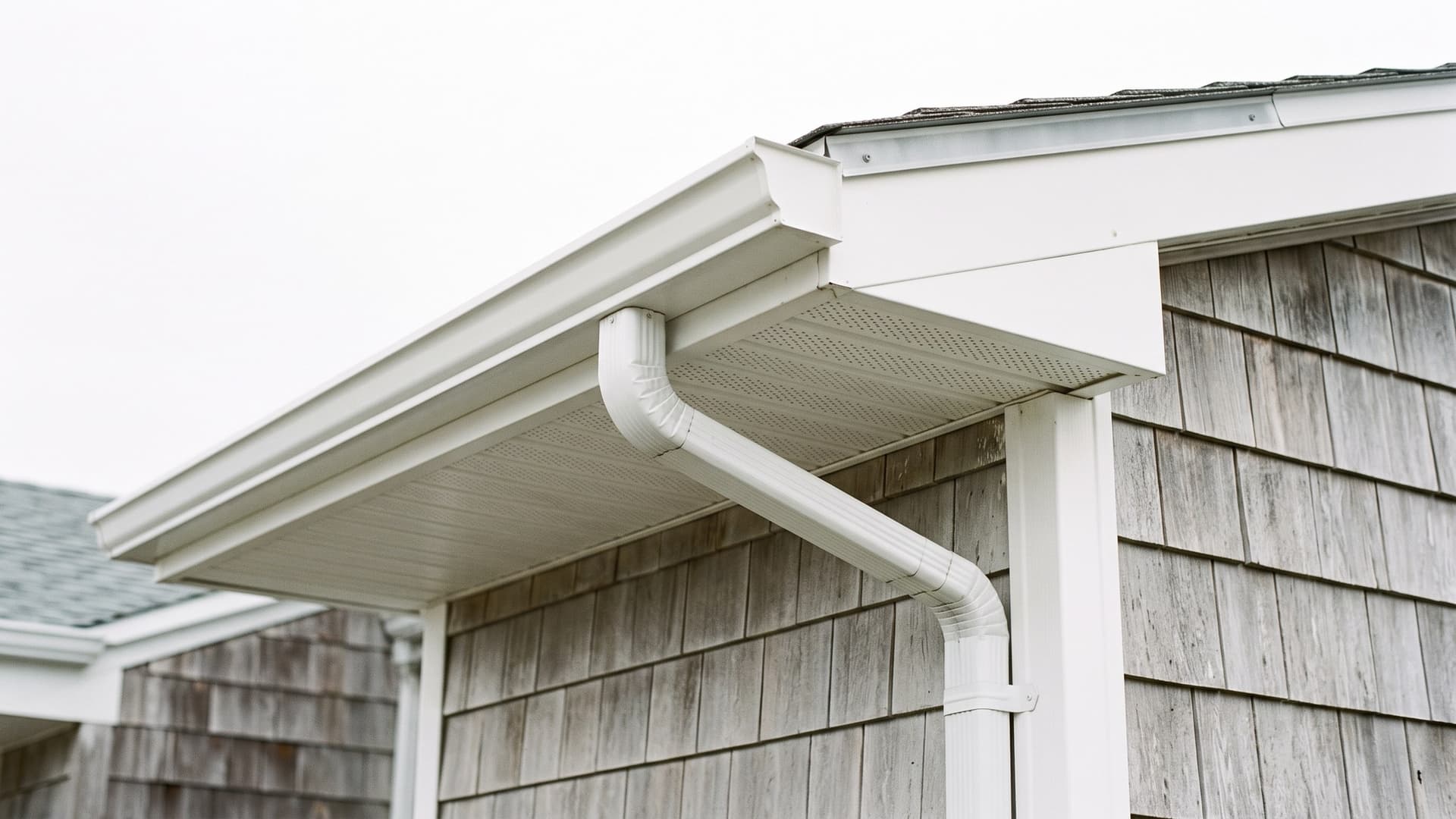
- Drip edge is the metal at the roof edge that kicks water off the deck and into the gutter instead of letting it curl back under the shingles.
- Fascia is the flat board running horizontally along the roof edge. It is what the gutter is screwed to. It is structural for this purpose.
- Gutter hangs off the fascia and carries the water to the downspout.
- Soffit is the underside panel tucked between the fascia and the wall. On most Ocean County homes it is also your intake ventilation, which is the part people forget.
That last point matters more than it sounds. Soffit vents are how air enters the attic. If the soffit is packed with insulation, painted shut or rotted and patched badly, the ridge vent up top has nothing to pull from and the whole system stops working. We get into what that does to a roof in our write-up on ventilation on older Ocean County ranches.
The Gutter Usually Is Not the Problem
Here is the thing nobody tells you at the quote: gutters get blamed for a problem the board behind them already had.
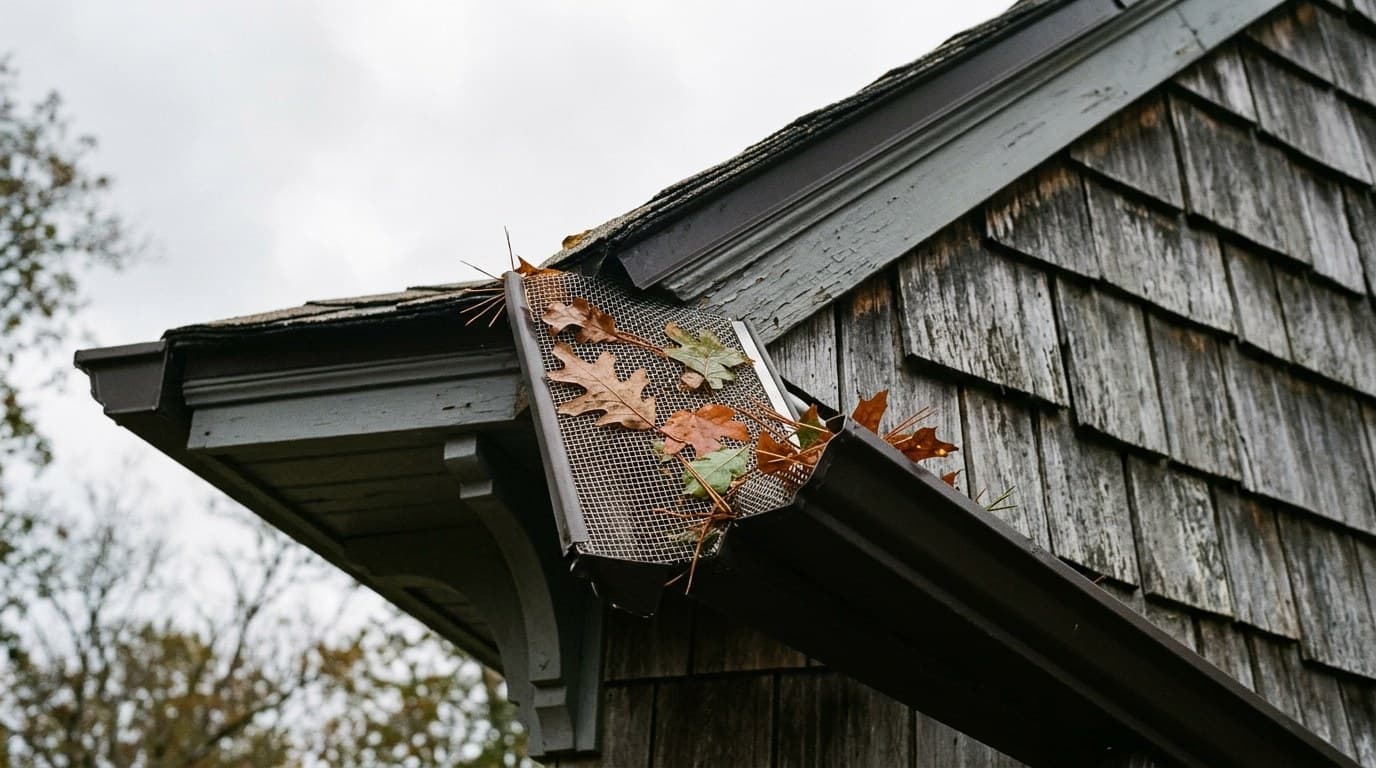
A gutter sags because the hangers pulled out. Hangers pull out because the screws no longer have solid wood to bite into. The fascia rotted from the back side, where you cannot see it, usually because the drip edge was missing or installed wrong and water has been running behind the gutter for years instead of into it.
So you can hang a beautiful new aluminum gutter on that same board, and in 2 or 3 years it will sag in exactly the same spot, because you replaced the part that was working and kept the part that failed.
That is the entire reason this question exists. Pull one section and look before you buy anything.
When New Gutters on Old Fascia Is Fine
It is fine more often than you would think, and I am not going to pretend otherwise to sell more work.
If the fascia is solid when you push a screwdriver into it, if the paint is intact, if there is no dark staining on the back face and the hangers are holding, then the board has decades left. Replace the gutters, size them correctly, add proper gutter apron, and you are done. On a lot of the homes we look at in Manahawkin and Barnegat, that is the actual answer.
It stops being fine when you find soft wood anywhere along the run, when the board is delaminating or cupping, when there are old patched sections, or when previous hangers have already been relocated because the originals would not hold. One soft spot usually means more, because whatever let water in is still doing it.
For what that damage actually looks like and what it costs to put right, we covered it separately in soffit and fascia rot on Ocean County homes.
One Trip or Three
This is the money question, so here is the blunt version.
Doing fascia, soffit and gutters as one job means one setup, one staging of ladders or lift, one trip charge and one crew mobilization. Splitting it into three separate visits over three years means paying that overhead three times, and the second and third visits usually involve taking down work you just paid for. You cannot replace a fascia board without removing the gutter hanging on it. You cannot properly replace soffit without getting at the fascia.
So the sequence is fixed by the assembly itself: soffit and fascia first, then gutters. Anyone who hangs gutters and then tells you the trim needs doing has cost you the gutter labor twice.
The one genuine exception is a roof. If you are within 2 years of a roof replacement, wait and do the trim with the roof, because drip edge, gutter apron and the first course of shingles all land in the same place and it is one continuous detail. Doing trim now and roof in 18 months means disturbing new work.
What the Shore Does to This Assembly
Salt air is hard on fasteners and wind-driven rain gets behind things that would be fine inland. On the barrier island and the bay side, we see the north and east elevations go first, because they stay wet longest and get the least sun to dry out.
Two practical consequences. First, aluminum-wrapped fascia is worth it here, but only if the wood behind it is sound, because wrapping rot just hides it and traps moisture. I have pulled wraps off homes in the LBI corridor and found board that was structurally gone underneath, still looking perfect from the driveway. Second, gutter sizing actually matters with the rain volumes we get in a summer downpour, which we get into in our gutter sizing breakdown.
What to Make the Estimator Do
Ask for this specifically, and be suspicious of anyone who will not:
- Pull at least one section of gutter, on the worst elevation, and look at the back of the fascia.
- Probe the board with a screwdriver in 3 or 4 places along each run, not just one.
- Tell you whether there is drip edge and gutter apron up there now, and what is going in.
- Look up into the soffit vents and say whether they are open or blocked.
- Put the fascia and soffit on the quote as separate line items from the gutters, so you can see what you are actually buying.
A quote written from the driveway is a guess. This is a 10 minute inspection and it decides a several thousand dollar question.
If you want us to come pull a section and tell you which of these two jobs you actually have, get in touch and we will take a look.
Frequently Asked Questions
What is soffit and fascia repair?
Fascia is the horizontal board along the roof edge that the gutter screws into. Soffit is the panel tucked underneath it between the fascia and the wall, and on most Ocean County homes it also carries the attic's intake ventilation. Repair means replacing rotted sections of that board and panel, usually because water has been getting behind the gutter rather than into it. It is done before gutters go back up, because the gutter hangs on the fascia.
Do I need new soffit and fascia with new gutters?
Only if the fascia is bad. Push a screwdriver into the board in several places along each run. If the wood is solid, the paint is intact and the hangers are holding, new gutters on the existing fascia are fine and nobody should be upselling you. If you find soft wood, delamination, cupping, old patches or relocated hangers, do all three together, because new gutters screwed into a failing board will sag again within 2 or 3 years.
Why do my gutters keep pulling away from the house?
Almost always because the hangers no longer have solid wood to bite into. The fascia rotted from the back face, where you cannot see it, usually because drip edge was missing or wrong and water ran behind the gutter for years. Rehanging or replacing the gutter alone puts new hardware into the same bad board, so it repeats. Pull a section and look at the back of the fascia before buying anything.
Should I replace soffit, fascia and gutters at the same time as the roof?
If a roof replacement is within 2 years, yes, wait and do them together. Drip edge, gutter apron and the first course of shingles all land in the same detail at the roof edge, so doing it as one continuous job avoids disturbing new work. If the roof has plenty of life left, do the trim and gutters now rather than letting a failing fascia keep feeding water into the assembly.