How Many Years Does Your Roof Have Left? Find Out First
Hire the inspection yourself and the report stays yours. The one a carrier orders works for the carrier, and on a marginal roof it can cost you the policy.
You can find out how many years your roof has left without your insurer ever hearing about it. Hire a roofer directly for a written condition assessment, pay for it or get it as part of a quote, and keep the report in your own file. The inspection your carrier orders is a different event with a different purpose, and on a marginal roof it can end with a non-renewal instead of a number.
Updated October 2026.
This comes up constantly in Ocean and Monmouth County, usually from somebody who is five or six years out from needing a roof and trying to work out whether that is this year's problem or 2031's. Fair question. The mistake is calling the insurance company to ask.
The two inspections are not the same thing
When you hire a roofer, the roofer works for you. You get the report, you decide what to do with it, and nobody else sees it unless you send it.
When a carrier orders an inspection, it works for the carrier, and the outcome is a decision about your policy. On an older roof that decision can be a rate change, a demand that you replace within a set window, a flip in how the roof is covered, or a non-renewal at the end of the term. None of that is a scare story. It is what underwriting is for.
So the order of operations matters. Find out what you have first. Decide what you want to do. Then deal with the insurance side on your terms. We wrote up how age changes a payout in what insurance actually covers on an older roof, and the short version is that plenty of NJ policies flip from replacement cost to actual cash value somewhere around the 10 to 15 year mark, which is exactly the window where knowing your number is worth the most.
What you can tell from the ground
Before anybody climbs anything, walk the property with your phone and look for the things that show up from a driveway:
- Granule loss. Check the bottom of the downspouts. A handful of granules after a new roof is normal. A steady accumulation on an old roof is the mat giving up its protection.
- Curling or cupped edges on the sun-facing slope, usually the south or west side at the shore.
- A roof that looks darker in patches where granules have thinned, especially above a hot attic.
- Nail pops showing as small raised dots in straight lines.
- Sagging between rafters, which is a decking problem rather than a shingle problem and changes the whole conversation.
Black streaking is not on that list. That is algae, it is cosmetic, and it says nothing about remaining life. The early warning signs we published go through the rest of them.
What a written assessment should actually contain
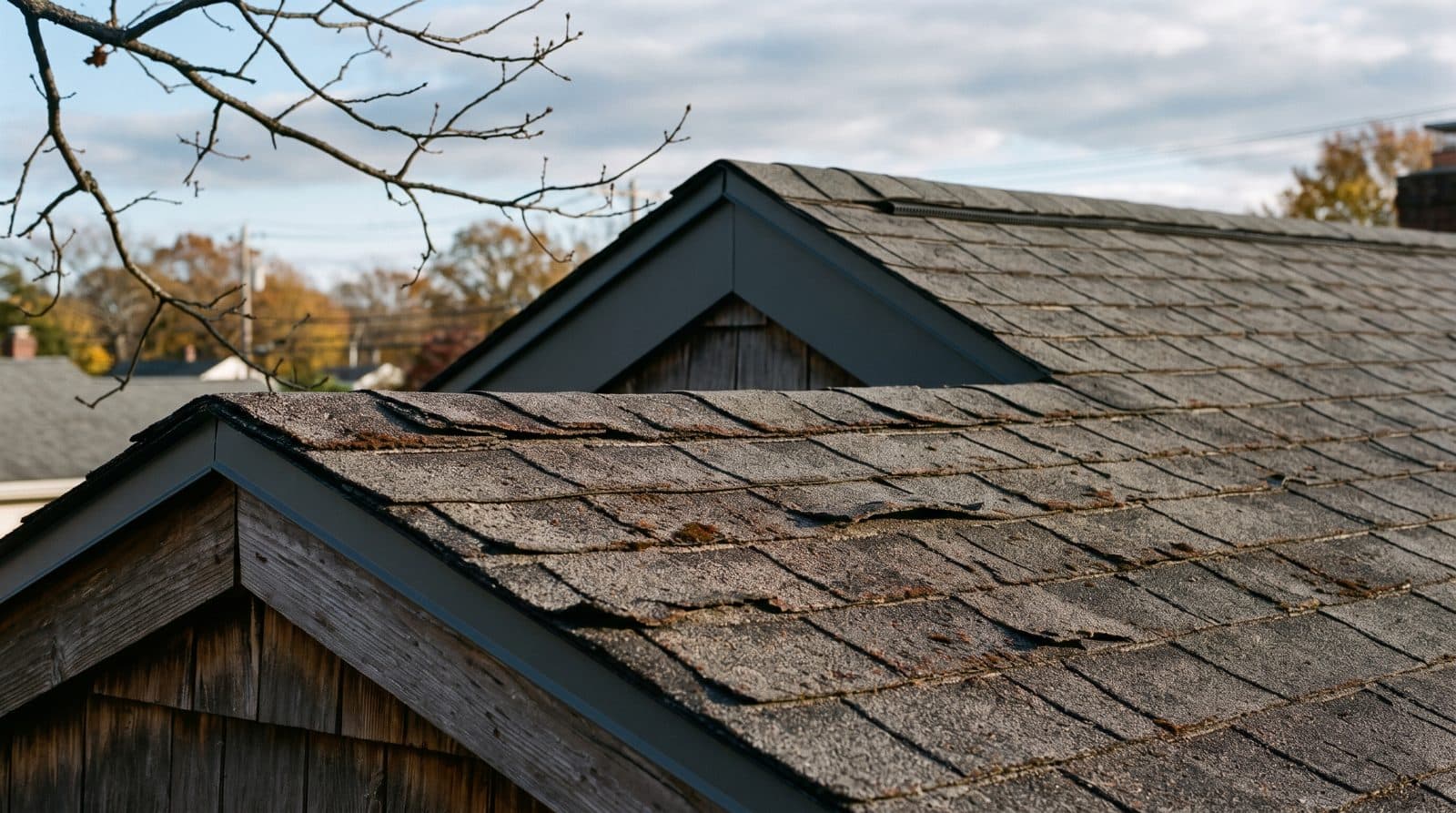
A useful report is not a one-line verdict. Ask for the installed age if it can be established, the shingle type, and photographs of the field, the valleys, the penetrations and the edges. Ask specifically about the flashing at every wall and chimney, the condition of the drip edge, whether there is ice and water shield at the eaves and valleys, and what the ventilation looks like, because a roof cooking from underneath does not make it to its printed warranty.
Then ask for the number in a form you can plan against: a range in years, what would shorten it, and what the roof needs now versus later. A good answer sounds like three to five years with the valleys watched, not like it looks fine.
Most roofers in this area will do this as part of quoting the work. We do it that way, and if the honest answer is that you have six more seasons out of it, that is what the report says. There is no version of this business where talking a homeowner into an early roof pays off twice.
What to do when the number comes back short
If the answer is three years or less, you are planning a replacement rather than reacting to one, and that is a much better position. You can pick the season. The months that actually work for a shore roof are not the months everybody calls. You can get quotes without a tarp on the house. You can also deal with the carrier knowing exactly what you are telling them.
Eight or ten years and the move is different. Write the date down, fix the small things now, and leave it alone. A roof with a sound deck and good flashing is not improved by anxiety.
If the answer is that the deck is the problem, nothing on the surface matters until that is settled, and any quote that does not mention it is a quote for the wrong job. Our note on repairing versus replacing goes through where that line sits.
Call or text us if you want a written assessment on a roof in Ocean or Monmouth County. We will tell you the number we would plan against, in writing, and it goes to you and nobody else.
Frequently Asked Questions
Will my insurance company find out if I have my roof inspected?
Not from the inspection itself. A roofer you hire works for you: the written assessment goes to you and stays in your file unless you choose to send it. What reaches the carrier is what you file or report. That is the whole reason to get your own number first, before any conversation with the insurer.
What should a written roof condition assessment include?
Installed age where it can be established, shingle type, and photographs of the field, the valleys, the penetrations and the edges. It should name the condition of the flashing at every wall and chimney, the drip edge, whether there is ice and water shield at the eaves and valleys, and what the ventilation is doing. Then a remaining life stated as a range in years, with what would shorten it, and a split between what the roof needs now and what can wait.
Does black streaking mean my roof is near the end?
No. Black streaking on a Jersey Shore roof is algae. It is cosmetic and it tells you nothing about remaining life. Granule loss at the downspouts, curling on the sun-facing slope, nail pops and any sag between rafters are the signals that actually matter.