Soffit and Fascia Rot on Ocean County Homes: Why the Trim Goes First at the Shore, What It Actually Costs to Fix, and Why Replacing the Roof Without It Is the Mistake That Costs You Twice
Almost every Ocean County roof we tear off has rotten soffit or fascia somewhere along the perimeter, and almost every homeowner is surprised by the line item. The trim that runs along the eaves and the rake is the part of the house that the salt air, the wind-driven rain, and the gutter overflow attack first, and the rot is almost always invisible from the ground. Here is why soffit and fascia goes early on a Jersey Shore home, the warning signs from the yard, what replacement actually costs in Forked River, Lacey, Toms River, and the LBI corridor, and why doing it without the roof is a tear-out you will pay for twice.
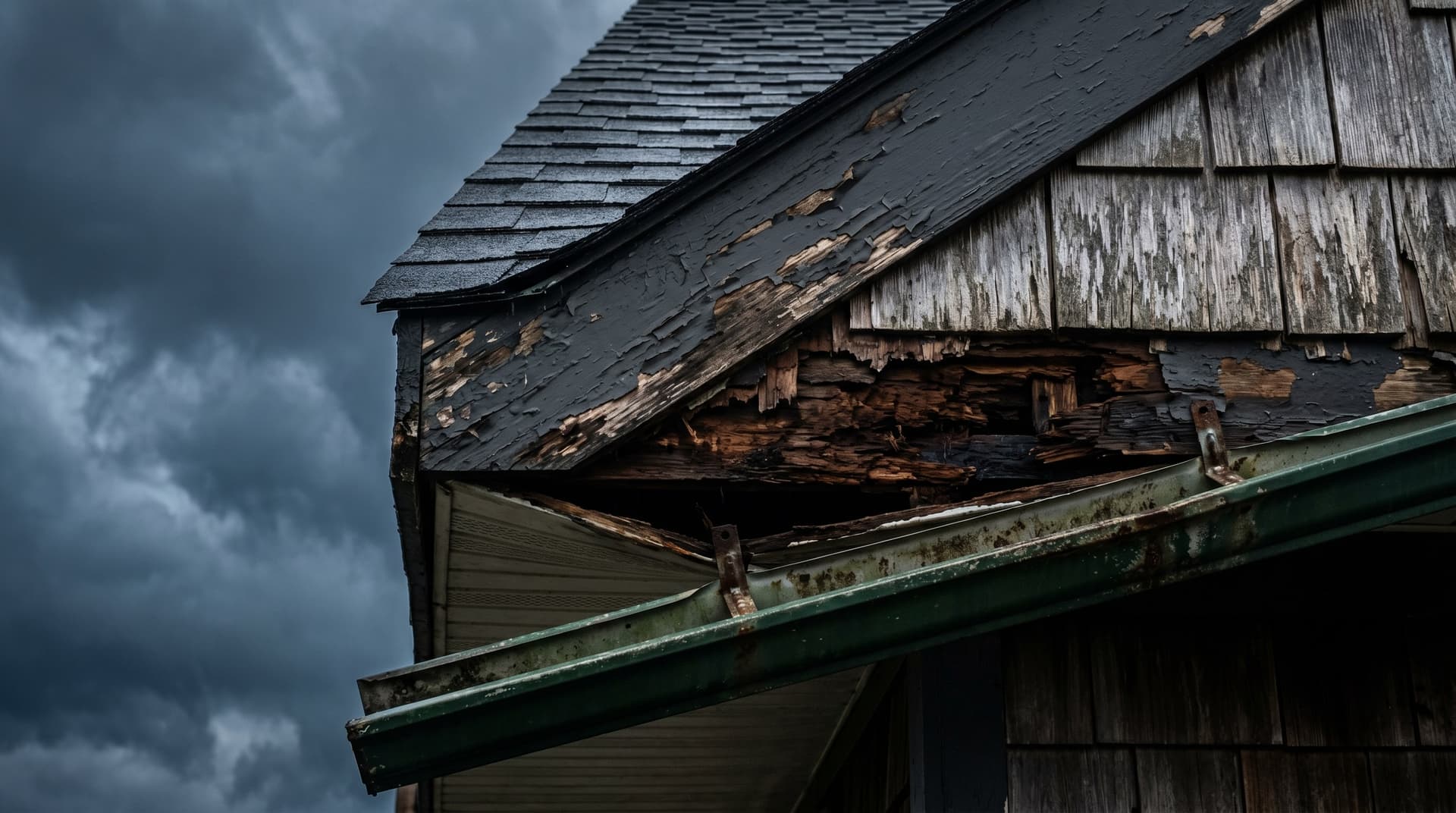
Almost every roof we tear off in Ocean County has some level of soffit or fascia rot at the perimeter, and almost every homeowner is surprised by the line item on the estimate. The trim that runs along the eaves and the rake of the house is the part most homeowners never think about until they see it pulled off, and it is the part that takes the worst of the shore wear long before the roof itself shows it. Salt air, wind-driven rain, gutter overflow, and the ventilation cycle that pulls warm, moist attic air out under the eaves all attack the soffit and the fascia from both sides at once. By the time a homeowner notices it from the yard, the wood underneath is usually past saving.
Replacing soffit and fascia is not the most expensive job on a shore home, but it is one of the most-missed and most-mispriced, and it is the line item that turns a clean roof estimate into a real number on a coastal home that has been sitting through 30 winters of nor'easters. Here is what soffit and fascia actually do, why they fail first at the shore, what the replacement runs in 2026 across Forked River, Lacey, Bayville, Barnegat, Toms River, Brick, Manahawkin, and out on the LBI corridor, and the reason doing this work after a new roof goes on is the mistake that costs you twice.
What the Soffit and Fascia Actually Do
Quick anatomy. The fascia is the vertical board that runs along the front edge of the roof — the trim board you can see from the street, the one the gutter screws into. The soffit is the horizontal panel that closes off the underside of the roof overhang, between the fascia and the wall of the house. Together they finish the eave, hide the rafter tails, and most importantly, they hold the gutter and ventilate the attic.
Three jobs at once. Aesthetic. Structural support for the gutter. And — the one most homeowners do not realize — the soffit is the intake side of the attic ventilation system that keeps the roof working. Air gets pulled in through the perforated soffit panels, runs up through the attic, and exhausts out the ridge vent. Block the soffit ventilation and the attic stops breathing, which is the failure that leads to the moisture buildup, the ice damming, and the premature shingle aging we covered in our piece on roof ventilation on older Ocean County ranches. The soffit is not just trim. It is part of how the roof stays alive.
When either one rots, all three of those jobs are compromised. The trim looks bad. The gutter loses its mounting. And the ventilation either short-circuits or stops entirely. The same wind-driven water that rots fascia rots window sills, which is why we so often end up talking about window inserts vs full-frame replacement on the same house.
Why Shore Homes Lose This Trim First
Soffit and fascia rot is not an "old house" problem at the shore. It is a coastal problem. Five things stack up on the eaves of an Ocean County home that an inland home never sees at the same intensity.
- Salt air, year-round. Anything within roughly five miles of the Atlantic gets a continuous load of salt aerosol that holds moisture against the wood. The fascia, exposed on the windward side of the house, gets the worst of it. Paint loses its bond faster, sealant joints fail faster, and the wood absorbs more moisture than the same wood would on a Pinelands ranch ten miles inland.
- Wind-driven rain on the eaves. Nor'easters and the occasional hurricane drive rain horizontally at the front of the fascia and up under the eaves. Water that would never reach the soffit on an inland home gets pushed into every gap, every seam, and every joint between the fascia and the gutter.
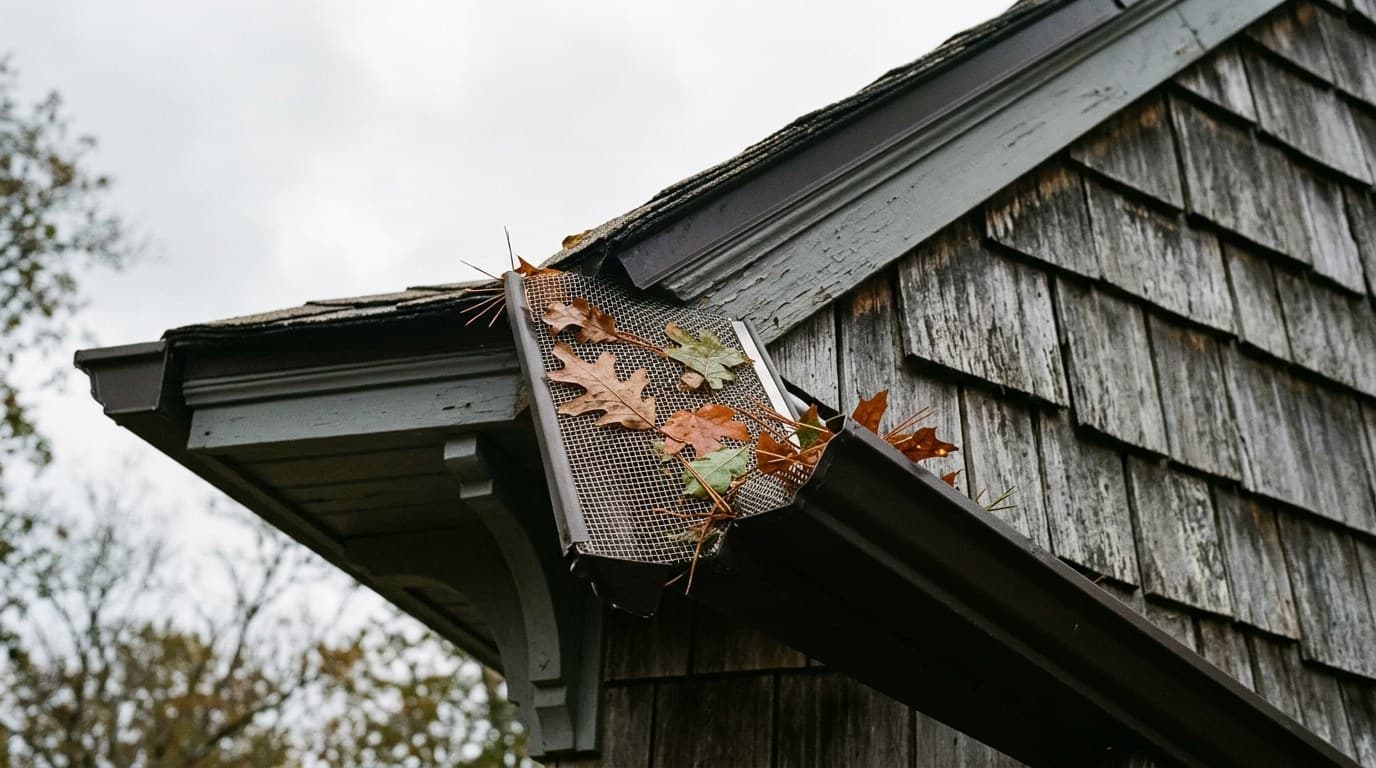
- Gutter overflow. A clogged gutter in a shore rainstorm dumps water straight over the front of the fascia and down behind it. Pine needles, salt-air algae growth in the gutter, and the typical Ocean County leaf load make gutter overflow more common than most owners realize. Every overflow event soaks the back of the fascia and the leading edge of the soffit, which is exactly why we size downspouts for shore rainfall on a new install (see what gutter installation costs in NJ and why downspout count drives it).
- The attic ventilation cycle. Warm, humid attic air gets pulled out the soffit vents in winter and meets cold soffit material from the outside. The dew point lands right at the soffit boards, and over years of cycles the back side of the soffit wets and dries on a daily basis. Untreated wood lining a poorly insulated soffit loses to that cycle.
- Freeze-thaw on the wet trim. Anything that has absorbed moisture and is exposed to a coastal winter freezes, expands, and works the joints open. Every freeze-thaw cycle opens the door for more water the next time. By the time the house is 20 years out from its last paint, the fascia is past saving on the windward elevation.
The combination is why shore trim has a working life of roughly 20 to 30 years on a well-maintained home, and as little as 15 years on a home that has gone too long between paint or that has had gutters running clogged for a few seasons. That is shorter than the working life of the shingles above it, and that mismatch is why the trim almost always needs to come off when the roof does.
The Warning Signs From the Yard
Most soffit and fascia rot is invisible from ten feet away. The paint can look fine, the gutter can still be holding water, and the soffit panels can look intact. Here are the signs we look for from the ground that mean the wood underneath is gone.
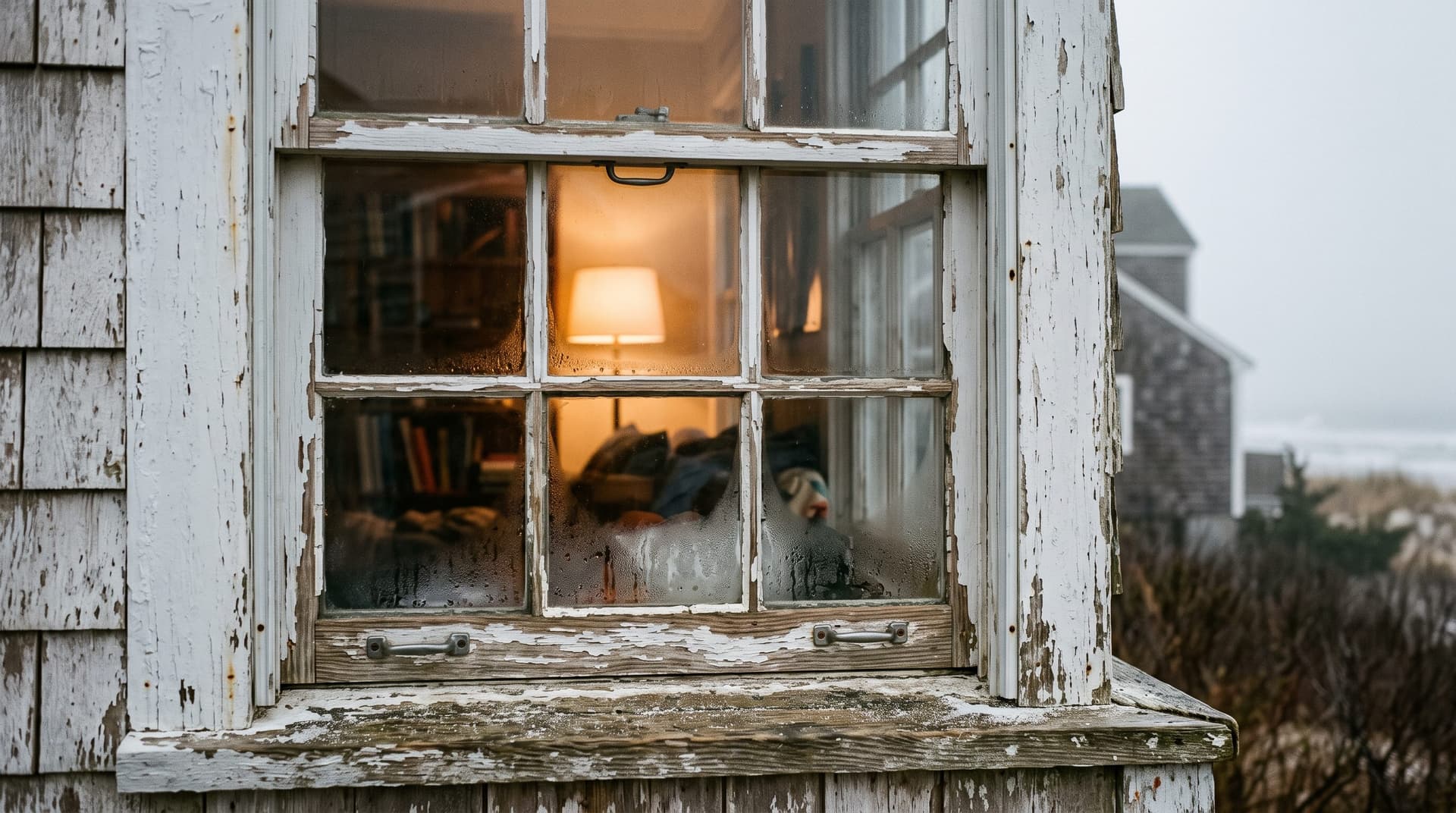
- Paint that flakes or bubbles on the fascia. Paint loses bond on wet wood. A fascia board that is shedding paint where it touches the gutter, or where the soffit meets it at the corner, is wet underneath.
- Visible dark staining or "tea staining" down the fascia. Stains running down from the gutter line are water that overtopped or leaked from the gutter and is soaking the front of the fascia. The stain on the outside is the surface signal of moisture inside.
- Soffit panels that are buckling, bowing, or pulling away at the edges. Vented vinyl or aluminum soffit panels sit on a wood substrate. When the wood behind them rots, the panels lose their mounting and start to sag or pop loose from the J-channel.
- Gutters that are pulling away from the house or running out of pitch. The gutter is screwed into the fascia. When the fascia rots, the screws lose their grip, and the gutter starts to droop, pull forward at the seams, or run out of pitch toward the downspout.
- Bees, wasps, or carpenter ants under the eaves. Carpenter ants in particular look for soft, wet wood. A nest under the soffit is a strong signal that the substrate behind the soffit is already rotting.
- Stains on the interior ceiling near the exterior wall. Water that gets past the fascia and runs down the back of the soffit can show up as a stain on the ceiling drywall along the perimeter of an upstairs room. By the time it shows on the inside, the rot outside has been working for at least one season.
If you can see any of these from the yard, the eave is already in late-stage failure. The full extent only comes into view when the gutter and the soffit panels come off.
What the Repair Actually Looks Like
"Replace the soffit and fascia" sounds like one job and is usually three or four, depending on how far the rot has spread.
- Gutter removal. The gutter has to come off before any fascia work happens. On a home that needs new gutters anyway, this is the moment to do it together. We covered the difference between seamless and sectional gutters in our piece on seamless versus sectional gutters in NJ, and the sizing question for the shore in that same guide.
- Fascia replacement. The rotted fascia boards come off and get replaced. On a quality job at the shore, the replacement is either a primed and painted PVC or composite trim board (Azek and similar), which does not rot the way wood does, or a kiln-dried, primed-on-all-six-sides cedar or pine board with stainless or hot-dipped galvanized fasteners. Stock big-box pine fascia, installed unpainted and fastened with electroplated screws, is the version that fails in five years instead of thirty.
- Soffit replacement. The soffit panels come off and the substrate gets evaluated. If the soffit framing (the lookouts and the soffit ladder) is sound, new vented vinyl or aluminum soffit panels go back over it. If the framing is rotten, that has to be rebuilt first, and that turns a half-day repair into a one-and-a-half-day repair.
- Drip edge and starter detail at the roof edge. This is the piece that gets missed by a trim crew that does not also do roofing. The drip edge, the ice-and-water shield, and the starter strip all overlap the top of the fascia. If those are not detailed correctly when the trim goes back on, water gets behind the new fascia the first time it rains.
- New gutters and downspouts. Reinstalling 20-year-old gutters on a fresh fascia is not a real fix. The gutter mounting hardware needs to be new, and on most homes the gutter itself does too.
Done correctly, the whole perimeter of the house comes apart, gets rebuilt, and goes back on as a system. Done incorrectly, the new trim hides the same problems that ate the old trim, and the failure comes back inside ten years.
What It Actually Costs in Ocean County in 2026
Honest ranges. Numbers move with the house, the eave configuration, and whether the soffit framing is sound underneath. No "starting at" games. These are real installed ranges for a typical Ocean County home in 2026.
- Fascia replacement, painted PVC or composite, full perimeter of a typical ranch: $2,400 to $4,200, including removal, new fascia, painting, and reattaching the existing gutter where the gutter is still serviceable.
- Soffit replacement, vented aluminum or vinyl panels, full perimeter of a typical ranch: $1,800 to $3,400, including removal, substrate inspection, new soffit, and J-channel detail.
- Full perimeter, soffit + fascia + new seamless gutters and downspouts: $5,500 to $9,500 on a single-story ranch with about 120 linear feet of eave. Add another $1,500 to $3,500 for a two-story home with more linear footage and more access cost.
- Rotted soffit framing rebuild (lookouts, soffit ladder, or rafter tail replacement): add $600 to $2,000 per side where it is needed. This is the line item that swings the most based on what we find when the soffit comes down.
- Drip edge, ice-and-water shield, and starter strip rework at the eave during a re-roof: already part of a proper full-roof replacement on a GAF system, but the trim work pairs cleanly with it.
For context, the total roof replacement in any of the three GAF lines we covered in our GAF shingle comparison runs in the same neighborhood as a full soffit-fascia-gutter perimeter rebuild on a typical shore home. The trim is not the small line item homeowners assume it is. It is a real piece of the envelope.
Why You Do This With the Roof, Not After It
This is the part homeowners regret on a regular basis. A new roof goes on, the homeowner notices the soffit and fascia look tired against the bright new shingles, and they call us six months later to replace the trim.
The problem is that the trim work overlaps the roof edge. The drip edge, the ice-and-water shield, the starter course, and the new roofing system all tie into the top of the fascia. Replacing the fascia after the roof is on means lifting the bottom course of shingles, peeling back the drip edge, working in the trim, then resetting the drip edge and re-sealing the bottom of the roof. It is a longer, more careful job that costs more than doing the trim during the re-roof, and there is a real risk of compromising the edge detail of the new roof in the process.
The clean order on a shore home is: tear off the old roof, remove the gutters, replace any rotten fascia and soffit, set new drip edge and ice-and-water shield with the trim already in place, then run the new GAF system over the top of all of it, then hang new gutters off the new fascia. That sequence costs the least, looks the best, and gives the longest service life. Out of sequence, it costs more and looks worse.
The same logic applies the other direction. Replacing soffit and fascia before a roof is due is fine, but anything tied into the roof edge has to be re-detailed when the roof comes off later, and that detail rework is not free.
If the roof is in the next 5 years, soffit and fascia come with it. If the roof is fine and the trim is the problem, the trim can go independently, with attention to how it integrates with the existing roof edge.
What We Do on Ocean County Homes
On every roof we replace, we evaluate the soffit and fascia as part of the same job, not as an afterthought. We pull the gutters, we inspect the substrate behind the soffit panels, we replace any rotten wood with PVC or composite trim on the elevations that face the prevailing wind and wood on the elevations that do not, we re-detail the drip edge and ice-and-water shield across the new fascia, we run the full GAF roof system from the eave up, and we hang new gutters off solid wood that will hold the screws for another 25 years. The homeowner gets one trip, one bill, and a roof-and-eave system that is right for the shore, not a new roof sitting on tired trim that will need its own truck six months later.
If your fascia is shedding paint, your gutters are pulling away, or your soffit is sagging at the eave on any home from Forked River out to LBI, send a couple of photos from the yard and we will tell you whether the trim is the whole job or whether the roof above it is part of the conversation. Call (732) 703-7808 or use the request form and we will come out and look.