Roof Final Walkthrough: What to Check Before You Pay
Walk the job in low afternoon light before the balance leaves your hands. Six things to look at from the ground, and what to do if you have already paid.
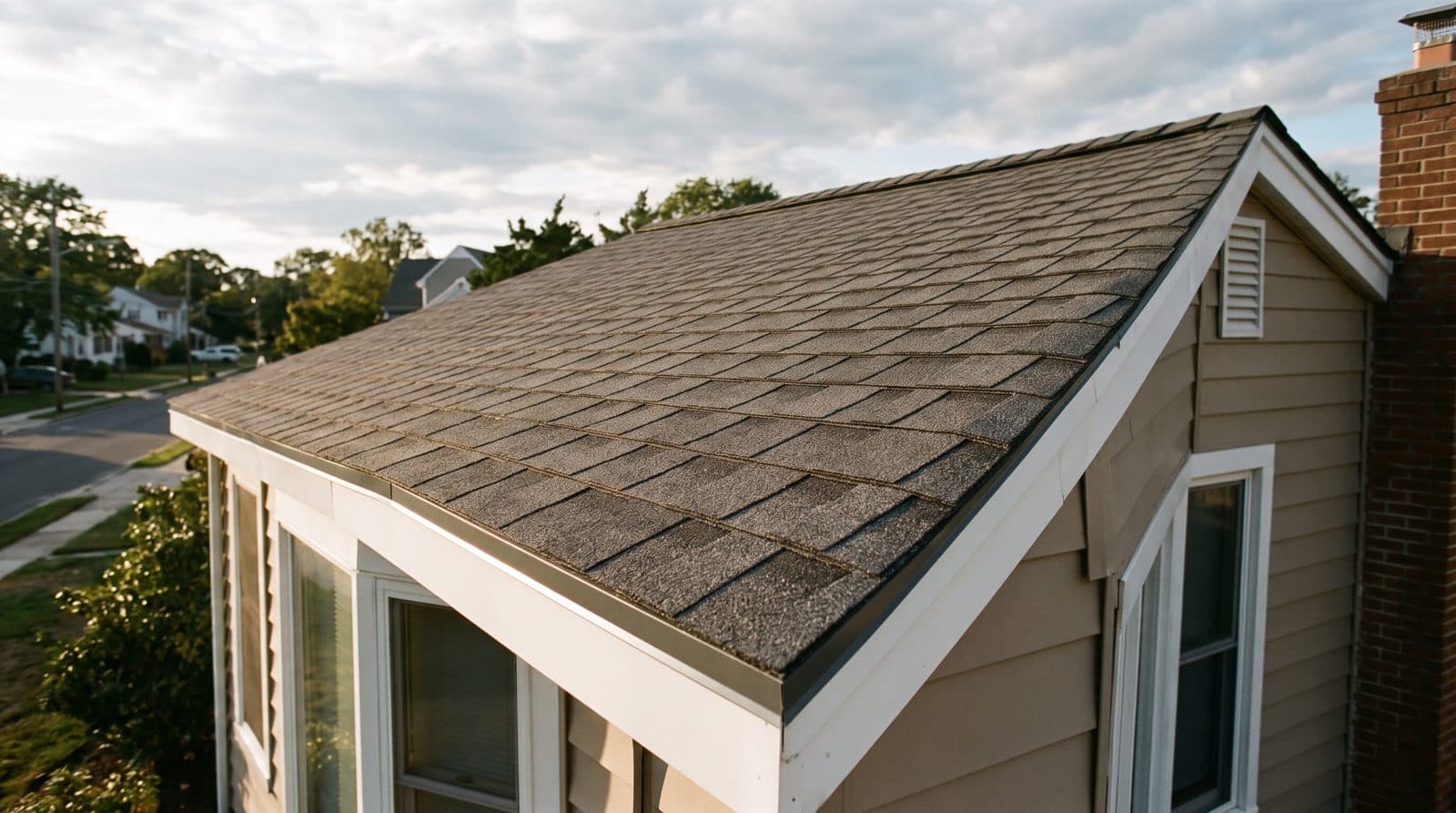
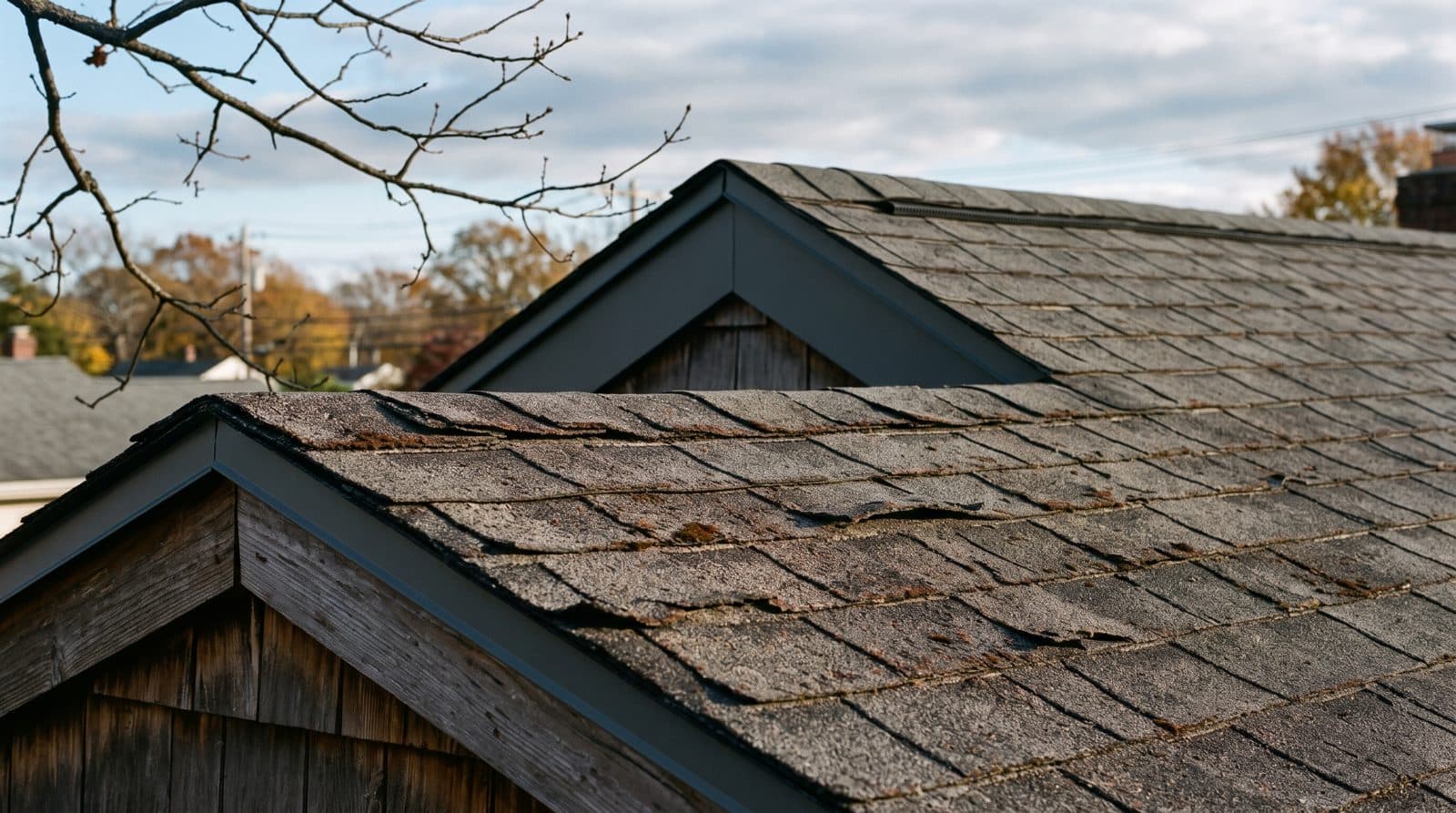
Walk the job before the balance leaves your hands, and walk it in low light. Late afternoon sun coming in at a shallow angle across the slope shows a crooked course, a lifted tab and a bad cut the way flat midday light never will. That hour is the last point at which the job is still open business. Once the final payment clears you are asking for a favour instead of asking for the job you paid for. Six things are worth your attention, and none of them need you on a ladder.
Updated November 2026.
We run roofs all over Ocean and Monmouth County, and the call we get most often in the week after a tear-off is some version of the same question. Something looks off, the money is already gone, and the homeowner is trying to work out whether it is a real defect or just what a new roof looks like. A homeowner on one of the roofing forums last month did his own final inspection, signed off, and only found the problem weeks later. His words were that the light was bad. He was right, and that is the part nobody tells you.
1. Stand at the corner and sight down each course
Go to the far corner of the yard, get low, and look along the plane of the roof rather than at it. Shingle courses should run straight and parallel to the eave the whole way across. A wave, a course that drifts, or a seam line that steps where two sections meet is the thing low light exposes. From directly below you will never see it.
Some variation is normal on an older deck that has settled, and a roof over a 1960s ranch in Bayville or Forked River will rarely be laser straight. What we are looking for is a run that wanders over 20 or 30 feet, not a sixteenth of an inch here and there.
2. Check the drip edge and the rake, not just the field
Metal drip edge belongs along the eaves and up the rakes, under the underlayment at the eave and over it on the rake. We check this one first on every job we hand back. From the ground you can see whether it is there, whether it runs the full length, and whether the corners are mitred or just overlapped and left. Missing drip edge is one of the cheapest things to skip and one of the most common reasons a fascia rots out five years later. It is also required on a new roof in New Jersey, so if it is absent, the answer is not a discount.
3. Look at every place the roof meets something else
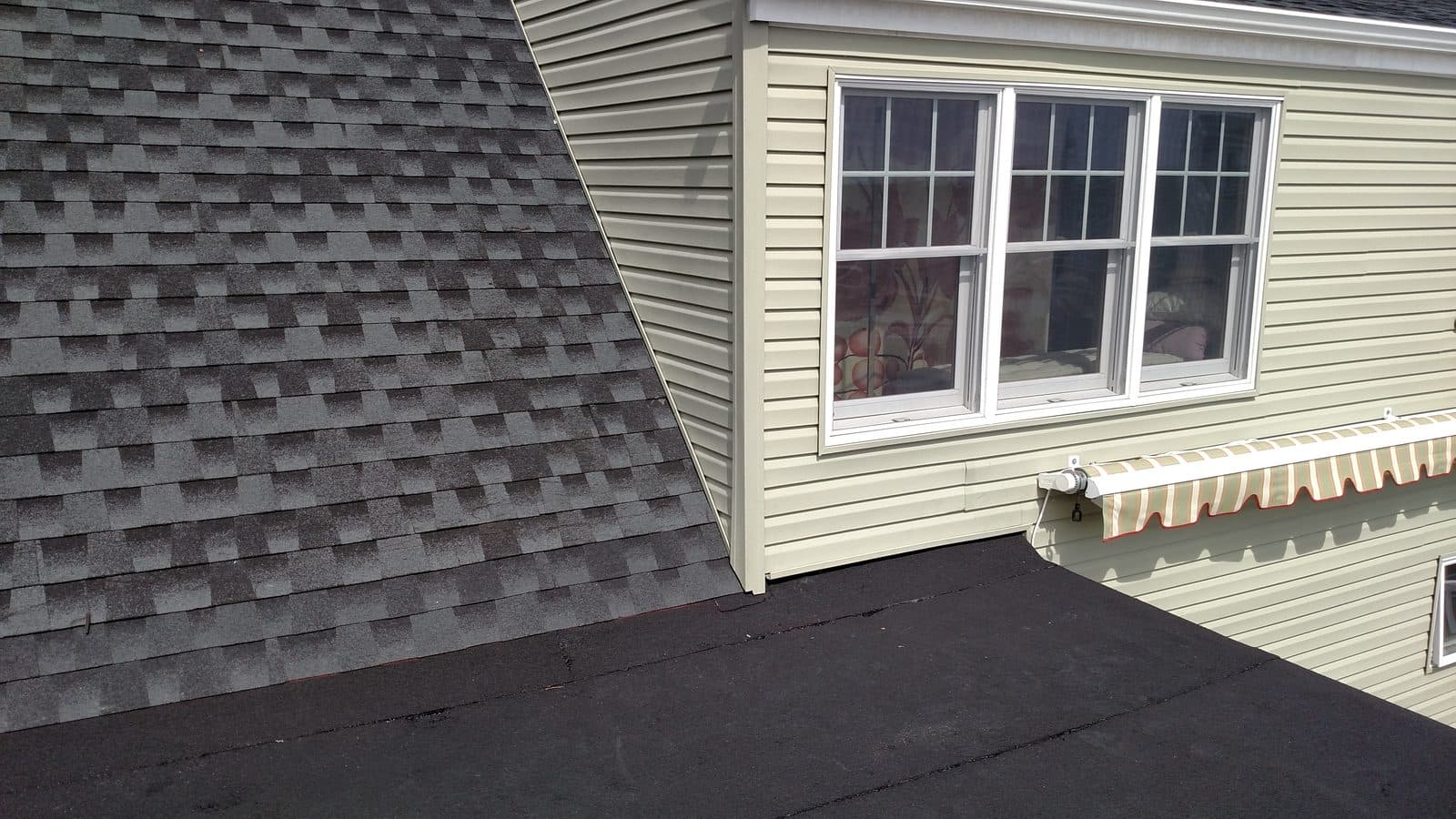
Flashing is where roofs actually fail. Walls, chimneys, skylights, dormers, pipe boots, and the spot where a lower roof dies into a sidewall. The question to ask, out loud, is whether the flashing is new. Reusing old step flashing is a real practice and it is sometimes defensible on a tight budget, but it should have been a conversation before the job, not a discovery after it. New flashing looks new. Bent, dull, caulk-smeared metal does not.
Watch for anything solved with a heavy bead of sealant. Sealant is a finishing detail. When it is doing structural work you will find out in the first nor'easter. We wrote up the sidewall junction separately because it causes so much trouble on shore homes.
4. Confirm the ventilation actually got finished
If a ridge vent went on, the ridge should be cut open underneath it. That sounds obvious. It is also one of the most frequently botched steps in the trade, because the vent gets installed over an uncut ridge and looks completely correct from the ground. Ask whether the ridge was cut and how wide the slot is, because the vent only moves air through the opening underneath it. While you are at it, ask what happened to the old static vents or turbines, because leaving them open alongside a new ridge vent short-circuits the airflow and the new system does less than the old one did.
5. The nail sweep, and when it happens
A tear-off and re-roof on an average 1,800 square foot ranch puts somewhere in the region of 4,000 nails into the deck, at 4 per shingle in the field and 6 per shingle where the wind exposure calls for it along this coast. Plenty of the old ones come off the roof with the debris. A magnetic sweep should cover the drip line, the lawn, the beds, the driveway and the road edge, and it should happen the same day the crew finishes, not the next time somebody is passing. Ask who is doing it and when. We send somebody back over the drive and the beds a second time, and we would still tell you to do your own pass a few days later with the mower, slowly. Anyone who has had a tyre go flat in their own driveway after a roof knows why this one is on the list.
6. Get the punch list written down before you pay
If something is wrong, write it down, date it, and get it acknowledged in writing before the balance is paid. That is how we would want a customer to handle it with us. A text message counts. Photographs count more. In New Jersey a home improvement contract and any change to it are supposed to be in writing, so a verbal promise to come back and fix something is worth less than a one-line text saying the same thing.
And if you have already paid and then found the problem, you are not out of options. The workmanship warranty is separate from the manufacturer's material warranty, and a reputable contractor honours it because the alternative is a review that follows them around the county forever. Call, be specific, send photographs, and put the request in writing. For what separates a sound installation from a rushed one, this walks through it in more detail, and if you are still choosing who does the work, start here.
Frequently Asked Questions
What time of day should I do the walkthrough?
Late afternoon, when the sun is low and coming in at a shallow angle across the slope. That light rakes the surface and shows a wandering course line, a lifted tab or a bad cut. Flat midday sun hides all three. If the only time available is midday, go back out later and look again before you pay.
Is the flashing supposed to be new?
Usually, yes. New flashing looks new. Reusing old step flashing at a wall or chimney happens and it is sometimes a reasonable call on a tight budget, but it belongs in the conversation before the job rather than as a discovery afterwards. Anything where a heavy bead of sealant is doing the work of metal is worth asking about.
Who sweeps for nails, and when?
The crew that did the tear-off, the same day they finish, over the drip line, lawn, beds, driveway and road edge with a magnetic sweeper. Ask who and when before they leave. A re-roof on an average ranch puts thousands of fasteners in play, so a second pass a few days later with your own mower is still worth doing.
What if I find something after I have already paid?
You still have the workmanship warranty, which is separate from the manufacturer's material warranty on the shingles. Call, be specific about what you are seeing and where, send photographs, and follow the call with the same thing in writing so there is a dated record. A contractor who intends to stay in business in Ocean County honours it.
Does a change order have to be in writing?
In New Jersey a home improvement contract and any change to it are meant to be in writing and signed, so treat a verbal promise as the weakest version of an agreement. A text message is better than a handshake and a photograph attached to it is better still. Do not rely on anyone's memory of what was said on a roof.