Roof Ventilation on Older Ocean County Ranches: Why Your Shingles Are Failing Early
If your ranch in Forked River, Bayville, or Manahawkin is on its second roof in 18 years, ventilation is probably why. Here is what we look for when we get on a roof, what the right system actually costs, and the red flag most homeowners miss before signing a new roof contract.
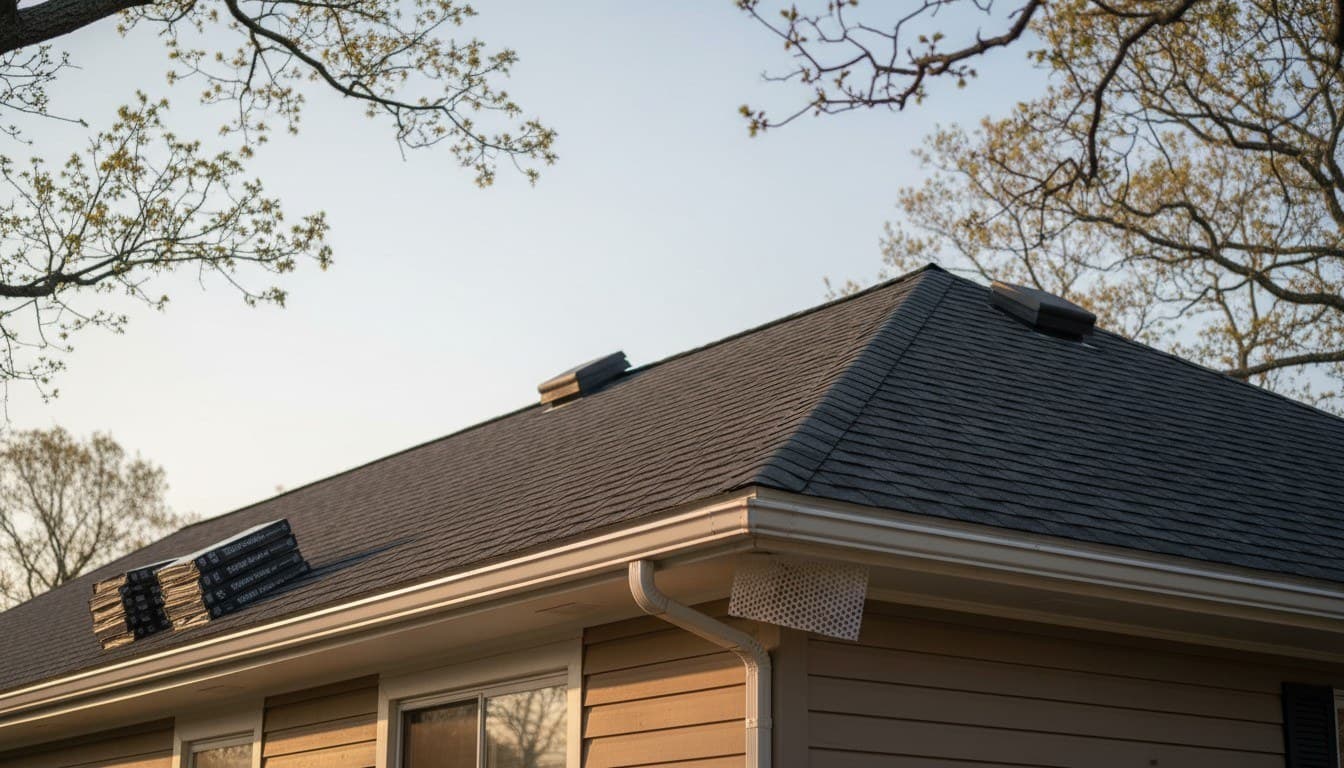
About a third of the roof replacements we quote in southern Ocean County are second roofs on the same house inside 20 years. The homeowner thinks the first roof was bad luck or a bad contractor. Sometimes it was. More often, the shingles failed early because the attic underneath was cooking them from below, and nobody fixed the actual problem when the new roof went on. The result is a third roof scheduled for 2032 and another five-figure check.
Roof ventilation is the part of a roof system most homeowners do not see and most contractors do not explain. On older ranches in Forked River, Bayville, Lacey, Barnegat, Manahawkin, Toms River, Brick, and the LBI corridor, the original ventilation was undersized when the house was built in the 1960s, 1970s, or 1980s, and rarely got corrected on later re-roofs. This is the post we wish every homeowner read before signing the next roof contract. The point is to know what to ask for and what to walk away from.
Why Roof Ventilation Matters More Than Most People Think
A roof is not just the shingles you can see. It is a system of layers that includes the attic space underneath. The air in that attic has to move continuously, all year, or three things go wrong:
Summer. Sun beats on the dark shingles. The shingle surface hits 150 to 170 degrees on a July afternoon in Ocean County. Without ventilation, the heat radiates into the attic and the attic climbs to 130 degrees. That heat cooks the shingles from the underside, breaking down the asphalt binder. Shingles that should last 30 years start losing granules at year 12, curl at the edges by year 15, and need replacement by year 18. A properly vented attic stays roughly 10 to 15 degrees cooler. Same shingles, 25 to 30-year actual lifespan instead of 18.
Winter. Warm moist air rises out of the heated living space into the attic. In a vented attic, that air keeps moving and exits at the ridge. In an unvented attic, the moist air hits the cold roof deck, condenses on the plywood, and runs down. We have opened up enough Ocean County ranch attics in February to know this is the rule, not the exception. The plywood rots from the inside. The insulation gets wet and stops insulating. Mold grows in the cavity. None of this is visible until the next roof tear-off when the decking has to be replaced sheet by sheet.
Shoulder seasons. Ice dams in winter, condensation in spring, and the freeze-thaw cycle every fall and spring put stress on the entire roof assembly. Poor ventilation amplifies all of it. Ice dams in particular are a ventilation problem before they are an insulation problem. We have written about ice dam prevention in a separate post; the short version is that warm attic air melting snow at the ridge while the eaves stay frozen creates the dam. Fix the ventilation, fix the dam.
How the Code Actually Reads on Roof Ventilation
The New Jersey residential building code follows the International Residential Code (IRC) on attic ventilation. The headline rule is the 1/150 ratio: net free vent area equal to 1/150 of the attic floor area, or 1/300 if you have a balanced ridge-and-soffit system and a vapor retarder.
Translated to a typical 1,400 square foot Ocean County ranch with a vented attic: you need roughly 4.7 square feet of net free vent area at the 1/300 ratio, split roughly 50/50 between intake (low, at the soffit) and exhaust (high, at the ridge or upper roof). The "net free area" number is the open area for air to actually pass through, not the size of the vent housing. A 4-foot ridge vent rated at 18 square inches of net free area per linear foot gives you 72 square inches of exhaust over that 4-foot run. The math has to add up across the whole roof.
Most older Ocean County ranches we inspect fail this math by half or more. Original ventilation on a 1972 ranch is typically a pair of gable end vents and maybe a few rusty round soffit cans. There is no ridge vent. There is no proper intake at the soffit. The two gable vents short-circuit each other rather than pulling air across the whole attic. The net free area is maybe 1/600 or 1/800, not the 1/300 the code now wants. Every shingle on that roof is being baked.
The Five Ventilation Problems We See Most on Ocean County Ranches
1. No ridge vent at all
The single most common deficiency. The original 1972 build did not have ridge venting because it was not standard yet. The 1995 re-roof did not add it because nobody wanted to pay for the extra step. The current roof shows two gable end vents and a clogged attic fan that has not worked since 2008. Air has nowhere to exit at the high point of the roof. Heat sits at the ridge and bakes the shingles directly above.
2. Soffit vents painted shut, packed with insulation, or never installed
The intake side. Without working soffits, no air can enter the attic regardless of how much exhaust is at the top. We pop ceiling tiles in attics where the previous owner had blown-in insulation packed all the way out to the eave, blocking every soffit vent. Result: dead air, baked shingles, rotted decking at the eave. Even when soffit vents exist, four out of five times they have been painted closed on the most recent siding job. The vent looks fine from the ground. From the attic, it is sealed.
3. Mixed exhaust types
Ridge vent on the same roof as a powered attic fan or a turbine. Sounds redundant, but in practice the powered fan or turbine pulls air down from the ridge vent (the closest exit) rather than up through the soffits (the design intent). The attic ventilates worse than it would with just the ridge vent alone. We see this on Ocean County homes where someone added a solar attic fan thinking more was better. More was worse.
4. Gable end vents fighting a ridge vent
Same problem, different geometry. When a ridge vent is added but the original gable end vents are left open, the ridge vent draws air from the gable vents on the windward side instead of the soffits. Air bypasses the field of the attic, hot spots persist over the living space, and the shingles in the middle of the roof bake. The fix is to seal the gable vents. Most homeowners do not know this. Most roofers do not mention it.
5. Bath fans or dryer vents dumping into the attic
Common on older Ocean County ranches where bath fans were added later and the installer ran the duct three feet into the attic and stopped. Now the attic is getting moist air from every shower. In winter, that moisture condenses on the cold roof deck and freezes overnight, then melts during the day and drips on the insulation. We have opened up attics where the insulation under a bath fan was saturated black with mold across a 6-foot circle. The fan was the cause; the roof was the symptom.
What a Properly Vented Ranch Roof Actually Looks Like
The standard system on a typical Ocean County ranch replacement, in the order we install it during a full tear-off:
- Continuous soffit ventilation along both eave runs. Either a continuous strip vent integrated into the soffit, or full-perforated vinyl soffit panels with insulation baffles in the attic so the intake stays clear. We measure the net free area against the attic footprint before specifying. On a typical 28-by-50-foot ranch, that is roughly 50 linear feet of vented soffit on each side.
- Insulation baffles at every rafter bay over the eaves. Foam or cardboard channels that hold the insulation off the underside of the deck and keep the soffit-to-ridge air path open. Without baffles, blown-in insulation blocks the intake within a year.
- GAF Cobra ridge vent (or equivalent) along the full length of the ridge. Continuous, full ridge, not the short 4-foot section a cheap install offers. We cut the deck back 1.5 inches each side of the ridge, install Cobra over the slot, and cap with matching ridge shingles. Net free area on a Cobra ridge vent is 18 square inches per linear foot. On a 40-foot ranch ridge, that is 720 square inches of exhaust, paired against 720 square inches of soffit intake. Balanced.
- Sealed gable end vents if the original house had them. Wood or aluminum panels installed inside the gable cavity to take the gable vents out of the air-flow equation. The ridge vent runs the show. The gables become decorative.
- Bath fan and dryer vent ducted through the roof or wall, not the attic. Solid duct from the fan housing to a dedicated roof cap or wall cap with a backdraft damper. We do this work as part of the re-roof because access to the attic from the deck side is rarely cleaner.
- Static or low-profile box vents only where ridge ventilation is not geometrically possible. Some hip-roof ranches have minimal ridge length. In those cases, we supplement with low-profile static vents sized to make up the net free area deficit.
This is the system that comes standard on every GAF Timberline HDZ replacement we install with the Golden Pledge or System Plus warranties. GAF requires balanced ventilation as a condition of those warranties. Most homeowners do not realize that an unbalanced ventilation system can actually void the shingle manufacturer warranty on a brand-new roof.
What This Costs On a Typical Re-Roof
The honest numbers for adding proper ventilation as part of a full re-roof on a typical Ocean County ranch (1,200 to 1,800 square foot roof footprint):
- Cobra ridge vent (or equivalent), full length: $450 to $900 installed, including the slot cut and matching ridge cap shingles. Negligible on a $14,000 to $18,000 re-roof.
- Continuous soffit vent retrofit or replacement: $800 to $1,800 depending on whether the soffit needs to come down entirely. If the existing soffit is plywood and painted shut, replacement with vented vinyl is the right call.
- Insulation baffles, full perimeter: $300 to $600 depending on rafter count.
- Sealing gable end vents: $200 to $400 if access is reasonable.
- Bath fan or dryer vent termination through the roof or wall: $250 to $500 per fixture, including the cap and flashing.
- Static or box vents where ridge venting is not possible: $80 to $150 each installed.
Total ventilation upgrade as part of a tear-off and re-roof: typically $1,800 to $3,500 on a ranch this size. That is the cost of getting another 10 years out of the shingles you are paying $15,000 for. The math is straightforward. Skipping it to save $2,000 on the install is the reason that roof comes off again at year 18.
What to Ask the Next Roofer Who Quotes Your House
If you are getting quotes for a roof replacement on an older ranch in Ocean or Monmouth County, six questions surface most ventilation gaps before the contract gets signed:
- "What is the net free area of the existing ventilation, and what will it be on the new roof?" A real roofer can answer this with numbers, not vibes. If the answer is "we will use the same vents that are there now," that is the wrong answer.
- "Will you install a continuous ridge vent, and how many linear feet?" Length matters. Cheap installs use 4-foot or 8-foot ridge vent sections. A real install runs the full ridge.
- "What is the intake plan, and have you confirmed the existing soffits are open?" If the contractor does not plan to inspect the soffits from the attic side before quoting, the soffits are not part of the plan.
- "Are you sealing the existing gable end vents?" If a ridge vent is going on, this should be in the scope. If it is not, ask why.
- "Is the bath fan vented through the roof or just into the attic?" A roofer who does not know is a roofer who is not going to fix it.
- "What does the GAF (or Owens Corning, or CertainTeed) warranty require for ventilation, and does your install meet it?" The right answer cites the 1/300 ratio and balanced ventilation, in writing on the contract.
The questions are not gotchas. Any roofer who has been on Ocean County ranches for 10+ years will answer all six without thinking. The contractors who try to redirect, hedge, or change the subject are the ones whose roofs are coming off again in 2042.
When Ventilation Is the Whole Job
Sometimes the roof itself is still in decent shape but the ventilation is failing. The shingles are at year 12, look mostly fine from the ground, and there is no reason to tear off a roof with another decade of life in it. In those cases, ventilation can be retrofitted without a full re-roof:
- Cobra ridge vent retrofit: Cut the ridge slot, install the vent, replace the ridge cap shingles. Roughly $800 to $1,500 on a typical ranch ridge length.
- Soffit vent retrofit: Cut continuous strips into existing plywood soffits and install screened strip vents. $1,000 to $2,200 depending on linear footage.
- Bath fan re-termination: Add a roof cap or wall cap and run solid duct to it. $250 to $500 per fixture.
- Gable vent sealing: $200 to $400.
Total ventilation-only retrofit on a typical Ocean County ranch: $2,500 to $4,500. That is materially cheaper than a re-roof, and it extends the existing roof by 5 to 10 years. The right time to consider this is at year 8 to 12 of a 30-year shingle, before the heat damage becomes irreversible.
Towns Where We See This Problem Most
The ranches built between 1955 and 1985 across southern Ocean County are the highest-frequency ventilation problem in our service area. Forked River and Lacey have entire neighborhoods of 1970s ranches with original soffit cans and no ridge venting. Bayville and Barnegat carry the same housing stock. Manahawkin, Tuckerton, and the Berkeley corridor have the post-war ranches built for shore-area year-round residents and the smaller summer cottages that have since been winterized. Toms River and Brick have ranches and split-levels with mixed ventilation, often with later additions that broke the original air path.
On the Monmouth shoulder, Howell, Wall, and Manasquan have similar stock from the same era, with the same problems. The pattern is the same regardless of town: original construction with undersized ventilation, one or two re-roofs that did not address it, and a current owner staring at shingles that are failing too early.
How Home Pro Handles Ventilation
Every roof we quote includes an attic inspection from the deck side before the price gets put in writing. We measure the existing net free area, photograph the soffit condition, check for bath fan terminations, and document the gable vents. The proposed system gets specified in the contract by component (Cobra ridge vent linear feet, continuous soffit type and linear feet, insulation baffles per bay, gable vent sealing, bath fan termination type) so there is nothing to argue about on install day.
If you are getting roof quotes on a ranch in Forked River, Lacey, Bayville, Barnegat, Manahawkin, Toms River, Brick, Tuckerton, Berkeley, Waretown, Howell, Wall, or Manasquan, get our inspection on your list. We will tell you honestly whether you need a new roof, a ventilation retrofit, or whether you can ride the current shingles another five years. Call us or use the contact form. The inspection is free and takes about 30 minutes.