Fogged, Stuck or Draughty: Which Window Problems Are Worth Fixing
Signs you need new windows: fog between the panes, a sash that won't stay up, a draught at the frame. Usually a seal or install fix, not a dead window.
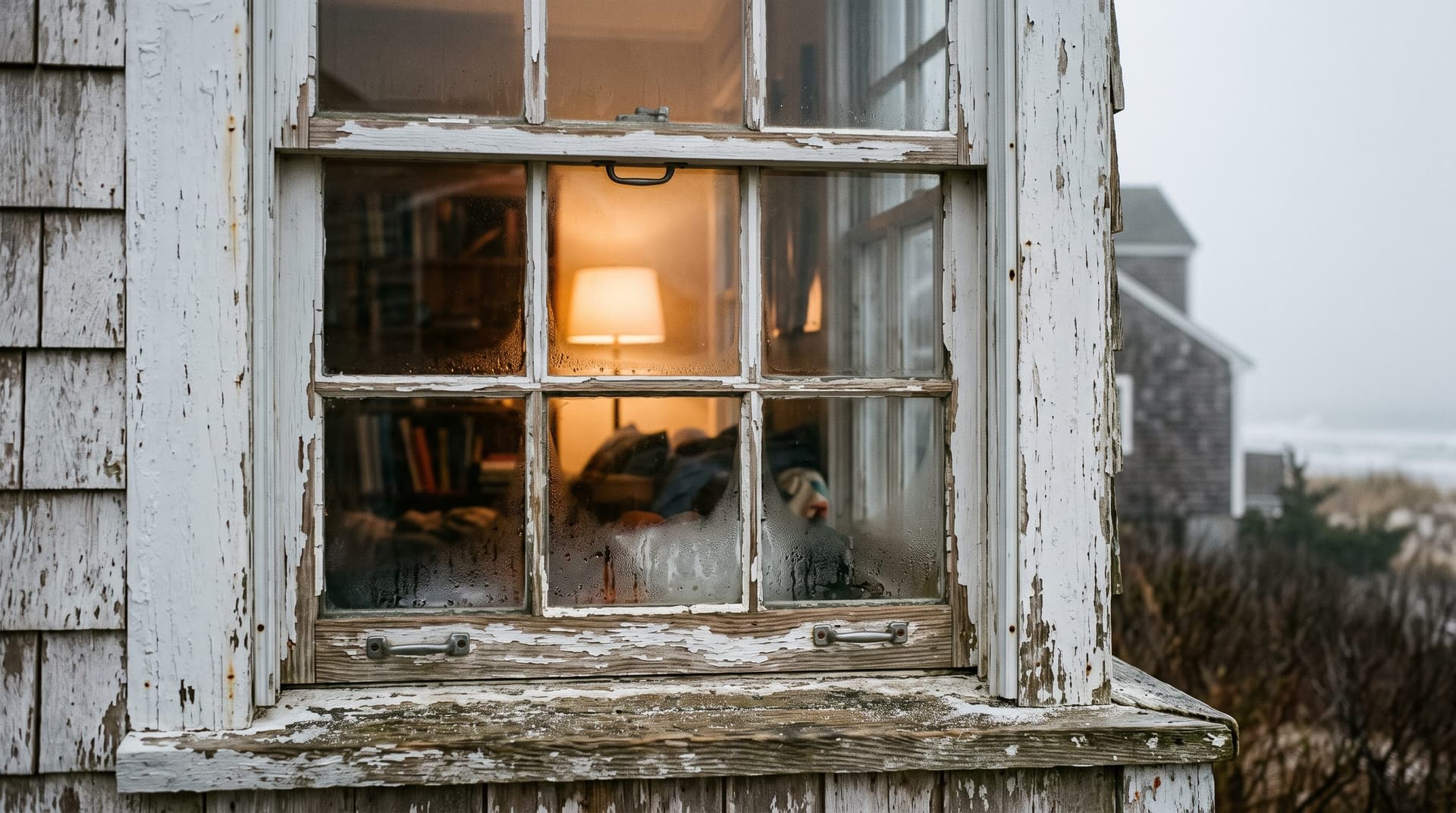
The clearest signs you need new windows are a fog you cannot wipe off sealed between the two panes, a sash that will not stay up on its own, and a draught you feel standing at the frame. But a lot of the windows homeowners call "bad" turn out to have a failed seal, a worn balance, or bad caulk, not a dead window. Fix the cheapest thing that solves the symptom first.
Updated October 2026.
Windows are the job where we talk the most people out of spending money. A whole-house replacement is a real number, and a lot of the time the window driving you crazy needs a twenty-dollar part, a bead of caulk, or a single sealed glass unit, not a truck full of new ones. Here is how to tell a dead window from one that just needs a fix, and keep anyone from selling you the wrong size of job.
Signs You Need New Windows: The Quick Triage First
Match your symptom to the likely cause first, so you walk into any quote knowing what you are looking at.
- Fog or haze sealed between the panes. The glass unit has failed. The rest of the window is usually fine, and glass-only replacement is on the table.
- Draught you feel at the outer trim. Failed caulk or missing air-seal at the wall. A trim-and-seal fix, not a new window.
- Draught at the sash meeting rail. Worn weatherstrip or a warped sash. A part or a repair, sometimes a replacement.
- Sash that will not stay up. A broken balance. A cheap, replaceable cartridge on most windows.
- Soft, spongy wood at the sill. Rot in the frame. This is the one symptom that pushes a window past any repair.
- Cracked frame, racked opening, or a discontinued 25-plus-year window. Now you are into replacement, insert or full-frame depending on the sill.
Condensation Between the Panes Means the Unit, Not the Window
Fog trapped between the two panes of glass, which you cannot wipe off, means the sealed glass unit has failed, not the whole window. A modern window is not one sheet of glass. Each sash holds an insulated glass unit, or IGU: two panes held apart by a spacer bar around the perimeter, the gap between them filled with argon gas, and a desiccant, a drying agent, packed inside that spacer bar to soak up the small amount of moisture sealed in at the factory. A dual bead of sealant holds it together, a primary polyisobutylene layer that keeps the argon in and a secondary silicone or polyurethane layer that keeps the weather out.
When that perimeter seal breaks down, argon leaks out and humid air works in. The desiccant absorbs that moisture for a while, which is why a failing unit sometimes fogs only on cold mornings at first. Once it is saturated, water vapour condenses on the cold inner faces of the glass, and no cleaning touches it because it is on a surface you cannot reach. This is a foggy window seal failure, and the important part is what it does not mean: the frame, the sash, the balances and the lock can all be perfectly good. Only the glass is dead. That is why glass-only replacement, swapping the IGU and keeping everything else, is often the cheapest real fix. On the shore, seals give out sooner because daily heat cycling and salt-laden humidity work the sealant harder than they do inland.
Draughts That Are Actually the Trim, the Caulk, or the Wall
A draught you feel standing near a window is more often a gap at the trim, failed exterior caulk, or an air path through the wall than a fault in the window itself. Before you condemn the unit, find where the air is actually coming from. On a windy day, move a hand or a lit incense stick slowly around the window: first around the sash where the two halves meet, then out at the outer casing where the window frame meets the wall.
Air at the sash meeting rail points at worn weatherstrip or a warped sash, which is a part or a repair. Air at the outer casing points at failed caulk or missing backer rod between the frame and the siding, a trim-and-seal job that costs a fraction of a new window. The third path is the one nobody checks: on older shore homes the rough opening was often stuffed loosely with fibreglass and never air-sealed, so cold air channels through the wall around a window that is otherwise fine, and that only shows itself when the trim comes off. If you are weighing drafty windows repair or replace, this is the fork: a draught at the caulk line is a repair every time, and only one traced to the sash or a failed unit starts the replacement conversation. The same paths that get past bad trim rot the wall behind your siding on a shore house.
Sashes That Will Not Stay Up, and the Cheapest Fix First
A window that will not stay open, or that slams shut on its own, almost always has a worn or broken balance, a part that runs twenty to sixty dollars, not a window that needs replacing. A double-hung window rides on a balance system hidden in the side jambs, usually a spiral balance, a twisted rod inside a tube, or a block-and-tackle balance, a spring and cord cartridge. It counterweights the sash so it holds wherever you leave it; when the spring fatigues or the cord frays, the sash drops.
On nearly every vinyl window and most modern wood windows, the balance is a replaceable cartridge: match the part and the sash works like new for a small fraction of a replacement. So if your window won't stay open, the first question is the balance, not the budget. You only move past a repair when the sash frame is cracked, the jamb liner is blown out, or the window is old enough that balance parts are discontinued, common past the twenty-five-year mark. A tired spring is not a reason to replace.
Rot at the Sill and What It Means for the Frame
Soft, spongy wood at the sill or the lower frame corners is the one symptom that pushes a window past any repair, because it means water is already inside the assembly. Press firmly on the interior sill and the bottom corners. Firm wood with a sharp sound is fine; give, softness, or a dull thud means water has been sitting there, and once the frame has taken on water, sealing a new unit inside it only traps the problem.
This is the line between the two kinds of replacement. An insert window nests inside your existing frame, so it cannot fix a rotten sill, it hides it. A full-frame replacement takes everything out to the framing, which is the only way to get at a wet sill and rebuild it first. The full breakdown of those two is in window inserts vs full-frame replacement. And the same water that rots a sill runs where gravity takes it, so a bad window and rotted soffit and fascia often turn up on the same elevation.
Salt Air, Storm Exposure, and How It Ages Hardware Here
On an Ocean County shore house, windows age from the hardware and the seal outward, faster than inland, because salt-laden air holds moisture against every metal part. Salt is hygroscopic, it pulls moisture from the air and keeps it there, so the balances, locks, hinges and fastener line stay damp and corrode years before anything shows on the glass. That is why the balance in a fifteen-year window on the bay in Forked River or Bayville is often shot while the same window in Howell or Freehold has years of spring left.
Wind-driven rain off the water finds the smallest gap in the top corners, and sustained wind loading works the weatherstrip loose. None of that means shore windows are a lost cause, it means the failures cluster in the hardware and the seal, exactly the parts you can replace without replacing the window. That is what keeps a homeowner in Barnegat, Manahawkin, Toms River, Brick or Wall from buying a whole unit when a balance and a fresh IGU would have done it.
Repair, Glass-Only, Insert, Full Frame: The Four Escalations in Order
There are four levels of window fix, and the honest move is to start at the cheapest one that solves your symptom, not jump straight to replacement. Here they are in order, with what each fixes and when it is right.
| Level | What it fixes | What stays | When it is right |
|---|---|---|---|
| 1. Repair | Weatherstrip, balance, lock, exterior caulk, a warped sash | The entire window and glass | Draughts, a sash that won't stay up, a stiff lock, air at the trim |
| 2. Glass-only | A failed sealed glass unit (the fog between the panes) | Sash, frame, hardware, trim | Fogged unit but sound sash and frame |
| 3. Insert / pocket | A tired window in a sound frame | The existing frame, sill and trim | Frame is solid, you want a new unit, you can accept a small loss of glass size |
| 4. Full-frame | Everything, including a rotten sill or frame | Nothing, back to the rough opening | Any sill or frame rot, an out-of-square opening, or a re-side |
Most window headaches are solved at level one or two. You only reach three or four when the unit is genuinely worn out, and the sill decides between them: a sound frame takes an insert, a rotten one demands full-frame. A contractor who quotes level four for a level-one symptom is selling you a job you do not need, the same discipline that separates an honest roof quote from a padded one in the roof warning signs NJ homeowners miss.
When to Replace Old Windows in NJ, and When to Leave Them
Replacement becomes the right spend when the failures stack: a fogged unit and a dead balance and a draught traced to the sash on one window, or a whole house of single-pane windows costing you real money to heat and cool. A single symptom on a sound window is a repair; several at once, or rot, is a replacement. That is the honest test for when to replace old windows in NJ, and it does not care how old the window is on paper, it cares what is actually failing.
Ready to find out which window fix you actually need?
Tell us what your windows are doing, fog you cannot wipe off, a sash that drops, a draught you can feel, and we will tell you whether it is a twenty-dollar part, a glass unit, an insert, or a full replacement, no charge and no upsell. We cover homes across Ocean County and Monmouth County. See what our exterior work covers, request a free window inspection, or call (732) 703-7808, and Stephen is usually the one who answers.
Frequently Asked Questions
What are the signs you need new windows instead of a repair?
You need replacement, not repair, when the failures stack on one window, a fogged sealed unit plus a dead balance plus a draught traced to the sash, or when there is soft, rotten wood at the sill. A single symptom on a sound window, a draught at the caulk, a sash that drops, a fogged pane, is almost always a repair or a glass-only fix. Rot is the one symptom that always means replacement.
Why is a window fogged up between the panes, and can it be fixed?
Fog sealed between the two panes is a foggy window seal failure: the perimeter seal on the insulated glass unit has broken down, argon has leaked out, humid air has worked in, and the desiccant inside the spacer is saturated so moisture condenses on the inner glass. You cannot clean it because it is between the panes. It is usually fixable without a new window, by replacing the glass unit alone and keeping the sash, frame and hardware.
A window won't stay open. Does it need replacing?
Almost never. A sash that will not stay up has a worn or broken balance, the spring-loaded system in the side jambs that counterweights it. On most vinyl and modern wood windows the balance is a replaceable cartridge that runs twenty to sixty dollars, so the fix is a part, not a window. You only replace when the sash frame is cracked, the jamb liner is blown out, or the window is old enough that balance parts are discontinued.
Should drafty windows be repaired or replaced?
Trace the draught first. Air at the outer trim, where the frame meets the wall, is failed caulk or a missing air-seal, a repair. Air at the sash where the halves meet is worn weatherstrip or a warped sash, usually still a repair. Only a draught you have traced to a failed unit or a compromised sash, especially alongside other symptoms, justifies replacement. Most drafty windows are a seal-and-trim fix, not a new window.
When should you replace old windows on a Jersey Shore house?
Replace when the problems stack on one window or when the sill has rot, and repair when it is a single symptom on sound wood. Shore windows fail from the hardware and the seal outward because salt air holds moisture against the metal parts, so a fifteen-year window on the water may have a shot balance and a failed seal while its frame is still fine. That combination points to glass and hardware fixes first, full replacement only when the frame goes.
Does salt air really wear windows out faster in Ocean County?
Yes, but in the hardware and the seal, not usually the frame. Salt is hygroscopic, so it pulls moisture from the air and holds it against the balances, locks, hinges and fasteners, corroding them years before anything shows on the glass. The upside is that these are replaceable parts, so a shore window often needs a balance and a fresh glass unit rather than a whole new window.