Siding Repair or a Full Re-Side? How to Tell on a Shore House
Salt air and wind off the bay wreck siding from behind, where you cannot see it. Here are the four checks that tell you whether you need a section repair or a full re-side, and why putting new panels over soft sheathing means paying twice.
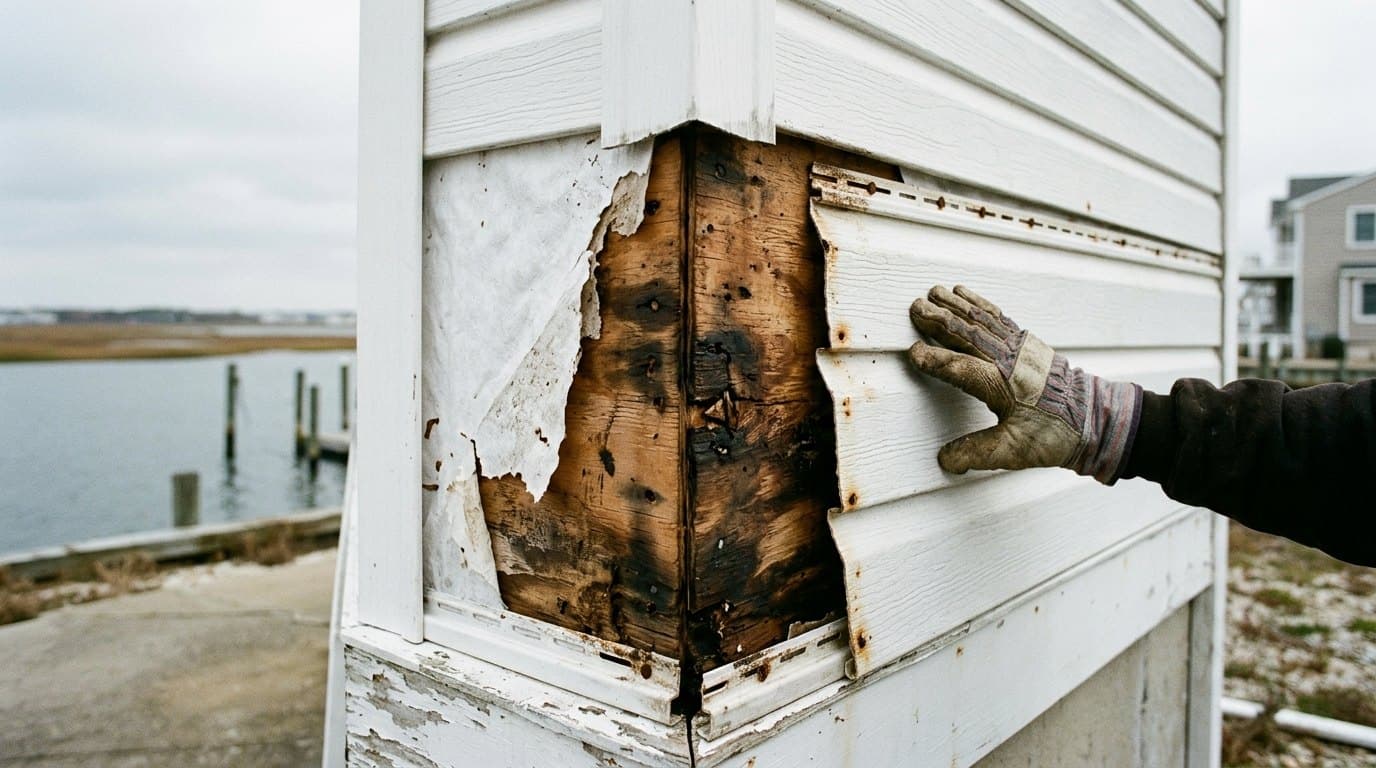
Siding repair is the right call when the sheathing behind the panel is still sound and the damage is limited to a run or an elevation. A full re-side is the right call when the sheathing is soft, when more than roughly a third of the house is affected, or when the panels are old enough that no colour match exists. The deciding factor is almost never the siding you can see. It is what the siding has been letting through.
Written for Ocean County shore homes specifically: Bayville, Lanoka Harbor, Forked River, Lacey, Barnegat, Waretown and the Manahawkin corridor, where salt air and wind off the bay do things to an exterior that inland siding never sees.
Home Pro Remodeling is a GAF Certified roofing and exterior contractor based in Forked River, working Ocean and Monmouth County NJ only. Siding is the second call we get most after roofing, and it is the one where homeowners are most likely to be sold the wrong size of job in either direction: a full wrap when a repair would have done, or a patch over a problem that needed opening up.
Why Shore Siding Fails Differently
Three things are working on a house down here that are not working on one in Freehold.
- Salt air. Salt is hygroscopic, which is a technical way of saying it pulls moisture out of the air and holds it against whatever it has settled on. On the fastener line behind your siding, that means corrosion working on nail heads years before anything shows on the surface.
- Wind loading off the water. An exposed bay-side or ocean-side elevation takes sustained wind that inland elevations do not. Vinyl is hung, not fixed, so it is designed to move, but repeated loading works panels loose at the nail hem, and a panel that has lost its grip lets water behind it in the next driving rain.
- Humidity that does not clear. Long humid summers mean anything that gets behind the siding dries slowly. Inland, a wetting event dries out. Here it sits.
The practical consequence is that shore siding almost always fails from behind and from the bottom up, which is exactly where nobody looks.
The Four Checks You Can Do Yourself This Week
1. Push on the bottom course, near the corners
Walk the house and press firmly on the lowest run of siding, especially within a few feet of each corner and under every window. You are feeling for two things: softness, and movement that feels different from the rest of the wall. The same soft-sill test decides whether a window needs an insert or a full-frame replacement, covered in window inserts vs full-frame replacement.
Vinyl should feel like a hung panel with a little give. If it feels spongy, or if pressing it produces a dull sound rather than a sharp one, there is a good chance the sheathing behind it has taken on water. Corners and under-window areas fail first because that is where water gets directed.
2. Look along the seams, at eye level and from an angle
Stand at one end of a wall and sight down it. Panel seams should overlap cleanly and sit flat.
Gapping in cold weather and buckling in hot weather both point at the same installation error: the siding was nailed too tight. Vinyl expands and contracts measurably with temperature and has to be able to slide on its fasteners. Nail it snug and it has nowhere to go, so it warps. This is the single most common workmanship defect we find on siding installed by a crew that did it fast.
3. Check for staining and smell
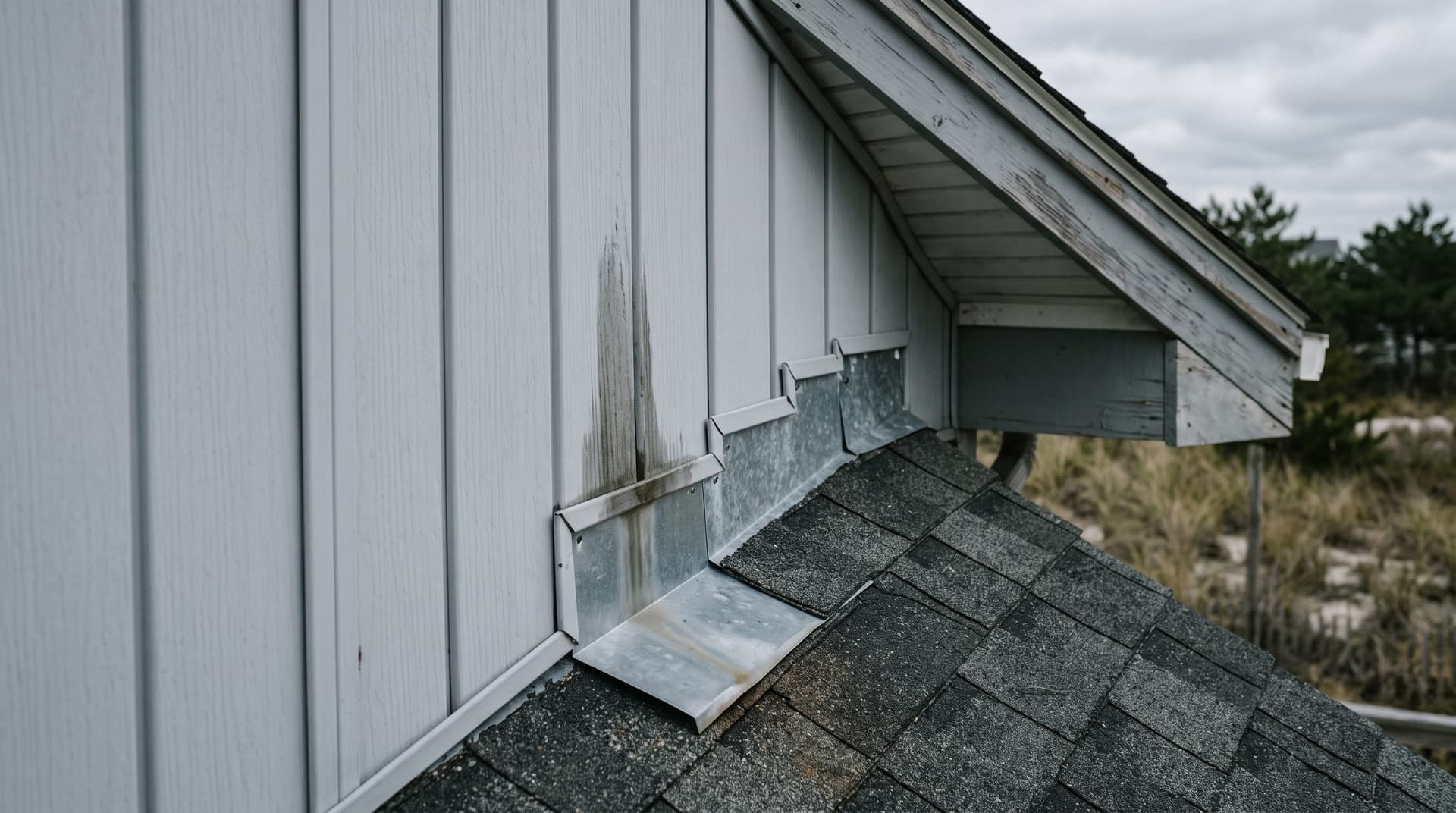
Dark streaking below a window, at a corner, or where a deck ledger meets the wall is water taking a path. Follow it down and see where it ends.
Inside, go into any room backing onto a suspect elevation (often a closet on an exterior wall) and use your nose. A musty smell on an exterior wall with no other source is a real signal, and it is worth acting on before it becomes visible.
4. Look at the wall from thirty feet back, in flat light
Waviness across a wall that looks flat up close usually means the sheathing behind it is no longer flat. Overcast light shows this far better than direct sun.
Repair or Replace: How We Actually Decide
Once we open a section, three questions settle it.
Is the sheathing sound? This is the one that matters most. If the plywood or OSB behind the panel is dry, firm and takes a fastener properly, a section repair is honest work and we will quote it as one. If it is soft, delaminating or crumbling at the edges, new siding over it is cosmetic. The wall is still failing underneath and you will be paying for the same elevation again in a few years, plus whatever the water reached in the meantime.
How much of the house is affected? One elevation, or one run below a window, is a repair. When damage shows up on multiple elevations, it usually means the cause is systemic (the original installation, or age) rather than one localised failure, and repairing it piece by piece turns into a rolling expense.
Can we match it? This is the practical one people do not think about. Vinyl fades. Even a perfect colour match from the same manufacturer will not match a wall that has had fifteen years of sun on it, and profiles get discontinued. On a rear elevation nobody sees, a close match is fine. On the front of the house it is going to bother you every time you pull in the driveway, and we would rather tell you that before the work than after.
What "Siding Restoration" Actually Means
You will see this term used, and it covers two genuinely different things.
Cleaning and brightening existing siding that is structurally fine but looks tired is real and worthwhile. Chalking on older vinyl, algae streaking on the north side, general grime: those come off, and a house can look years younger for a fraction of a re-side.
Where the word gets used loosely is when it is applied to a wall with damage behind it. Restoring the surface of a wall whose sheathing is wet is not a repair. It is a cover-up with a nicer name on the invoice. Ask specifically whether anything is being opened up and inspected, or whether the whole scope happens on the outside face of the siding.
A Note on Insurance
Wind and storm damage to siding is often covered. Gradual deterioration, and damage traced to bad installation, generally is not.
The distinction matters when you call. If a specific storm loosened panels or tore a run off, photograph it before anything gets touched and call your carrier. If the honest answer is that it has been going for years, an adjuster will see that too, and a contractor who encourages you to file anyway is doing you no favours. That is the same pattern we wrote about in how to spot a storm-chaser roofer, and it shows up on siding just as often as on roofs.
What a Straight Siding Quote Should Contain
- Whether any sheathing is being replaced, and the price per sheet if it is. Same principle as decking on a roof: if there is no allowance in the quote, either the wall was inspected and is genuinely sound, or you are being charged later.
- House wrap. Is existing wrap being kept, patched, or fully replaced? On a full re-side it should be new.
- What happens at windows and doors. Trim, J-channel and flashing at openings are where most water actually gets in. A quote that does not mention openings has not thought about them.
- Fastener spec. Coastal exposure warrants corrosion-resistant fasteners. This is cheap and it is the thing that decides whether the wall is still tight in year twelve.
- Panel thickness and profile. Vinyl is not one product. Thickness and rigidity vary a lot, and on a wind-loaded elevation that difference is functional, not cosmetic.
Getting a Straight Answer
If you are in Bayville, Lanoka Harbor, Forked River, Lacey, Barnegat, Waretown, Manahawkin, Toms River or Brick and you want to know which job you actually have, we will come look and tell you, including telling you it is a repair when someone else has quoted a wrap. Home Pro Remodeling is GAF Certified and NJ HIC licensed (13VH08300200), 5.0 rating across 200+ Google reviews across Ocean County. Request a free siding estimate or call (732) 703-7808, you get us directly, not a call center. Here is what our siding work covers.
Frequently Asked Questions
Should I repair my siding or replace all of it?
Repair is the right call when the sheathing behind the panel is still sound and the damage is limited to one run or one elevation. Replace when the sheathing is soft, when damage shows on multiple elevations, or when no colour match exists for a wall you look at every day. The deciding factor is what is behind the siding, not what the siding looks like, so any honest answer requires opening a section up.
How do I know if there is water damage behind my siding?
Press firmly on the bottom course near corners and under windows. Softness or a dull sound instead of a sharp one suggests the sheathing has taken on water. Then look for dark staining below windows and at corners, and check any closet on that exterior wall for a musty smell with no other source. Waviness in a wall viewed from thirty feet back in flat light is the fourth signal.
Why is my vinyl siding buckling and gapping?
Almost always because it was nailed too tight. Vinyl expands and contracts with temperature and is designed to slide on its fasteners, so when it is fixed rigidly it has nowhere to go and warps. You see gapping in cold weather and buckling in heat. It is a workmanship defect rather than a product failure, and it is the most common one on siding installed quickly.
Does homeowners insurance cover siding damage?
Wind and storm damage often is covered; gradual deterioration and damage traced to poor installation generally are not. If a specific storm loosened or tore off panels, photograph everything before anything is touched and call your carrier. If the damage has been developing for years, an adjuster will see that, and any contractor urging you to file anyway is putting you at risk rather than helping.
Why does siding fail faster at the Jersey Shore?
Three coastal factors stack up. Salt is hygroscopic, so it holds moisture against the fastener line and corrodes nail heads long before anything shows on the surface. Sustained wind off the water works panels loose at the nail hem. And long humid summers mean water that gets behind the siding dries slowly instead of clearing. The result is that shore siding usually fails from behind and from the bottom up.
What is siding restoration, and is it worth it?
It means two different things. Cleaning and brightening siding that is structurally sound but chalky or algae-streaked is real and can make a house look years younger for a fraction of a re-side. Applied to a wall with wet sheathing behind it, though, it is a cover-up with a better name. Ask specifically whether any section is being opened and inspected or whether the whole scope stays on the outside face.