Roof Repair or Replace? How NJ Homeowners Decide in 2026
Roof repair or replacement in NJ comes down to one honest number: if the fair repair estimate is more than 30% of a full replacement, replace it. Leak repairs on the Jersey Shore run $400 to $1,200; storm repairs run $1,000 to $4,000. Full replacement in Ocean or Monmouth County lands between $8,000 and $25,000+ in 2026. Here is how we decide, job by job, after twenty years and roughly 140 roofs a year across the shore market.
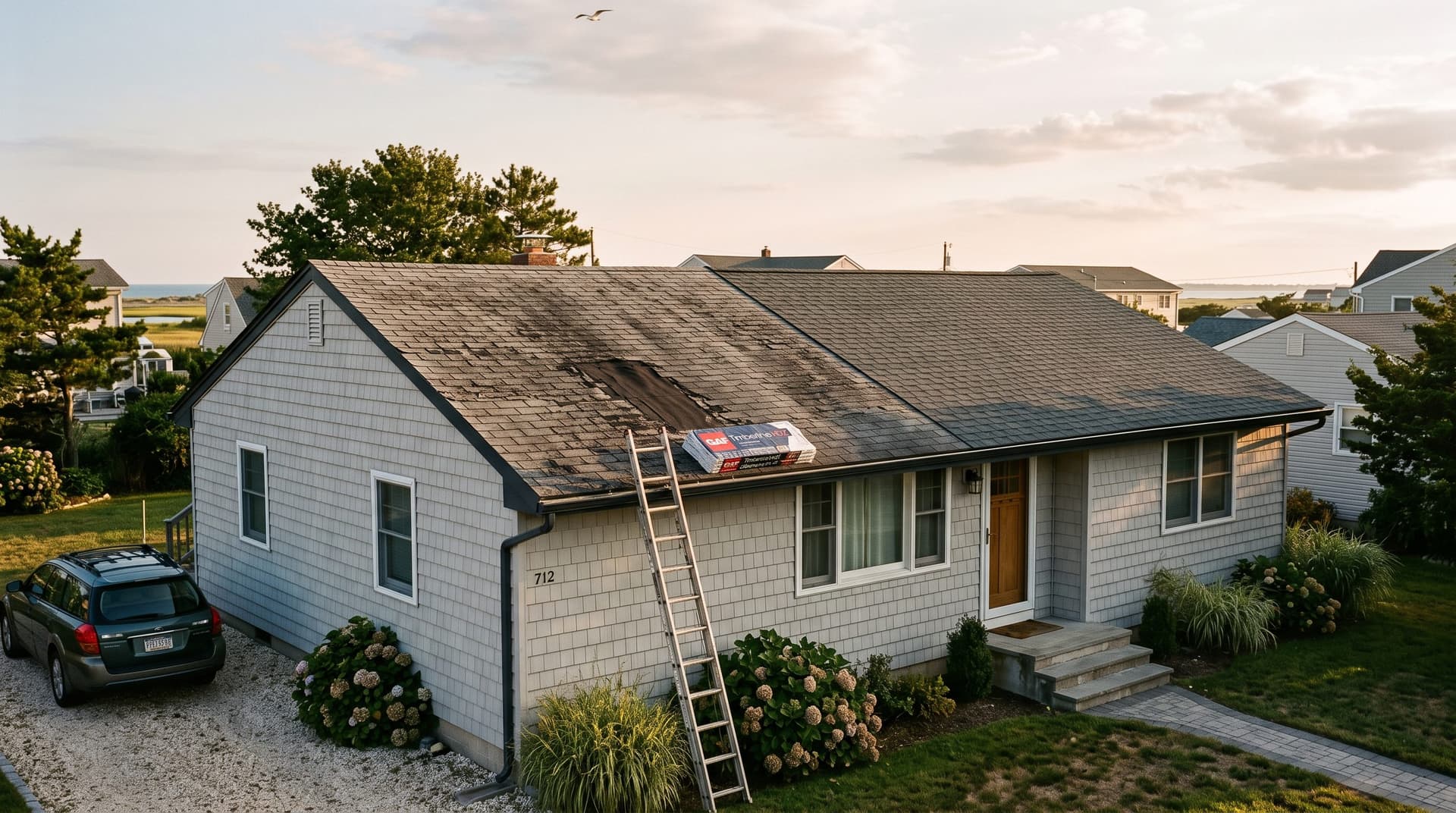
Roof repair or replacement in NJ comes down to one number: if the fair repair estimate is more than 30% of a full replacement, replace. Leak repairs on the Jersey Shore run $400 to $1,200; storm repairs run $1,000 to $4,000. A full replacement in Ocean or Monmouth County lands between $8,000 and $25,000+ in 2026.
Updated July 2026 with current price bands, the 2026 GAF Timberline HDZ install spec, and the repair-vs-replace split from our last six years of tear-offs across Ocean and Monmouth County.
Every week we walk homeowners across Ocean and Monmouth County through the same conversation: is this a repair, or is this a replacement? The honest answer is almost never the one the last guy told them, and it comes down to four questions plus one threshold — after roughly 140 jobs a year and twenty-plus years on Jersey Shore roofs, here is how we decide.
Should I Repair or Replace My Roof?
The four-question rule: how old is the roof, how much of the roof is damaged, is the damage isolated or systemic, and does the repair cost cross 30% of a full replacement? Two "repair" answers and two "replace" answers usually mean you are replacing. Any single "replace" answer that hits the structural side of the deck almost always means you are replacing whether the other three lean toward repair or not.
- How old is the roof? Under 12 years, the working assumption is repair. 12 to 18 years, it depends on material warranty and install quality. 18 to 22 years, the conversation flips — every dollar spent on repair is a dollar you will spend again in three years when the next slope fails. Over 22 years on original shingles, you are replacing.
- How much of the roof is damaged? Under 10% of the field, a repair is honest work. 10 to 25% depends on where the damage lives — a ridge cap failure across a whole ridge is not the same as 25% of one slope. Over 25% and the labor to open, patch, and blend the repair costs enough that a full tear-off is the smarter number.
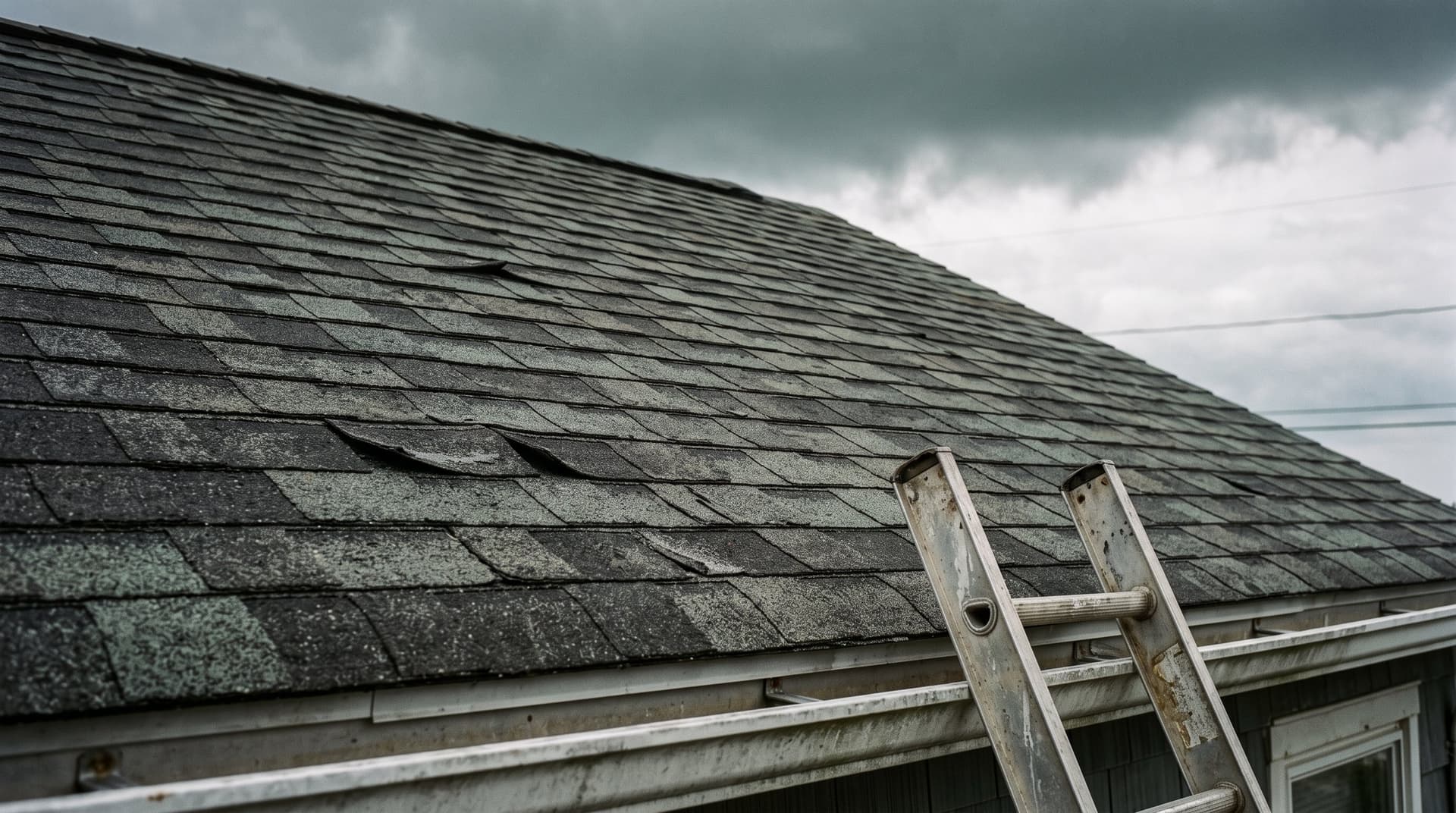
- Is the damage isolated or systemic? One missing shingle after a nor'easter is isolated. A field full of curled tabs, granule loss down every gutter, and lifted ridge cap on two elevations is systemic. Repairing one symptom of a systemic failure buys you the next leak call, not a fixed roof.
- Does the repair cross 30% of a full replacement? This is the industry rule, and it holds up in the field. If the fair repair number is over 30% of the tear-off-and-replace number for the same roof, you replace. Below that line, repair is a defensible call.
Our own repair-vs-replace split over the last six years: almost exactly 30% repair, 70% replace, and roughly 65% of the roofs we tore off between 2020 and 2026 were 22 to 28 years old on their first shingle system. The pattern is the same across Ocean and Monmouth County — the shore market is running on 30-year architectural shingles installed between 1996 and 2004, and 2026 is the year most of them are asking to come off.
What Is the 30% Rule for Roof Replacement?
The 30% rule says: if the honest repair estimate is more than 30% of the tear-off-and-replace number for the same roof, do the replacement instead. It exists because at that threshold, three things almost always become true at once. The repair only buys you a few years before the rest of the roof fails. The labor cost of the repair, blended across a small area, is worse dollar-for-dollar than the labor cost of a full install. And the warranty math flips — a repair carries a workmanship guarantee of a year or two on a roof with maybe five years of shingle life left, versus a full 50-year GAF Timberline HDZ material warranty and a 10-year workmanship guarantee on the replacement.
An example makes it real. A 22-square roof in Toms River gets storm damage across the front slope — call it 6 squares of visible shingle failure, torn underlayment in one spot, and a chimney flashing that has been leaking for a year. Real repair number to open it, patch the underlayment, re-flash the chimney, and blend 6 squares of shingle: roughly $4,600. Full tear-off-and-replace on the same 22-square roof with GAF Timberline HDZ, ice and water shield, synthetic underlayment, new flashing, and a 6-nail coastal fastener schedule: roughly $13,800. The repair is 33% of the replacement. Over the line. Replace.
Where the 30% rule breaks: a roof under 8 years old with isolated storm damage where the repair is technically over 30% but the shingles still have 20 years of life left. In that specific case, repair anyway. The rule is a threshold, not a ceiling — the age of the surrounding roof is always the tiebreaker.
When Does a Repair Actually Make Sense?
Repair makes sense when the damage is isolated, the roof is under about 15 years old, and the fair repair number sits well under the 30% line. On roofs like these we repair and walk away, and the roof holds. Three real examples from the last twelve months across the shore:
- Bayville — 8-year-old ranch, blown-off ridge cap. Nor'easter peeled a 20-foot section of ridge cap. Field intact, no leak. Repair $780 vs. full replacement ~$11,500. Repaired.
- Forked River — 11-year-old cape, chimney leak. Counter-flash failed. Open, new step and counter-flash, blend six shingles: $1,150 vs. full replacement ~$14,200. Repaired.
- Manasquan — 14-year-old colonial, pipe boot leak. Cracked EPDM boot on the plumbing vent. New boot, lead flashing collar, seal: $420. Repaired.
Common thread on every repair-worthy job: the rest of the roof passed a full inspection. Deck sound. Ventilation working. No granule loss down the gutters. No curled shingles anywhere else on the field. If any of those are failing, the "repair" is a bandage on a roof that is telling you it wants to come off.
When Should You Just Replace It?
Four signals that mean replacement, not repair, regardless of the price of the immediate problem:
- The roof is 20+ years old on its original shingle system. Even if the current problem is one flashing detail, spending money on a 22-year-old roof is timing the market against yourself. The next storm strips the next section. On the Jersey Shore, salt air and sustained wind pull the 20-year threshold down another 2 to 4 years — barrier island and bayfront homes on LBI, Beach Haven, Lavallette, Bay Head, and Mantoloking hit end-of-life at 18 to 24 years, not the inland 25 to 30.
- You are having a recurring leak in more than one spot. One leak from one flashing detail is a repair. Two active leaks on separate slopes, or a leak that has been "fixed" twice and come back, is a full-roof problem. The underlayment is done, the field is porous, and every repair is chasing the next entry point.
- Damage covers 25% or more of the roof surface. Past that threshold, the labor to blend a repair costs enough to close most of the gap to a real replacement, and the balance of the roof is a year or two behind the failed section anyway. Repairing 25% of a roof to leave the other 75% to fail on its own schedule is not a plan.
- Any structural finding — soft deck, sagging ridge, rotted rafter tails. The moment the sheathing comes into it, "repair" stops meaning what it meant. Deck rot means water has been in the assembly for at least one season and probably several. You are opening the field to inspect the framing at that point, and once the field is open, tear-off is the right call.
The four together explain why our repair-vs-replace split runs 30/70 across Ocean and Monmouth County. Most of the roofs we walk are past one or more of these lines even when the homeowner is hoping for a repair. The honest thing is to say so.
What Are the Real 2026 Numbers on the Jersey Shore?
Real market numbers from our last twelve months of estimates across Ocean and Monmouth County. Every number below is installed, itemized, and built to the 2026 GAF Timberline HDZ install spec — 6-nail coastal fastener schedule, ice and water shield at all eaves plus every valley and penetration, synthetic underlayment, drip edge, starter strip at eaves and rakes, ridge vent, and ridge cap.
| Job Type | Typical Range (2026) | What Drives the Number |
|---|---|---|
| Leak repair — pipe boot, single flashing, small area | $400 – $1,200 | Access, one-story vs. two-story, whether the leak has already opened the drywall |
| Storm damage repair — ridge cap, blown shingles, section of flashing | $1,000 – $4,000 | Square footage of damaged field, how much ridge or valley is involved, whether an insurance claim is running in parallel |
| Chimney reflash + shingle blend | $1,200 – $2,600 | Chimney size, whether counter-flashing has to be cut into masonry, how many shingle courses have to be pulled in |
| Full replacement — single-story ranch, 18–22 squares | $8,000 – $14,000 | GAF Timberline HDZ, standard pitch, no dormers or skylights |
| Full replacement — two-story colonial or cape, 22–30 squares | $14,000 – $22,000 | Access, dormers, valleys, skylight flashing kits |
| Full replacement — steep-pitch or complex shore home | $22,000 – $25,000+ | Roof jacks or staging, chimney work, three-story access, LBI barrier-island logistics |
The gap between "leak repair" and "full replacement" is real money, and it is exactly why the 30% rule is the honest way to decide. A repair number that sits at 20% of a replacement is a repair. A repair number that sits at 40% of a replacement is a replacement wearing a discount label. For a deeper breakdown of how a full-replacement number is built, our Ocean County roof replacement cost guide walks every line item. If you are trying to figure out whether your roof is even at the decision point yet, the five roof warning signs you should not ignore is the first read.
Does Salt Air Change the Math for Coastal Ocean County Homes?
Yes, and by more than most homeowners realize. Salt air, sustained wind, and UV cycle every roof faster within about five miles of the Atlantic than the same roof would age inland. On barrier island homes across LBI, Beach Haven, Long Beach Township, Surf City, Ship Bottom, Harvey Cedars, Barnegat Light, and along the Bay Head to Mantoloking corridor, we see architectural shingles hitting end-of-life at 18 to 24 years instead of the 25 to 30 the same shingles deliver on an inland Freehold or Marlboro colonial. Bayfront homes in Forked River, Lacey, Bayville, Waretown, Manahawkin, and Tuckerton land in the 22 to 26 year window.
That compression matters for the repair-vs-replace call in two ways. First, the age threshold moves down — a 17-year-old roof on a Forked River lagoon-front cape is closer to end-of-life than a 17-year-old roof in Manalapan. Second, when storm damage hits, the surrounding shingles that "looked fine" are usually within 2 to 3 years of failing themselves. Repairing one storm-damaged section on a coastal 20-year-old roof means the next nor'easter tests the next section. Replacement resets the clock. For coastal-market storm handling and how insurance claims interact, our storm claim playbook for NJ covers the sequence.
The other coastal variable is the fastener schedule. On coastal Ocean County jobs Home Pro installs to a six-nail schedule per shingle, not the four-nail minimum. Six-nail is what GAF specs for high-wind zones and what the manufacturer looks for on any wind-warranty claim. If a competing quote does not name the fastener count, the honest question to ask is what it is. If the answer is four, the quote is inland-quality on a coastal roof.
Frequently Asked Questions
Is the 30% rule for roof replacement an official standard?
No — there is no state or federal code that mentions it. It is a working rule from insurance claim reviewers and contractors who have watched enough repair-then-replace jobs to know where the math flips. It holds up in the field because at roughly 30% of the replacement cost, a repair no longer buys enough remaining roof life to be worth the money. On roofs under 12 years old with isolated damage the rule is a threshold you can cross with a clean conscience; on roofs over 18, it is a hard line.
Should I ever repair a roof that is over 20 years old?
Only for one reason: to buy time while you are financing the replacement. If a 22-year-old roof has an active leak and you cannot start the replacement for six weeks, a $600 to $1,000 emergency repair to stop water intrusion is honest work. Spending several thousand dollars on a repair to a 22-year-old roof with plans to keep the roof for another five years is not. The repair will not hold long enough to earn the money back.
Does homeowners insurance cover roof repair or replacement in NJ?
Storm damage: yes, if the damage is documented as caused by a covered peril (wind, hail, falling limb) rather than wear and tear. Age-related failure: no. Insurance carriers in NJ have gotten aggressive about denying claims on roofs over 15 years old and pushing homeowners toward actual-cash-value payouts (roof age discounted from replacement cost) instead of full replacement-cost coverage. The claim is built with photos and a licensed contractor's inspection report before the adjuster arrives, not after — the sequence and specifics are in our storm claim playbook.
Can a repair patch match the shingle color on my existing roof?
Closely, but almost never perfectly on a roof over 10 years old. A 12-year-old shingle has weathered — UV has faded the granules and the surrounding tabs read slightly different from a factory-fresh bundle. On isolated patches (a pipe boot, a single flashing repair), the mismatch is invisible from the street. If dead-perfect color match matters — resale within 12 months, for example — replacing the affected slope may be the better call than a large repair.
How long does a roof repair actually last?
A properly done repair on a sound roof holds for the remaining life of the roof — if the field around the repair has 10 good years left, the repair should too. A repair on a failing field does not, and that is the problem with "just patching it" on a 22-year-old roof. Every Home Pro repair carries a 2-year workmanship guarantee on the repair area regardless of the roof age.
What is the fastest way to know if my roof is at the decision point?
Three visible signs from the ground: granules piled at the downspout base after rain, dark patches on the shingle field where the granules are gone, and any curled or missing shingles on any elevation. Two of three = the roof is worth an inspection. All three = the conversation is replacement, not repair. Full walkthrough in our five roof warning signs guide.
Ready for an honest read on your roof?
Every roof gets one free inspection from Home Pro — 20+ years of Ocean and Monmouth County jobs, GAF Certified installation, and a straight answer about repair versus replace against the 30% rule. Not a sales pitch: we walk the roof (or fly a drone if it is not safe to walk), check the deck from inside the attic, check the ventilation, and send a written report with photos and a recommendation. Call (732) 703-7808 or request an inspection through the contact page and we will be on the property within 48 hours across Forked River, Lacey, Bayville, Barnegat, Manahawkin, Toms River, Brick, Waretown, Berkeley, Tuckerton, LBI, Howell, Wall, Manasquan, Brielle, Spring Lake, Sea Girt, and anywhere else in Ocean or Monmouth County. Not sure what to ask on the quote? Our how to hire a roofing contractor in NJ guide covers what a real proposal looks like — ours or theirs.