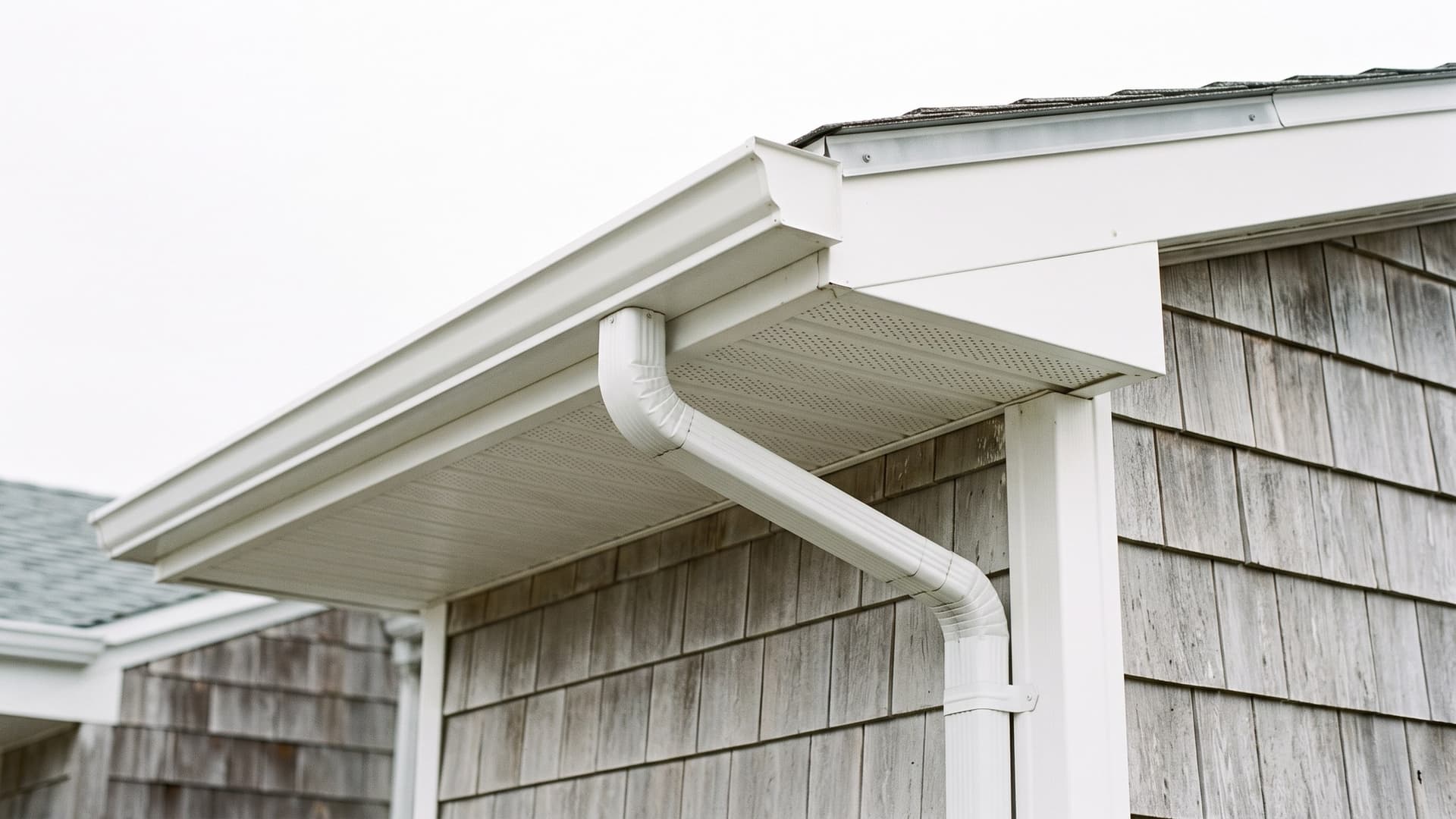
Who Installs Rain Gutters? Roofer, Gutter Company, or General Contractor
Who installs rain gutters, a roofer, a gutter company, or a GC? A GAF Certified Ocean County NJ roofer on who owns the roof edge and why it matters.
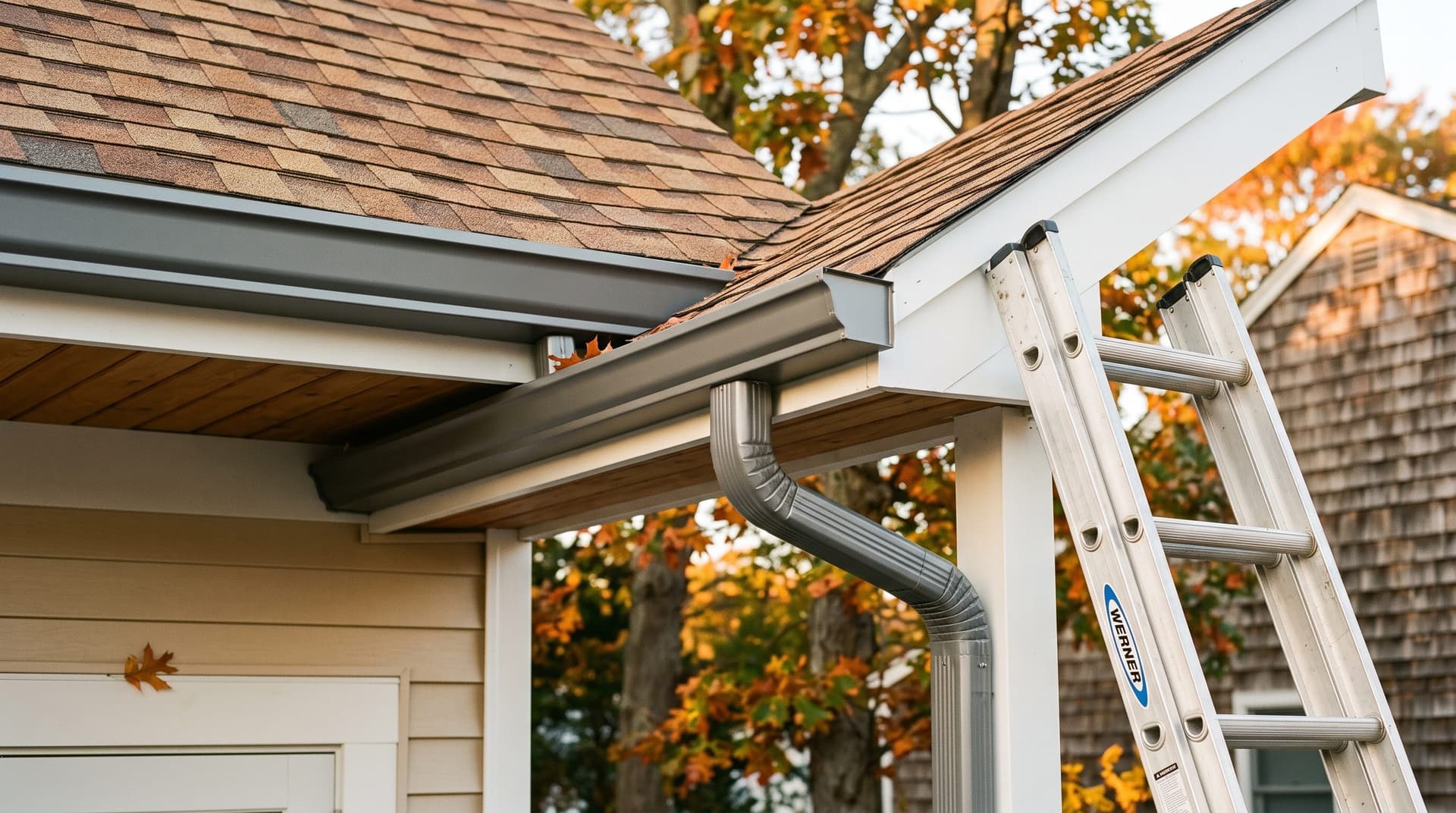
Who installs rain gutters? A roofer, a gutter company, or a general contractor all can, but a roofer is usually the right call. Gutters bolt onto the roof edge, the fascia, drip edge, and ice-and-water shield, and those three layers have to stack in one exact order the roofer already controls.
Updated August 2026 with the roof-edge layering sequence that decides whether a gutter drains or rots the fascia, a roofer-vs-gutter-company-vs-GC comparison table, and the exact questions to ask before you book any of the three across Ocean and Monmouth County.
I am Stephen Flury, owner of Home Pro Remodeling, a GAF Certified roofing and exterior contractor based in Forked River, working Ocean and Monmouth County NJ only, from Lacey and Barnegat through the LBI corridor and up the Monmouth shore to Sea Girt. Homeowners call and ask who they are even supposed to hire for gutters, because a roofer, a gutter-only company, and a general contractor all say they do it. All three can hang a gutter, but only one owns the part of the roof the gutter actually attaches to. Here is who does what, where the leaks hide, and how to pick.
Who Installs Rain Gutters, a Roofer, a Gutter Company, or a GC?
A roofer, a dedicated gutter company, and a general contractor can all install rain gutters, and for most Ocean and Monmouth County homes the roofer is the right hire. The reason is not loyalty to my own trade. It is that a gutter does not hang on the wall, it hangs on the roof edge, and the roof edge is a stack of layers the roofer installs and warranties. When one crew owns the drip edge, the fascia, the ice-and-water shield, and the gutter, there is no seam for water or blame to slip through. When two different crews own those layers, the seam is exactly where the trouble starts.
The three options are not equal, and they are not interchangeable. A gutter-only company is fast and often cheaper on a standalone gutter swap where the roof edge is already sound. A general contractor is the right call when the gutters are one small piece of a much larger project. A roofer is the right call any time the gutter and the roof edge touch, which is every time, and especially when the roof is being replaced in the same window. The table further down lays the three side by side.
What Does a Roofer See at the Roof Edge That a Gutter-Only Crew Does Not?
A roofer sees the fascia, the drip edge, and the ice-and-water shield as one connected system, because a roofer is the one who installed them. A gutter-only crew shows up, screws hangers into the fascia, and hangs the trough. If the fascia is soft, the drip edge is set wrong, or the shingle course above it was cut short, a gutter crew usually will not catch it, because none of that is their trade. They are looking at the trough. The roofer is looking at everything the trough hangs on.
This matters most on the Jersey Shore, where salt air and years of leaking sectional gutters quietly rot the wood behind them. When we pull an old gutter off a bay-side ranch in Bayville or Forked River, the fascia underneath is often spongy or gone, and a hidden hanger needs solid wood to bite into. Screw a new gutter into rotted fascia and it sags off the house inside a season. We catch and replace bad fascia and soffit before the gutter goes up, as a separate visible line on the quote, never buried in the total. We cover that rot pattern in our post on soffit and fascia rot on Ocean County homes.
Where Do the Roof Edge and the Gutter Actually Meet, and Who Owns That Detail?
The roof edge and the gutter meet at the drip edge, and the order those layers stack in decides whether water lands in the trough or behind it. It is the piece nobody sees and almost nobody asks about, and the whole argument for having a roofer own both. On a correctly built shore roof edge, the layers go in this exact sequence.
- Fascia board first. Sound, straight wood behind the whole run. Rotted or wavy fascia gets replaced before anything else, because every layer above depends on it.
- Drip edge over the fascia at the eave. A metal L-flashing that laps over the top of the fascia and kicks water out past it, so runoff clears the wood instead of wicking down the back.
- Ice-and-water shield lapped over the drip edge. At the eave the self-adhering membrane goes on top of the drip edge, so water driven back up under the shingles by wind or an ice dam rides over the metal and off the roof, not behind the fascia.
- The gutter tucked under the drip edge kick. Hang the gutter too low or the drip edge too short, and water sheets off the shingles, jumps the gutter, and runs straight down the fascia.
Get that stack out of order and the most expensive gutter on the market still dumps water where you do not want it. A gutter-only crew installing after a roof they did not touch is trusting that whoever did the roof set the drip edge and shield correctly. When they did not, the gutter company points at the roofer and the water keeps going behind the board. A roofer who installs both owns the whole sequence, which is why a coordinated roof replacement that includes the gutters lets us set the drip edge behind the new gutter exactly as it should be.
How Do You Compare a Roofer, a Gutter Company, and a General Contractor?
Compare them on one thing: who owns the roof edge the gutter attaches to. Everything else, price, speed, and scheduling, follows from that. Here is the honest side-by-side.
| Who you call | What they own | Roof-edge risk | Best for |
|---|---|---|---|
| Roofer (Home Pro) | The whole edge: fascia, drip edge, ice-and-water shield, and the gutter as one system | Lowest. One crew owns every layer, so there is no seam to leak or argue over. | Any gutter job where the roof edge matters, and every reroof where gutters go on in the same visit. |
| Gutter-only company | The trough and downspouts only | Higher. They hang on a fascia and drip edge someone else built and rarely inspect it. | A clean standalone gutter swap on a sound, recent roof edge with good fascia. |
| General contractor | Coordination, then subs the gutters out | Highest for a standalone job. The person on your fascia is whoever the GC hired that week. | A full remodel or addition where gutters are one small line among many trades. |
None of these are wrong hires in every case, only in the wrong one. Calling a GC to swap one run of gutters pays a coordination markup for a job that needs no coordinating, and calling a gutter-only company the same week your roof is torn off puts two crews on one eave when one could do both.
When Is a Gutter-Only Company Actually the Right Call?
A gutter-only company is the right call when the roof edge is already sound and recent and all you need is the trough replaced. If your roof was properly done three years ago, the fascia is solid, the drip edge is set right, and a storm just crushed one run, a good gutter specialist can measure, roll, and hang a replacement fast and well. I am not going to tell you to pay a roofer's rate for that.
The line is the condition of the edge. When the fascia is questionable, the roof is over fifteen years old, there is any history of water getting behind the gutters, or the roof itself is due, the edge is in play and the roofer should own it. On a shore home that has run leaking sectional gutters for years, the edge is almost never as sound as it looks from the ground, which is why we inspect the fascia and drip edge before quoting a gutter job.
Whose Warranty Covers the Gutter If Water Gets Behind It?
Whoever installed both the roof edge and the gutter is the only one whose warranty covers a leak between them, and when two companies split the work, neither warranty covers that seam. A gutter company warranties its trough and hangers. A roofer warranties the roof and the edge flashing. When water gets behind a gutter, the failure usually lives in the seam between those two warranties, the drip edge and fascia detail, and each company can honestly say it was not their part.
When Home Pro installs the roof edge and the gutters together, one company is accountable for the water from the shingle to the downspout. No handoff, no seam, nobody to point at but us. Our gutter installs carry a written workmanship warranty, and when the gutters go on with a reroof, the GAF system warranty on the roof and edge is registered in your name. For who can register which warranty, our post on a roofing specialist versus a general contractor lays out the manufacturer coverage a subbed-out crew cannot carry.
What Should You Ask Before You Book a Roofer, Gutter Company, or GC?
Ask each one who inspects and owns the fascia and drip edge. The answer sorts a real gutter installer from someone who only hangs the trough, and a straight contractor answers all six of these without dodging.
- Will you inspect the fascia and drip edge before you hang anything? The right answer is yes, in writing, with rotted fascia priced as a separate line. "We just hang the gutter" means the edge is your problem when it fails.
- What size gutter and downspout are you spec-ing, and why? A real answer names 5-inch or 6-inch K-style tied to your roof area, not a default. On a large or steep shore roof, 6-inch carries close to 40 percent more water, the difference between a trough that clears in a downpour and one that overflows down the fascia.
- Seamless or sectional? Seamless is rolled on-site in one piece per run. Sectional is joined every ten feet, and every joint is a future leak in the shore freeze-thaw cycle, which we break down in our post on seamless versus sectional gutters.
- Who is actually on my house, your crew or a sub? This exposes a GC subbing the work. You want the crew that will be accountable in year three.
- Are you licensed and insured in NJ? Ask for the Home Improvement Contractor number and a certificate of insurance. Home Pro carries NJ HIC License 13VH08300200.
- Can I see gutter jobs you finished in my town? Named local work beats a stock five-star page. We can show you seamless installs in Toms River, Lacey, and Barnegat.
Run those six on all three, and the right hire for your roof sorts itself out. Most of the time, once a homeowner hears that the gutter hangs on the roof edge and not the wall, the roofer is the obvious answer.
The Bottom Line for Your Ocean and Monmouth County Gutters
Who installs rain gutters best comes down to who owns the roof edge, and on nearly every shore home that is the roofer. A gutter-only company is a fine hire for a clean swap on a sound, recent edge, and a general contractor earns the markup only when gutters are buried inside a bigger project. Any time the fascia, the drip edge, or the roof itself is in play, one crew should own the whole edge so there is no seam for water or blame to hide in.
Frequently Asked Questions
Should a roofer or a gutter company install my gutters in NJ?
A roofer, on nearly every Ocean and Monmouth County home, because gutters attach to the roof edge a roofer installs and warranties. A gutter-only company is the right call only when the edge is already sound and recent and you just need the trough replaced.
Why does it matter if the same contractor does both the roof and the gutters?
Because water gets behind gutters at the seam between two trades. When one company does the roof and another the trough, a leak in the drip-edge and fascia detail between them falls into a gap neither warranty covers. One crew owning both means one company is accountable from the shingle to the downspout.
What is a drip edge and how does it relate to rain gutters?
A drip edge is the metal flashing along the roof eave that laps over the fascia and kicks water out past the wood, and the gutter tucks under that kick to catch it. Set the drip edge wrong or hang the gutter too low and water sheets off the shingles, jumps the gutter, and runs down the fascia. The order the drip edge, ice-and-water shield, and gutter stack in decides the whole job.
Should I get 5-inch or 6-inch gutters at the Jersey Shore?
Most standard shore roofs are fine with 5-inch K-style, but large, steep, or heavily-valleyed roofs should step up to 6-inch, which carries close to 40 percent more water. Ocean and Monmouth County downpours routinely drop two to three inches of rain an hour, which overwhelms an undersized trough. We size to the actual roof square footage and pitch, and pair long runs with extra 3x4 downspouts.
Who is responsible if water gets behind my new gutters?
Whoever installed both the roof edge and the gutter. If two companies split the work, the failure usually lives in the drip-edge and fascia seam between them and each points at the other. When Home Pro installs the edge and the gutters together, one company is accountable from the shingle to the downspout, with a written workmanship warranty on the install.
What towns does Home Pro install rain gutters in?
Home Pro Remodeling is based in Forked River and installs gutters in Ocean and Monmouth County NJ only, from Lacey, Bayville, Barnegat, Waretown, and Manahawkin through the LBI corridor, Toms River, and Brick, and up the Monmouth shore through Wall, Manasquan, Spring Lake, and Sea Girt. We are GAF Certified, NJ HIC licensed (13VH08300200), and hold a 5.0 rating across 200+ Google reviews.
Ready for a straight answer on your gutters?
Every gutter job starts with a free inspection of the roof edge, the fascia, and the drip edge before we quote a trough. We tell you whether the edge is sound enough for a simple swap or whether the fascia has to be dealt with first, and we put the size, the seamless spec, and the warranty in writing. Get a free gutter estimate from Home Pro Remodeling, or call (732) 703-7808 and I usually answer myself. You can also see what a full install covers on our seamless gutter installation page or check what gutter installation costs in NJ.