Roofing Specialist vs General Contractor (Ocean County NJ)
Roofing specialist vs general contractor: which should Ocean County NJ homeowners hire? A GAF Certified roofer explains warranties, crews, and cost.
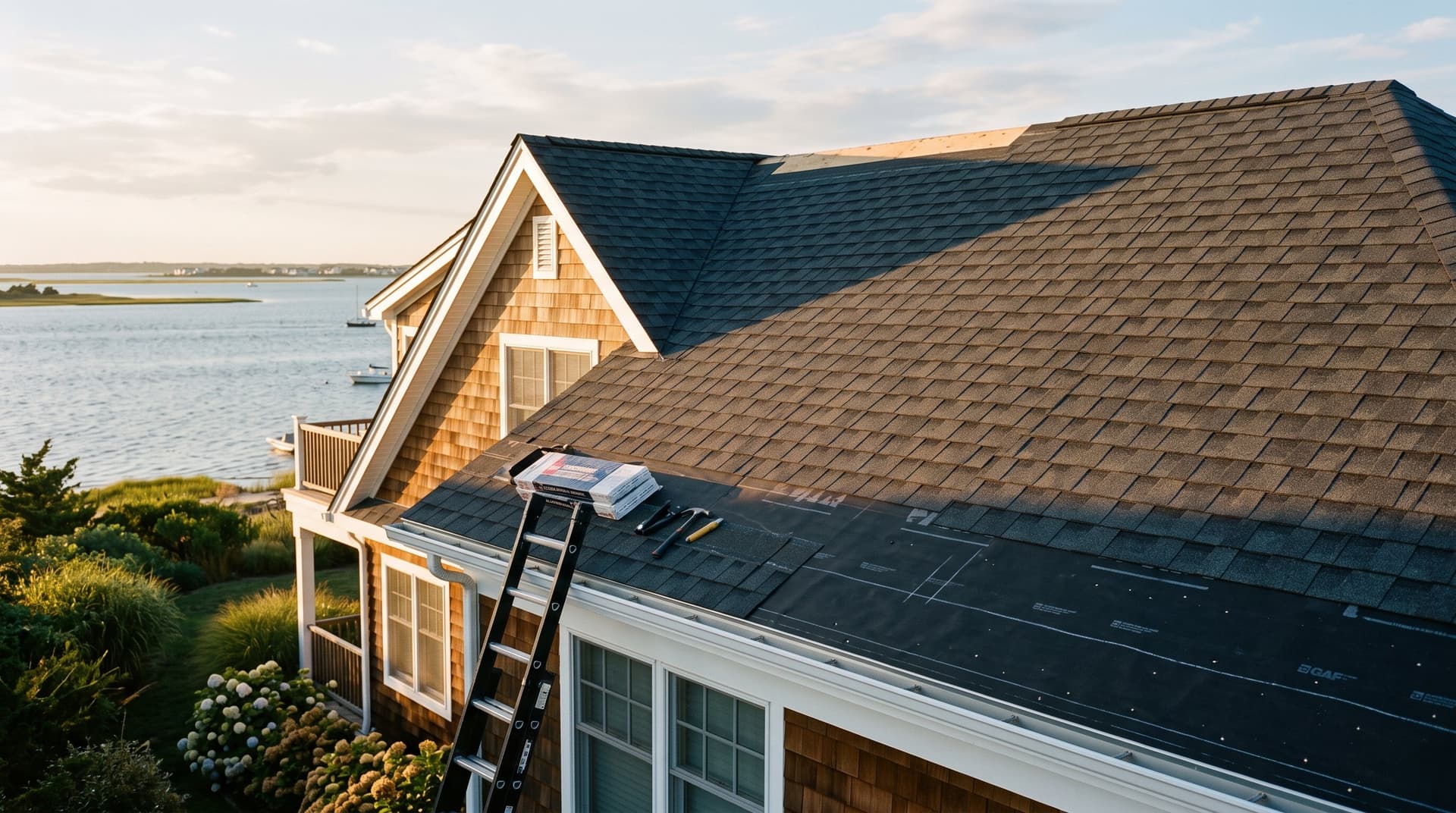
Roofing specialist vs general contractor: for a roof, Ocean County NJ homeowners should hire the specialist. A GAF Certified roofing contractor carries a manufacturer credential a general contractor does not, and that credential unlocks GAF's enhanced System Plus and Golden Pledge warranties (up to 25 years of workmanship coverage) a non-certified installer cannot register.
Updated July 2026 with the current GAF warranty tiers, the exact install spec a certified crew follows, and the vetting checklist we walk homeowners through before a reroof across Ocean and Monmouth County.
We are a GAF Certified roofing contractor working Ocean and Monmouth County NJ, from Forked River and Toms River down to Manahawkin and up the Monmouth shore through Wall and Manasquan. This is the question homeowners ask us most before a roof replacement, and there is real money and warranty coverage riding on the answer, so here is the honest breakdown.
Roofing Specialist vs General Contractor: Which Should Ocean County NJ Homeowners Hire?
For anything that lives or dies on your roof, hire the roofing specialist, not the general contractor. A general contractor (GC) coordinates trades and is the right call for a kitchen, an addition, or a whole-home remodel where five trades have to be scheduled around each other. A roof is a single system installed by one crew, and the details that keep it watertight for 30 years are the details a specialist runs every day and a GC subs out to whoever is available that week.
The confusion is fair, because plenty of general contractors list "roofing" on their site. The difference is not the sign on the truck. It is who actually climbs on your roof, what manufacturer credential stands behind the work, and whether the warranty you are handed at the end is worth the paper it is printed on. On the Jersey Shore, where salt air and nor'easter wind punish a roof harder than they do inland, that difference shows up faster than most homeowners expect.
What Actually Separates a Roofing Specialist From a General Contractor?
The separation comes down to credential, crew, and accountability, and on a roof all three point to the specialist. A GC who "also does roofing" is usually hiring a sub for the day and marking up the invoice, which means the person on your roof has no relationship with you and no manufacturer certification tied to your home.
- Manufacturer certification. A GAF Certified roofing contractor has been vetted, licensed, and insured to GAF's standard. A general contractor who subs the work carries no manufacturer status, so the enhanced warranties are simply not available on your roof.
- Dedicated install crew. A specialist runs the same trained crew on tear-offs week after week. A GC's roofing sub changes job to job, so your flashing, valley, and ventilation details depend on whoever was free that morning.
- Single point of accountability. When a specialist installs it, one company owns the result. When a GC subs it and a leak shows up two winters later, it turns into the GC blaming the sub and the sub being long gone.
- Roof-specific licensing and insurance. We carry NJ Home Improvement Contractor License 13VH08300200 and roofing-specific liability coverage. A general policy does not always cover a roofing loss the way a specialist's does.
- It is the only thing we do. Roofing, siding, gutters, and windows are our whole business, not a line item bolted onto a remodel bid.
What Roof Warranty Can a General Contractor Never Give You?
The warranty a general contractor cannot give you is any of GAF's enhanced coverage, because those tiers are only issued through manufacturer-certified contractors. This is the single most expensive difference between the two, and most homeowners never hear about it until a leak shows up. A standard installation comes with GAF's basic limited shingle warranty. A GAF Certified contractor can register your roof for the enhanced System Plus warranty, and the top-tier Golden Pledge is issued by GAF Master Elite contractors after a factory inspection of the finished roof.
| Warranty tier | Who can register it | What it actually covers |
|---|---|---|
| Standard Limited Warranty | Any installer, including a GC's sub | Shingle material defects only, prorated over time. No workmanship coverage at all. |
| System Plus Limited Warranty | GAF Certified contractors | Extended non-prorated material period plus added manufacturer-backed workmanship coverage. |
| Golden Pledge Limited Warranty | GAF Master Elite contractors only | Up to 25 years of workmanship coverage plus 50-year material, with a factory inspection of the completed roof. |
Here is why this matters in dollars. Most roof failures are not shingle defects, they are workmanship: a flashing detail, a nail line driven too high, a ventilation mistake. A basic warranty covers the shingle and leaves the labor bill to you. The enhanced GAF workmanship coverage is exactly the part a general contractor's subbed-out roof cannot carry, because the enhanced tiers are tied to the contractor's certification, not to the box of shingles.
Does a Specialist Install a Roof Differently Than a General Contractor?
Yes, a specialist installs to a full manufacturer system while a subbed-out crew often installs to whatever is fastest. GAF's enhanced warranties are only valid when the roof is built as a complete system, which means the specific accessory layers have to be there, not skipped to shave an hour. Here is the sequence a GAF Certified crew follows on a full tear-off in Ocean or Monmouth County.
- Full tear-off down to the deck, then inspect and replace any rotted or delaminated sheathing before anything new goes on.
- Drip edge installed at the eaves and rakes so water sheds off the fascia instead of behind the gutter.
- Ice and water shield along the eaves, in the valleys, and around every penetration, which matters on the Shore where wind-driven rain and ice damming both push water uphill.
- Synthetic underlayment across the full field, which is lighter, tougher, and more tear-resistant than old felt.
- Starter strip along the eaves and rakes to lock down the first course and resist wind uplift.
- GAF Timberline HDZ architectural shingles nailed to spec in the engineered nail zone, which is where wind-rating and warranty eligibility both live.
- Ridge vent paired with matching ridge cap so the attic breathes and the roof does not cook shingles from below.
A general contractor subbing the job by the square has no reason to enforce any of that, and no certification on the line if a step gets skipped. A specialist has both.
When Does Hiring a General Contractor Actually Make Sense?
Hiring a general contractor makes sense when the roof is one piece of a larger multi-trade project, not a standalone job. If you are raising a rooflines on an addition, gutting a house to the studs, or building new, a GC earns the markup by scheduling framers, electricians, and roofers so the whole project lands on time. That is real coordination work and it is what a GC is built for.
Even then, one rule holds: insist that the GC's roofing sub is a manufacturer-certified specialist, and get the warranty tier in writing before the tear-off starts. The coordination can come from the GC. The roof itself should still be installed and warrantied by a specialist. For a roof replacement or a roof repair that is not tangled up in a bigger remodel, skip the middleman and hire the specialist directly.
How Should Ocean County Homeowners Vet a Roofing Specialist?
Vet a roofing specialist by pinning down credential, crew, and warranty in writing before you sign anything. The good ones answer every one of these without flinching, and the answers are specific. Here is the checklist we tell homeowners in Brick, Barnegat, Lacey, and Bayville to run on any roofer they call, including us.
- Ask for the manufacturer certification, by name. "We use GAF shingles" is not a certification. GAF Certified or GAF Master Elite is. Anyone can buy the shingles; only a certified contractor can register the enhanced warranty.
- Confirm the NJ HIC license and roofing insurance. Ask for the license number and a certificate of insurance that specifically covers roofing work.
- Ask which warranty tier they will register, and get it in writing. Standard, System Plus, or Golden Pledge changes what a future leak costs you. It belongs in the contract, not in a handshake.
- Ask who does the tear-off. Their own trained crew or a sub they found this week. The answer tells you who is accountable in year three.
- Get a line-itemed scope. A real roofing quote lists ice and water shield, synthetic underlayment, drip edge, starter strip, and ridge vent. A one-line "reroof" price is hiding what got cut.
- Read local reviews from real towns. Look for named jobs in your county, not stock five-star copy. Home Pro holds a 5.0 rating across 200+ Google reviews from Ocean and Monmouth County homeowners.
Why the Specialist Wins on a Standalone Roof
For a roof, the specialist wins on the two things that actually cost you money later: install quality and warranty coverage. A general contractor is the right hire for a full remodel with a roof buried inside it. For a standalone roof replacement or repair anywhere in Ocean or Monmouth County, a GAF Certified specialist gives you a crew that does only this and a manufacturer-backed warranty a subbed-out roof can never carry.
If you want that spelled out for your specific roof, get a free roof estimate from Home Pro Remodeling. We inspect the roof, line-item the scope, tell you the exact warranty tier we register, and put it in writing. Call (732) 703-7808 and you get us directly, not a call center.
Frequently Asked Questions
Should I hire a roofing specialist or a general contractor for my roof in NJ?
For a standalone roof, hire the roofing specialist. A general contractor is built to coordinate multiple trades on a remodel or addition and usually subs the actual roofing out to whoever is available. A roofing specialist runs a dedicated crew, is the only company accountable for the result, and, if manufacturer certified, can register enhanced warranty coverage a GC's subbed-out roof cannot carry. Hire the GC only when the roof is one piece of a larger multi-trade project, and even then insist their roofer is certified.
What is a GAF Certified roofing contractor and why does it matter?
GAF Certified means the contractor has been vetted, licensed, and insured to GAF's standard, which lets them register your roof for GAF's enhanced System Plus warranty. It matters because most roof failures are workmanship, not shingle defects, and only a certified contractor can attach manufacturer-backed workmanship coverage to your roof. A general contractor who subs the job holds no manufacturer status, so that coverage is not available on your home no matter which shingles get installed.
Can a general contractor offer a GAF warranty?
A general contractor can only pass along GAF's basic limited shingle warranty, which covers material defects and no labor. The enhanced tiers, System Plus and the top-tier Golden Pledge, are issued only through GAF Certified and GAF Master Elite contractors. If a GC subs your roof to a non-certified crew, none of that enhanced workmanship coverage can be registered on your roof, and you find out the hard way when a leak turns into an out-of-pocket labor bill.
What should a real roofing quote include?
A real roofing quote is line-itemed, not a single reroof number. It should list a full tear-off, deck inspection and any sheathing replacement, drip edge, ice and water shield at eaves and valleys, synthetic underlayment, starter strip, the specific shingle (for example GAF Timberline HDZ), and ridge vent. It should also name the warranty tier the contractor will register. A one-line price is hiding what got cut to win the bid.
Does a roofing specialist handle insurance claims?
Yes. A roofing specialist inspects storm damage, documents it, and works the claim with your carrier, which is routine on the Jersey Shore after wind and nor'easter events. Home Pro Remodeling provides a written, dated inspection and handles the roofing side of insurance claims across Ocean and Monmouth County. A general contractor subbing the roof rarely owns that process, so the documentation and accountability fall through the cracks.
What towns does Home Pro Remodeling serve?
Home Pro Remodeling is based in Forked River and serves Ocean and Monmouth County NJ only. That includes Forked River, Lacey, Bayville, Barnegat, Toms River, Brick, Manahawkin, Waretown, and Berkeley in Ocean County, and Howell, Wall, Manasquan, Brielle, Spring Lake, and Sea Girt in Monmouth County. We are GAF Certified, NJ HIC licensed (13VH08300200), and hold a 5.0 rating across 200+ Google reviews.