Vinyl Siding Installation Cost: What Moves the Price in NJ
Vinyl siding installation cost turns on six things, and the panel is the smallest. What moves a shore-house quote, and what to ask before you sign.
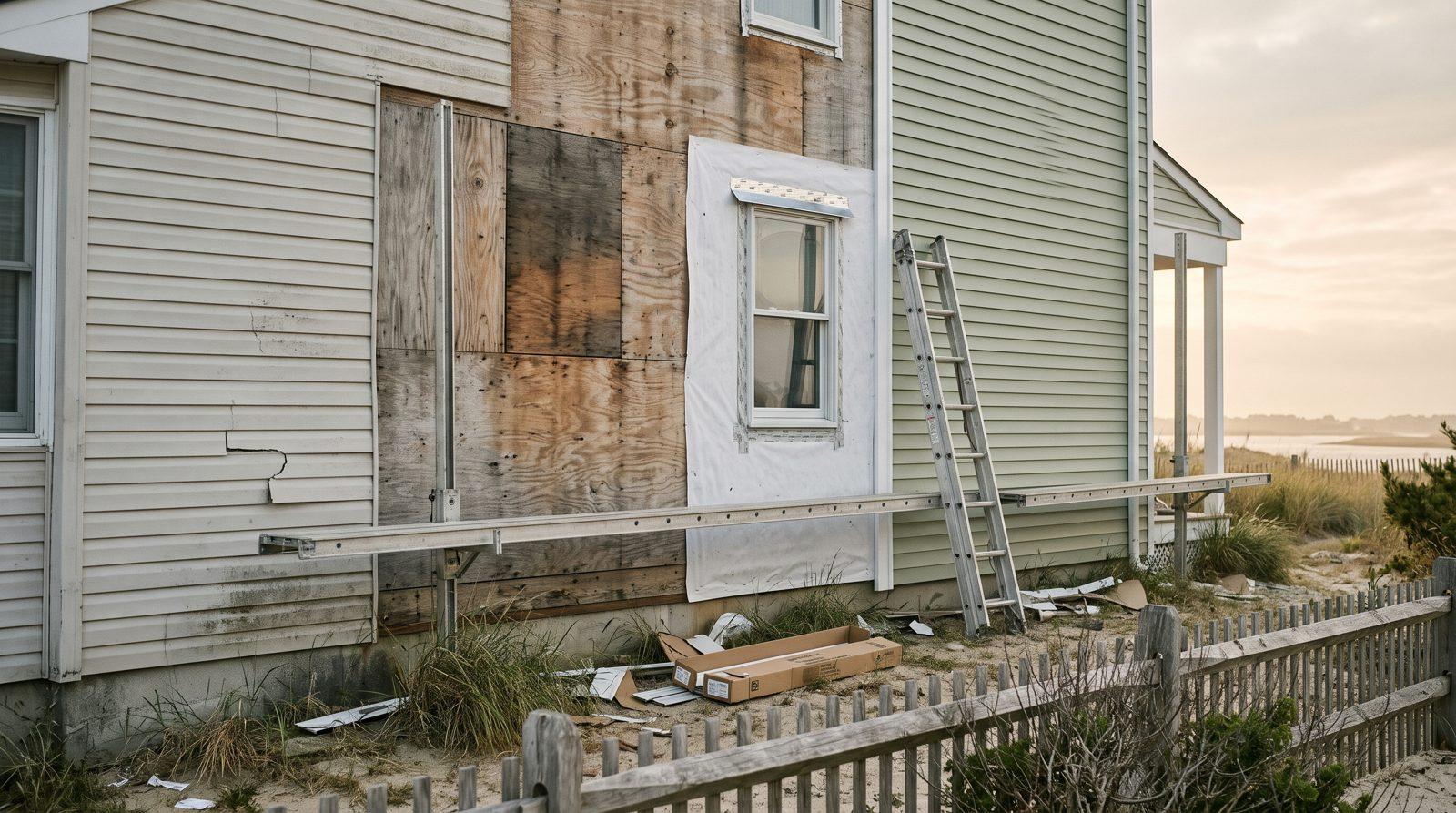
Vinyl siding installation cost on an Ocean County house comes down to six things, and the panel on the sample board is the smallest of them: how much wall there is, what has to come off first, what the sheathing looks like once it does, how much trim and how many corners the house has, which vinyl line you pick, and whether the roof or windows are being done at the same time. Two quotes for the same house can land far apart and both be honest, because they are often pricing different work. The way to read them is to know which of the six each one priced.
Updated November 2026.
Siding is the second thing we get called about after roofs, and the question almost always arrives with a number attached. Somebody down the street got a price, or a mailer quoted a figure per square foot, and now the homeowner wants to know if that's real for their house. Sometimes it is. Often it's a number for a different job.
1. How much wall, measured the way the trade measures it
Siding gets estimated in squares, one square being 100 square feet of wall. A rough estimate takes the outside walls, subtracts the big openings, and adds waste for cuts. A plain two-story box is the cheapest shape there is to side. A house with dormers, bump-outs, a bay window and a garage roof dying into a wall has less flat wall and a lot more cutting, and every cut is labour. That's why two houses with the same square footage on the tax record can get very different siding numbers. One of them is a rectangle.
2. What comes off first
Every siding job we do is a full tear-off to the sheathing. We don't hang new vinyl over old siding, aluminum or cedar, even though it's technically possible and it makes a quote look a lot friendlier. A cover-over skips the labour and the dumpster for the old material, and that's a real saving on paper. It also leaves whatever made the old siding fail sitting right behind the new panels, and at the shore that's usually water.
If you're comparing a tear-off quote with one that never mentions removal, you aren't comparing prices yet. Ask the second contractor, in writing, whether the old siding is coming off.
3. The sheathing nobody can price from the driveway
This is the honest unknown in every re-side. Until the old siding is off, nobody knows how much of the wood behind it is soft. On a bay-side cape that's had salt air and wind-driven rain working behind loose panels for twenty years, the bottom courses and the area under windows are the usual suspects. We inspect the sheathing once it's exposed and replace anything soft before a single new panel goes up.
A good quote tells you how that will be handled before the job starts, usually as a price per sheet replaced. A quote with nothing about sheathing either expects a perfect wall or plans to have that conversation with you later, mid-job, with half the house open.
4. Wrap, flashing, trim and corners
Fresh house wrap goes on over the sheathing, taped and detailed around every window, door and penetration. Then the flashing: head flashing over windows, pan flashing under doors, and kick-out flashing where a roof edge meets a wall. Kick-outs are small, cheap parts, and leaving them out is one of the most common reasons we find rotted sheathing below a roof-to-wall corner on houses that were re-sided ten years ago.
Then the finish work, which is where a lot of the hours go. Corner posts, window trim, J-channel, soffit and fascia where they're part of the scope. A house with a dozen windows and eight outside corners takes noticeably longer than one with six windows and four corners, even at the same wall area.
5. Which vinyl
The product range is wide. Standard lap vinyl is the budget line. Insulated vinyl, such as CertainTeed CedarBoards, has a foam backing that stiffens the panel and cuts thermal bridging through the studs. Board and batten, Carolina Beaded and cedar-impression shakes are profiles people choose for the look, and they take more care to hang well than plain lap.
Our honest take on the insulated upgrade: it earns its keep on older shore houses with thin or no wall insulation, where the drafts and the summer heat gain are noticeable. On a house that's already well insulated the return is smaller, and we'll say so before we quote it rather than put the insulated line on everybody's estimate. The choice between vinyl and something else entirely is a separate decision, and we wrote up vinyl against fiber cement on shore homes for that one.
6. Doing it alone, or with the roof and windows
If the roof or windows are close to due, doing them together with the siding usually costs less than doing them in separate years. One set of permit trips, one round of dumpsters, and one schedule instead of three. More important, the house wrap and flashing at the roof-to-wall lines and around the windows get detailed as one job instead of two contractors each patching around the other's work.
How long it takes, and what to ask for
A typical 2,000 to 3,000 square foot house runs 5 to 10 days on site for a full re-side. Trim complexity, weather and how much sheathing turns up soft decide where in that range a job lands. You should get the schedule with the estimate, and a magnetic nail sweep of the yard and drive before anyone leaves.
When the quotes come in, line them up on the same six questions. Is it a tear-off? How is sheathing priced? Is new wrap and flashing written in? What trim and corner work is included? Which product and profile, by name? Is anything bundled? The quote that answers all six is usually not the cheapest one, and it's usually the only one pricing the whole job. If the siding is failing in only one spot, check first whether a repair will do instead of a full re-side. If you want our number on your house, the siding page shows exactly what we put in the scope.