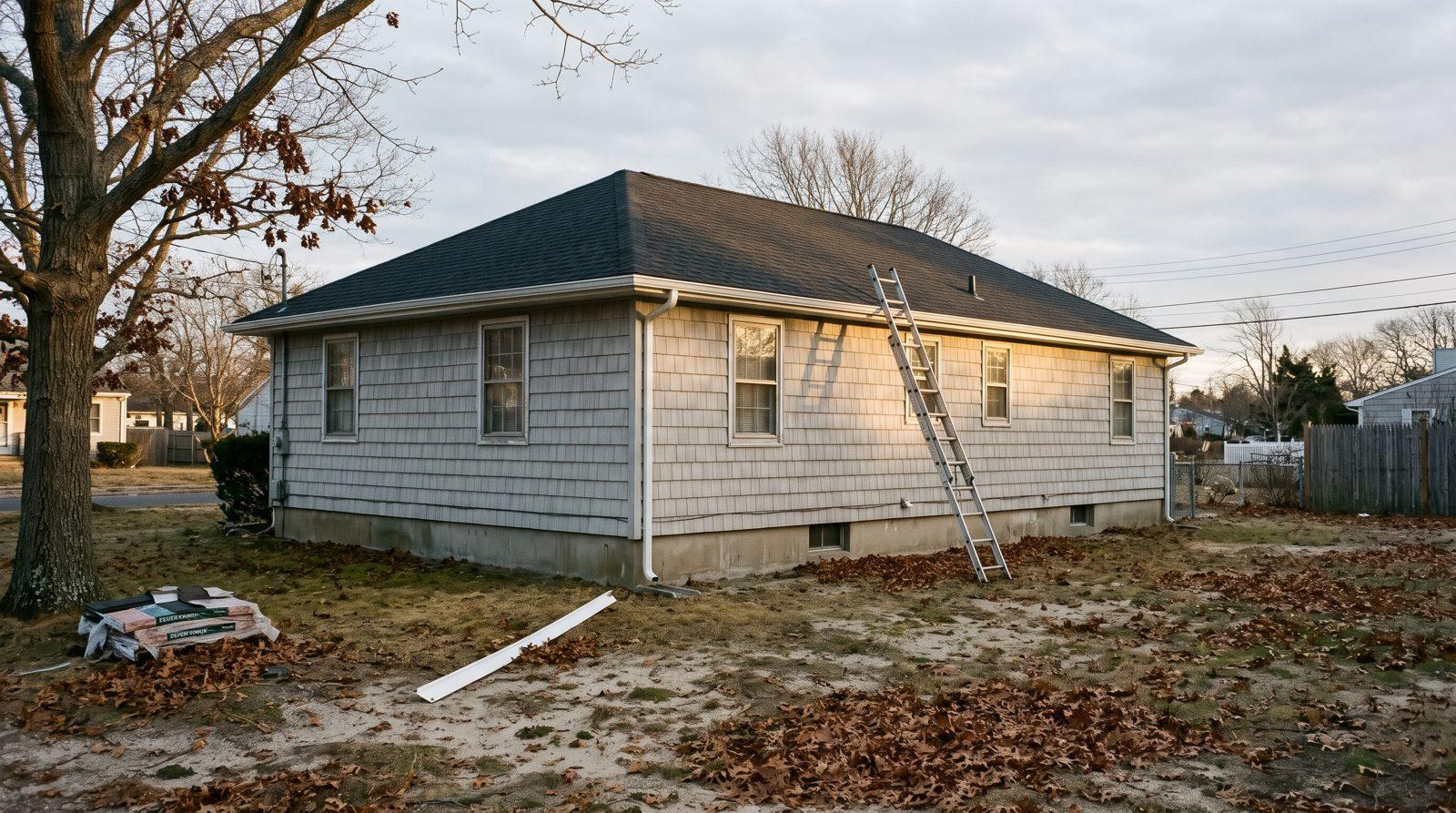
How to Tell How Old a Roof Is: Three Ways, and Only One Needs a Ladder
Check the paperwork first, then the town's permit file, then the roof itself, and expect the permit trail to go cold for NJ roofs replaced after 2018. Here is what each source shows and what it misses.
There are three ways to tell how old a roof is: the paperwork, the town's permit file, and the roof itself. Only the last one needs a ladder. Start with the paper, because a dated document beats any roofer's eyeball, and use the roof to check the paper rather than replace it. In New Jersey there's a catch in the middle step. Since 2018 a like-for-like shingle replacement on a one- or two-family house hasn't needed a permit, so for a newer roof the town may have no record at all.
Updated November 2026.
The question usually lands on us in one of two ways. Somebody is buying a house and the inspector wrote "roof near end of life" without a number. Or somebody has owned the house for six years, never knew what they bought, and now the insurance renewal is asking. Either way, an age is the first fact you need before a quote means anything.
1. The paperwork
Go through these before you call anyone:
- The seller's disclosure. The form New Jersey sellers fill out asks for the roof's age. It's only as good as the seller's memory, but it's a starting date.
- The home inspection report from when you bought. Read what it actually says about the roof, not the summary page.
- Receipts and the contract from whoever did the work, if the previous owner left a folder.
- A manufacturer warranty certificate. If the roof went on with a registered warranty, the certificate carries the install date. That's about the best evidence there is.
If you're mid-purchase, ask for these now through your agent. Sellers find folders a lot faster before closing than after.
2. The permit file, and where it goes cold
Every town keeps its construction permits, and you can ask the municipal construction office for a property's file with an OPRA request (New Jersey's public records law). For an older roof this is gold: a permit and a final inspection with dates on them.
The gap is 2018. Before that, a full reroof needed a permit. After the state changed its rules, a straight shingle-for-shingle replacement on a one- or two-family house no longer does, so a roof put on in 2019 can leave no trace in the town's file. A permit dated 2008 tells you a lot. No permit tells you almost nothing about a newer roof. Structural work, decking past the local threshold and a few other cases still need one, so check anyway, but don't read an empty file as "original to the house."
3. The roof itself
This is where a roofer earns the visit. A few things narrow the window:
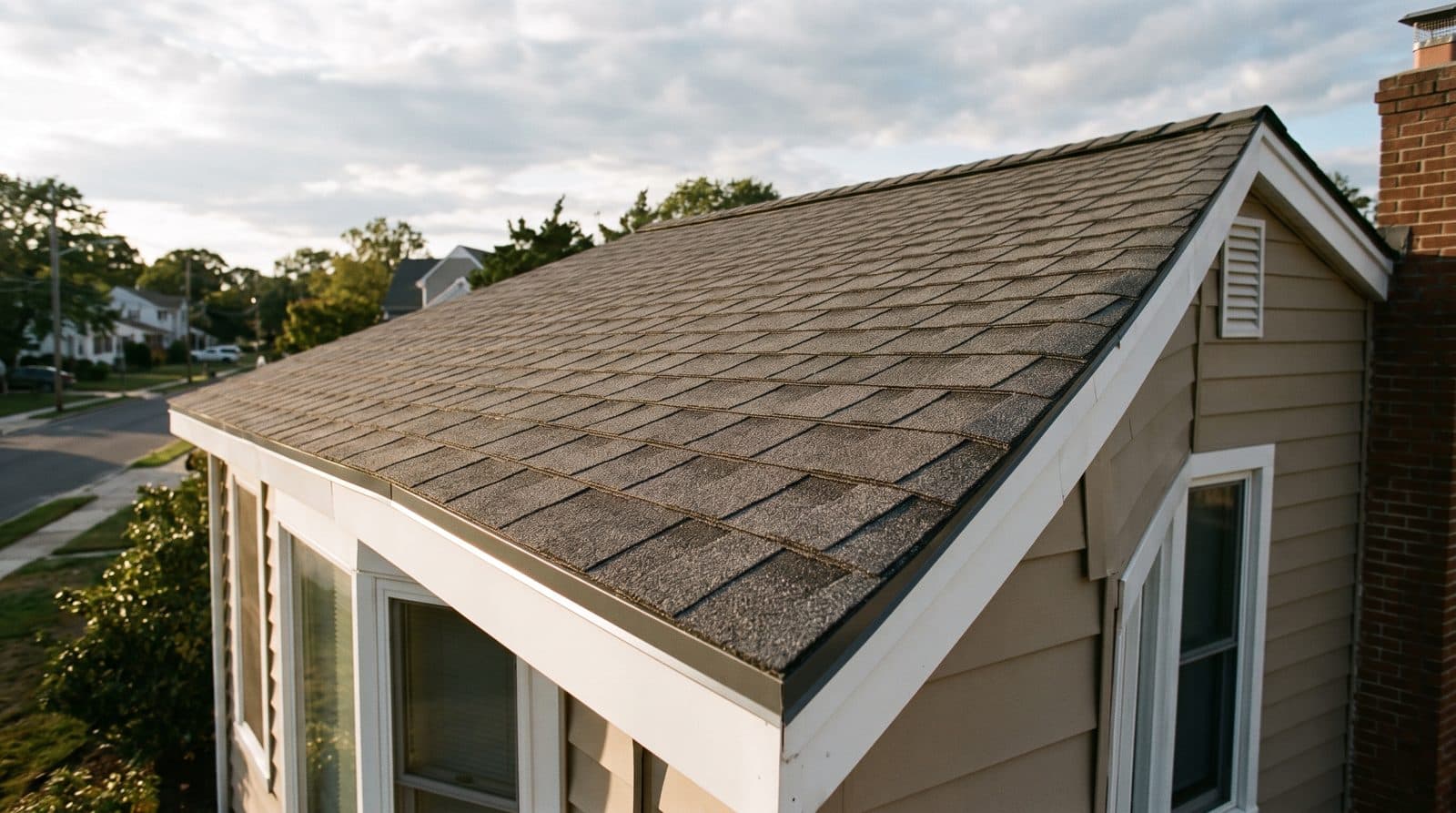
- The shingle line. Manufacturers change their products every so often, and a roofer who installs them can often date a roof from the shingle alone. On a GAF roof, the Timberline HDZ (the one we install, with its wide nailing strip) replaced the older Timberline HD around 2018. Older styles narrow it further.
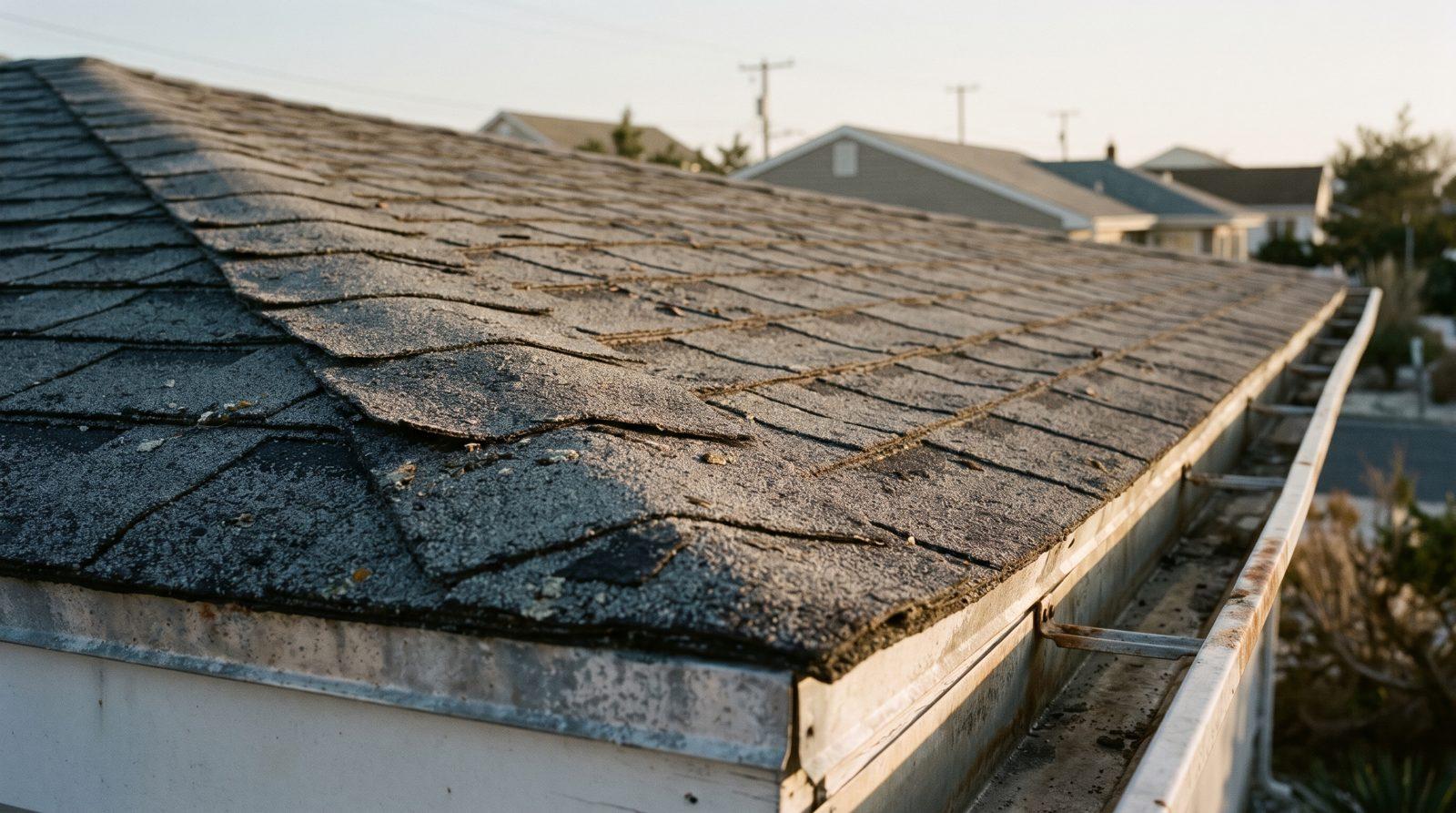
- How many layers. Look at the edge above the gutter. Two stacks of shingles mean somebody laid a new roof over an old one. The top layer is the one you're dating, and the one under it is why the whole thing is heavier and hotter than it should be. We don't overlay; tear-off is the only way to see the deck.
- The attic. Old bundle wrappers sometimes get left up there, and the underside of the decking shows staining and nail rust that a five-year-old roof doesn't have.
- Wear. Granule loss and curling on the south and west slopes, cracked rubber boots around the vent pipes. Useful, but this measures condition, not age, and those are different things.
When two roofers disagree by ten years
It happens, and usually one of them is guessing from wear. A shore roof that takes the full afternoon sun can look fifteen years old at ten, and a roof shaded by trees on the north side can look younger than it is. Ask each of them one question: what is your number based on? A permit, a warranty date or a shingle line that went out of production is evidence. "It looks tired" is an opinion. Ours is that the honest answer is often a range, something like "installed between 2008 and 2012," and a roofer who gives you a single year with no document behind it is being more confident than the roof allows.
Once you have an age, the next question is how much life is left, which is a separate job. We wrote that one up in how many years your roof has left, and how age changes an insurance payout is covered in what insurance covers on an older roof. If the answer is that it's time, our roof replacement page explains how we do it.
Frequently Asked Questions
Can I find out how old my roof is from the town?
Sometimes. Ask the municipal construction office for the property's permit file with an OPRA request. A roof replaced before 2018 usually left a permit and a final inspection with dates on them. Since 2018 a like-for-like shingle replacement on a one- or two-family house needs no permit in New Jersey, so a newer roof may have no record at all, and an empty file does not mean the roof is original.
What is the most reliable proof of a roof's age?
A dated document: a registered manufacturer warranty certificate, the installer's contract or invoice, or a permit with a final inspection. A roofer's estimate from the shingles is useful for checking those, but on its own it is a range, not a date.
Why do two roofers give me different ages for the same roof?
Usually because one is reading wear rather than evidence. A shore roof facing the afternoon sun can look fifteen years old at ten. Ask each roofer what the number is based on: a permit, a warranty date or a shingle line that went out of production counts, an impression does not.