Your Insurance Says You Need a New Roof. Is That True?
Most of these letters are about the age of the roof, not its condition, and the two get solved differently. How to tell which letter you have, what an independent inspection can prove, and whether the policy pays.
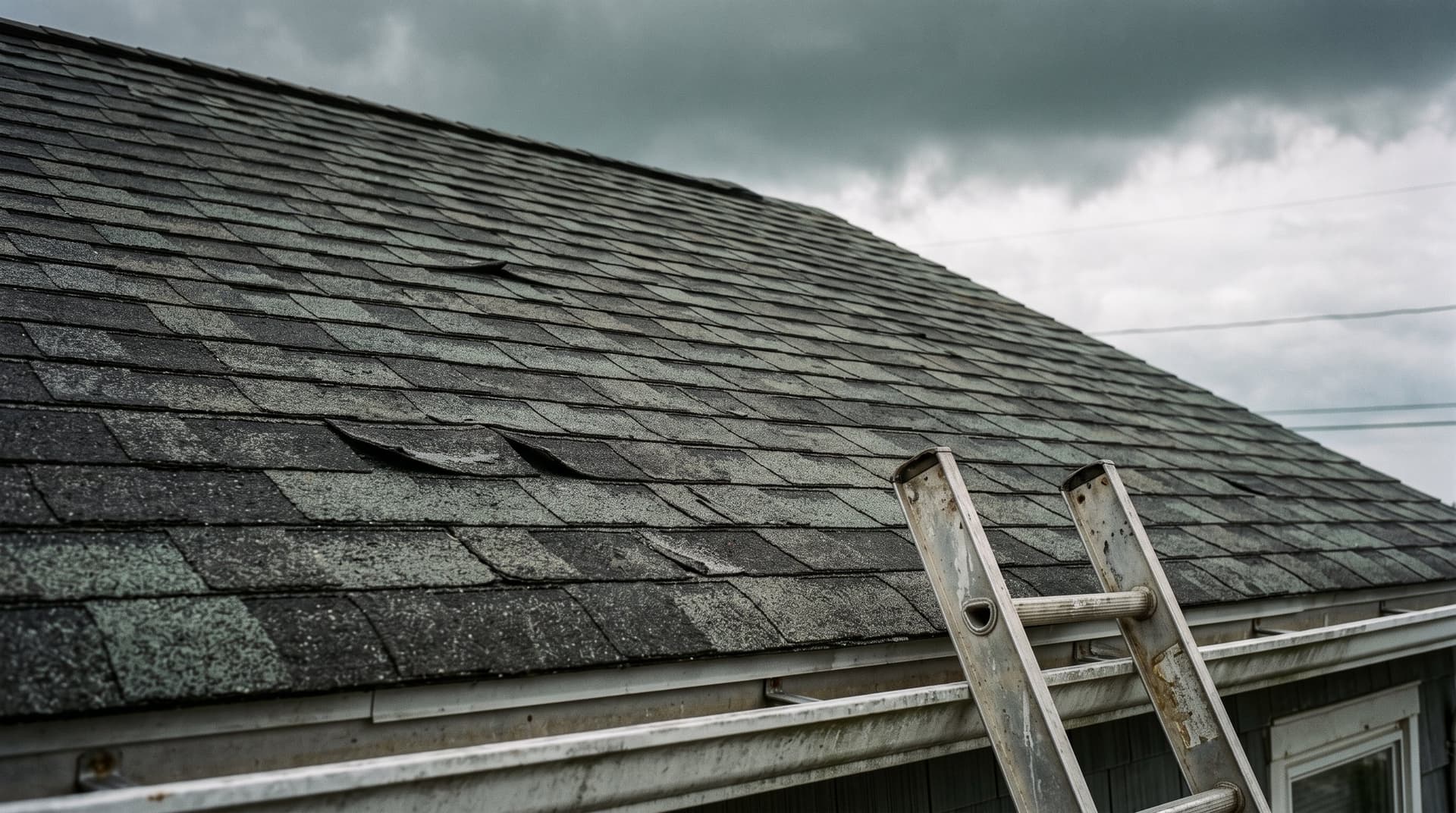
Sometimes yes, and often it has nothing to do with whether your roof leaks. Most of the letters I get shown in Ocean County are underwriting letters about the age of the roof, not inspection reports about its condition. Those are two completely different problems and they get solved two completely different ways, so the first thing to do is work out which one you are holding. Updated September 2026.
I have read a lot of these at kitchen tables in Forked River and Bayville. The homeowner is upset, the letter has a deadline on it, and 9 times out of 10 nobody has explained the difference to them.
First, work out which letter you have
Read it again and look for what triggered it.
An underwriting or non-renewal letter comes from the insurance company, usually after a drive-by or aerial photo, and it talks about the age of the roof or the general condition of the property. It says something like coverage will not renew unless the roof is replaced or repaired by a date. Nobody has been on your roof. Often nobody has been on your property.
A claim decision comes from an adjuster after you filed for storm damage. It is about one event and what it did. That is a different fight with different evidence.
The age letters are the ones that have gotten aggressive the last few years along this part of the coast. Carriers have tightened hard on older asphalt roofs near the water, and plenty of homeowners in Barnegat, Waretown and out toward Manahawkin have gotten one on a roof that is doing fine. Age is a proxy the carrier uses because it is cheap to check. It is not a measurement of your roof.
What an independent inspection can actually prove
If you think the roof has life left, the counter is documentation, and it has to be specific. A letter back saying the roof is fine will not move anybody.
What does move them is a dated inspection with photographs: the condition of the shingle mat, granule coverage, whether the shingles are still sealed down or lifting at the tabs, the state of the flashing at the chimney and walls, the valleys, the pipe boots, the ridge, and whether the decking underneath is sound. Get an estimate of remaining service life written out with a number on it. Include the attic if there is access, because ventilation and moisture staining tell an inspector more about a roof's remaining life than the surface does.
Then send it. Carriers do reverse these, especially when the roof was condemned from an aerial image and the photos show a sealed, intact roof.
Be ready for the answer to go the other way, though. Sometimes the inspection finds that the carrier was right, and it is better to learn that from photographs than from a ceiling stain in February.
When they are right, and you should just hear it
I will say the unpopular part. A fair number of the roofs I am called out to look at after one of these letters are genuinely at the end.
The signs are not subtle once somebody points them out. Shingles that have lost enough granules that the mat shows through and the surface looks bald in patches. Tabs that have stopped sealing and lift by hand on a mild day. Corners curling up. Nail pops through the shingle face. Repeated small repairs in the same areas. Any sag in a plane, which means the decking has been wet for a while.
A 3-tab roof out here that is past 20 years has generally had a full salt air and nor'easter career. Architectural shingles run longer, and a good architectural roof with decent ventilation can look sound well past that. Ventilation is the thing nobody thinks about and it is often what killed the roof early: a hot, unvented attic cooks shingles from underneath, and that roof will not make its rated life no matter whose name is on the wrapper.
We put the specific failure signs in one place in roof warning signs for NJ homeowners, which is the list I would want you to walk with before you decide anybody is wrong.
Whether the policy pays, and how much
This is the part that catches people, and it is worth knowing before you make any calls.
If the replacement is being forced by underwriting, on an old but undamaged roof, the policy is almost certainly not paying for it. That is a condition of keeping coverage, not a claim. It is out of pocket.
If there is an actual covered event behind it, storm damage, then how much you get depends on whether your policy is written at replacement cost or actual cash value. Replacement cost pays to put the roof back. Actual cash value subtracts depreciation for the years the roof already gave you, which on a 15 year old roof can be a large subtraction. Many coastal policies have quietly moved older roofs to actual cash value at renewal, and most homeowners find out at the claim. Your declarations page says which one you have, and it is worth reading today rather than after a storm. We went through the mechanics in does insurance cover roof age, ACV or RCV, and the claim process itself in storm damage insurance claims.
Also check whether there is a separate, higher wind or named storm deductible. On shore policies there usually is, and it is a percentage of the dwelling coverage rather than a flat number, which surprises people.
What I would do, in order
- Read the letter and decide whether it is underwriting or a claim. Everything else follows from that.
- Get an independent inspection with photos and a written remaining life estimate. Do this before you call the carrier back, so you are answering with evidence rather than an opinion.
- Pull your declarations page and find out if you are on replacement cost or actual cash value, and what the wind deductible is.
- Note the deadline and work backwards. These usually give 30 to 60 days, and a roof is not something to buy on the last week of a deadline.
- Then decide. If the roof has real life left, send the documentation and push back. If it does not, you now know what you are buying and why.
Should it come to a replacement, ask whoever quotes it what goes down besides shingles: synthetic underlayment, ice and water shield in the valleys and at the eaves, new drip edge, proper pipe boots, and ridge vent sized to the intake you actually have. A roof that fails early out here usually failed at one of those, not at the shingle. We are GAF certified and Stephen has been on Ocean and Monmouth County roofs for more than 20 years, and you can see a full before and after from a Toms River job on our Toms River page. The roof replacement page covers what the job involves.
And if you want a second opinion on a letter before you spend anything, call us and we will come look at it. If the roof has years left, I will tell you that, and you can put it in writing to your carrier.
Frequently Asked Questions
Can my insurance company make me replace a roof that does not leak?
They cannot force the work, but they can decline to renew the policy if it is not done, which amounts to the same choice. Age-based non-renewal letters are usually written off a drive-by or an aerial image with nobody on the roof, so a dated independent inspection with photographs of the shingle mat, seal, flashing and decking plus a written remaining-life estimate is the thing that gets them reversed.
Will my policy pay for the roof if underwriting is forcing the replacement?
Almost certainly not. An old but undamaged roof replaced to keep coverage is a condition of the policy, not a claim, so it comes out of pocket. A policy pays when there is a covered event such as storm damage behind it.
What is the difference between ACV and RCV on a roof claim?
Replacement cost value pays to put the roof back. Actual cash value subtracts depreciation for the years the roof already gave you, which on a 15 year old roof can be a large subtraction. Many coastal policies quietly move older roofs to actual cash value at renewal, and most homeowners find out at the claim. Your declarations page says which one you have.
Who should I call first, the adjuster or a roofer?
Get the independent inspection first, so you are answering the carrier with photographs and a remaining-life number rather than an opinion. Then call the carrier. Also pull your declarations page for the wind or named-storm deductible, which on shore policies is usually a percentage of dwelling coverage rather than a flat figure.