How to File a Roof Storm Damage Insurance Claim in NJ Without Getting Played
What actually happens after a nor'easter or hurricane takes shingles off your Ocean County roof. The order to call people in, what adjusters look for, and the moves that get claims approved instead of denied.
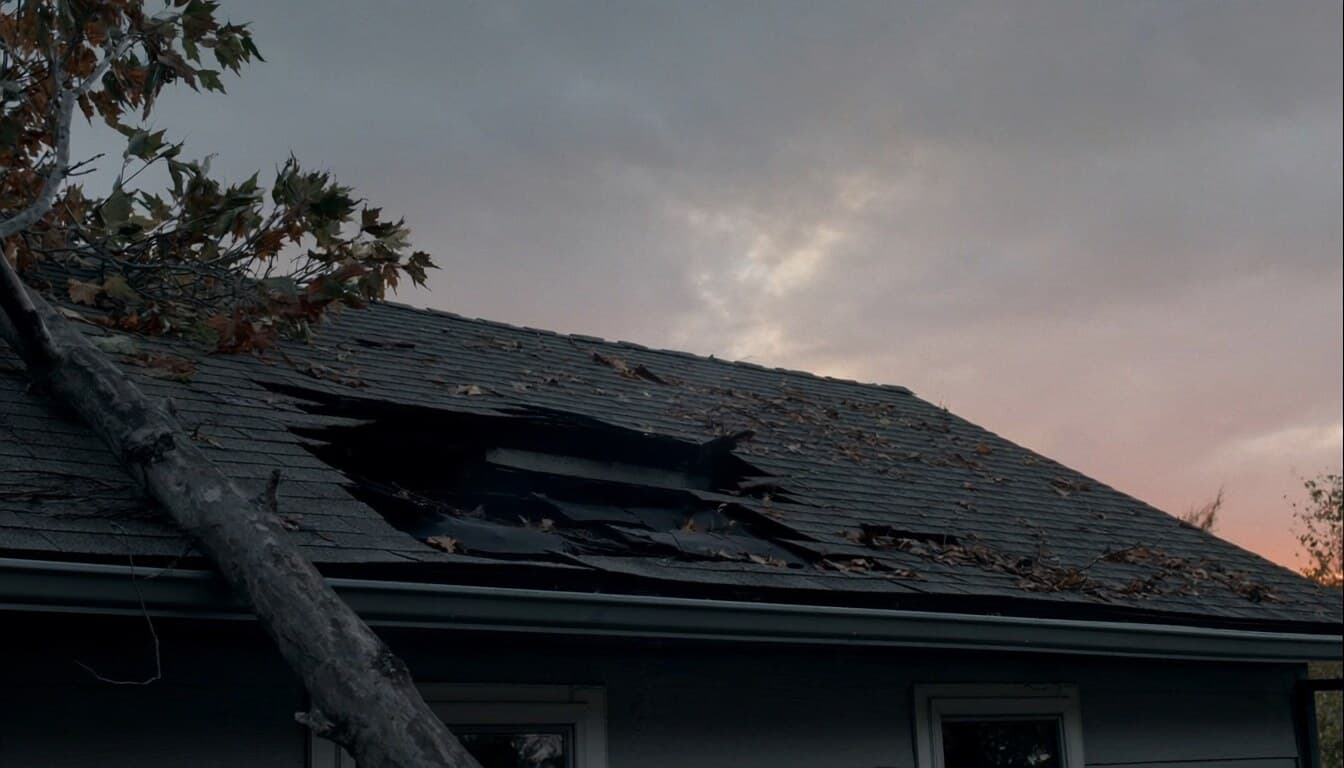
Storm season on the Jersey Shore is no joke. A single nor'easter or remnant tropical system can pull dozens of shingles off a roof in Forked River, Bayville, or Manahawkin overnight. The damage is the easy part. Getting your insurance company to actually pay for the repair is where most homeowners get steamrolled. Here's how to handle it without losing the claim or paying out of pocket for damage you already insured against.
Step one: do not call your insurance company first
This sounds backwards, but it's the single biggest mistake we see in Ocean County. The minute you open a claim, the clock starts and an adjuster gets dispatched. If you haven't documented the damage yet, the adjuster's report becomes the official record of what happened. That report is almost always written in the carrier's favor.
Call a licensed local roofer first for a free storm inspection. Get up there with a contractor who looks at coastal NJ roofs every week and knows the difference between hail bruising, wind lift, and normal granular wear from twenty years of sun. Document everything before anyone else writes the story.
What real wind and hail damage looks like
Adjusters are trained to deny claims that look like wear and tear. Knowing what counts as covered storm damage saves the claim:
- Wind lift on architectural shingles. Tabs that have broken the seal strip and lifted, even if they haven't blown off yet. The factory seal is what makes the roof watertight. Once it breaks, the shingle is failed even if it's still on the roof.
- Creased shingles. Shingles that have been folded back by wind and laid down again leave a horizontal crease across the tab. Look for these around eaves and ridges where wind speeds are highest.
- Missing shingles. Obvious, but photograph the count and the location. Adjusters will argue a few missing tabs aren't enough to warrant a full slope replacement, but the building code in New Jersey often disagrees.
- Hail bruising. Soft, round depressions where the granular surface has been knocked off, exposing the asphalt mat. Hail damage is harder to find than wind damage but more valuable on a claim because it usually pays out the entire roof.
- Damaged flashing, drip edge, or ridge vent. Bent metal, missing fasteners, vent caps blown off. These are often denied as "maintenance" but they're storm-caused and they should be in the scope.
Document like it's going to court
Because it might. Take photos from the ground first showing the whole roof and the property. Then close-ups of every damage point with a tape measure or coin in frame for scale. Date and timestamp everything. Get drone shots if your roofer flies one. Save the weather report from the date of loss showing wind speeds or hail at your address. NOAA and the National Weather Service archive this data and it's free.
Write down what happened in your own words while it's fresh: when you noticed the damage, what the storm did, whether you heard impacts. This becomes part of your sworn statement of loss later.
Now call the carrier
Open the claim with your photos and your roofer's inspection report already in hand. Ask for the policy number, the claim number, and the adjuster's name and direct number. Get the policy mailed or emailed to you in full so you can read it yourself. Most NJ homeowner policies have specific coverage triggers around named storms versus regular wind, and around hail deductibles versus other-peril deductibles. The carrier will not volunteer any of this. Read the policy.
When the adjuster shows up, your roofer should be on the roof at the same time. Period. We meet adjusters at every storm-damage inspection in Ocean and Monmouth County. The adjuster is going to write a scope of damages. If we're not there, the scope gets written without us. We've seen scopes that include three tabs of shingles on a roof we know needs full replacement.
Scope, RCV, and ACV: the three numbers that matter
Once the adjuster writes the scope, the claim payout breaks into two checks:
- Replacement Cost Value (RCV). What it actually costs to repair or replace the damage today, with current materials and labor.
- Actual Cash Value (ACV). RCV minus depreciation. This is your first check and it's almost always less than half the total.
- Recoverable depreciation. The remaining amount the carrier holds back until the work is completed. Most policies require you to actually complete the repair within a specified window (usually 180 days to 2 years) and submit final invoices to release this check.
One warning before you count on that recoverable-depreciation check: on a pure actual-cash-value roof endorsement the depreciation is never recoverable, and on an older roof the ACV payout can be near zero. Whether your roof settles on RCV or ACV is set by your policy and your roof's age, not by the storm. We break down the RCV vs. ACV math and the exact policy line to read in our guide to whether insurance covers your roof based on age.
If the scope the adjuster writes is too low to actually do the job right, your roofer should write a supplement. A supplement is a formal request to add line items the adjuster missed: code-required ice and water shield, a new ridge vent because the old one is bent, drip edge that doesn't match current code, plywood replacement for rotted decking found during tear-off. We supplement nearly every storm claim in Ocean County. Carriers expect it. Homeowners who don't supplement are leaving money on the table.
What gets claims denied
The denials we see most often on Jersey Shore roofs:
- "Wear and tear, not storm-related." Fight this with your weather report and dated damage photos. If the roof was passing rain before the date of loss and leaking after, that's a storm event.
- "Cosmetic only." Some carriers carve out cosmetic damage on metal roofs and certain shingle lines. Check the policy. If the carve-out isn't there, this denial doesn't stand.
- "Insufficient damage." Carrier wants to repair a few shingles instead of replacing the slope. New Jersey building code generally requires matching shingles for repairs, and discontinued shingle lines (which is most of them after a few years) trigger a full slope or full roof replacement under the matching statute.
- "Late notice." Most policies require prompt notification, usually within 30 to 60 days of the loss. Don't sit on storm damage. Document fast and file fast.
The deductible reality
Most NJ homeowner policies have a windstorm deductible separate from the standard deductible. On the Jersey Shore, that wind deductible is often 1% to 5% of the dwelling coverage limit. On a $500,000 dwelling, a 2% wind deductible is $10,000 out of pocket before the carrier pays anything. Read your declarations page and know this number before the storm hits, not after.
Hurricane and named-storm deductibles are even higher in some policies. Some carriers also separate hail from wind. Know what you have.
One more warning tied to that deductible: if a contractor knocking your door after the storm offers to "cover" or waive it, walk away. In New Jersey that offer is illegal and it attaches you to insurance fraud on a claim filed in your name. We spell out that red flag and five others in how to spot a storm chaser after a Shore storm.
How we handle storm claims at Home Pro
If a storm hits Ocean or Monmouth County and you think your roof took damage, we come out, climb the roof, and tell you straight: real claim, marginal claim, or no claim. We don't chase storm work for the sake of writing claims. If the damage is real, we document it with photos and a written scope, meet the adjuster on site, write supplements when the scope is short, and handle the work end-to-end with our GAF Timberline HDZ system, full ice and water shield, synthetic underlayment, new flashing, and a 10-year workmanship guarantee. You sign the contract, we run the claim, your carrier pays the carrier's share, you pay the deductible. That's it.
If you're in Lacey, Forked River, Barnegat, Toms River, Manahawkin, the LBI corridor, Brick, Howell, Wall, or anywhere else in Ocean or Monmouth County and you've taken storm damage, call us before you call the carrier. The order matters.