Why One Roofing Quote Is Thousands Lower Than the Others
Why do roofing quotes vary so much? Usually one of four line items: tear-off vs layover, decking, underlayment, or warranty terms. Here's how to read them.

Roofing quotes vary by thousands of dollars because the low number usually skips real costs, not corners: layover instead of tear-off, no decking allowance, felt instead of synthetic underlayment, thin ice-and-water shield coverage, and a workmanship warranty that isn't actually written down anywhere.
Updated August 2026 with the roofing-square math behind a per-square price, the exact line items that separate a real quote from a stripped-down one, and a one-page table for putting three quotes side by side and comparing them fairly.
Home Pro Remodeling is a GAF Certified roofing and exterior contractor based in Forked River, working Ocean and Monmouth County NJ only, from Lacey and Barnegat through Manahawkin and the LBI corridor up to the Monmouth shore. The question we hear most after "what's this going to cost" is "why is his number so much lower than yours." Usually the other guy isn't a crook. The two quotes just aren't pricing the same roof, and nothing on either page makes that obvious unless you know what to look for.
The Four Things a Low Number Is Usually Leaving Out
A quote that lands thousands below the others is almost always leaving out one of four things: a tear-off to bare deck, a real decking allowance, code-grade underlayment and ice-and-water coverage, or a workmanship warranty that means anything in writing. Skipping any of it doesn't make the roof cheaper to own, it just moves the bill to the years after the crew leaves.
- Tear-off vs. layover. A layover skips tear-off labor and disposal, and it's the single biggest gap between two numbers.
- Decking allowance. A quote with no per-sheet decking price either found a perfect deck (rare on anything over 15 years old) or is planning to charge you later without saying so now.
- Underlayment and ice-and-water spec. Felt paper and minimal ice-and-water coverage cost less to buy and install than a full synthetic and shield package, and the difference doesn't show up until the first February storm.
- Warranty terms. A "30-year roof" with no written workmanship coverage and no certification behind the material warranty is a different product than one with both, even with the same shingle on the wrapper.
The rest of this walks through each one, what it should cost to do right, and how to catch the gap before you sign anything.
Tear-Off vs. Layover, and Why It Changes Everything Below the Shingles
Tear-off removes the existing roof down to bare wood decking before anything new goes on, while a layover nails a second layer of shingles directly over the first, and the difference in labor and disposal alone can run into the thousands on a mid-size roof. Roofers price and measure a roof in "squares," a square being 100 square feet of roof surface, and both the material and the labor number scale off that count. A 24-square colonial and a 24-square ranch cost roughly the same to shingle. What changes the number underneath is whether the crew removes 24 squares of old roofing first or just adds a second layer on top of it.
New Jersey's building code allows a maximum of two layers of asphalt shingles on most one- and two-family homes, so a layover is only legal at all if you're on your first layer, and even then it's rarely the right call. It traps moisture and heat between the two shingle layers, adds real weight to the structure, and, critically, means nobody ever looks at your decking. We tear off to bare deck on every full replacement, because you cannot inspect, repair, or warranty what you never uncover, and GAF's strongest warranty tiers require a tear-off to bare deck with GAF-approved components installed together, which a layover structurally cannot qualify for. If a quote doesn't say "tear-off" in plain words, ask. A layover priced to look like a full replacement is the single most common way a number comes in low.
Decking: The Line Nobody Can Price Honestly Before Opening the Roof
Nobody can price your decking honestly before the old roof comes off, because the plywood or board sheathing underneath is invisible until then, which is exactly why the right quote gives you a per-sheet price instead of pretending to already know. Roofs that have taken a slow chimney leak, an ice-dam season, or twenty years of poor attic ventilation often hide soft or delaminated sheathing that looks fine from the attic side and only shows itself once the shingles and underlayment come off.
There are only two honest ways to handle it: a clear per-sheet rate with your sign-off required before extra work happens, or a contractor who knows the roof well enough to reasonably vouch for the deck. A quote with no decking language at all either assumes zero replacement, a bet on your behalf you never agreed to, or plans to bill you mid-job once the tarps are down and you have no room to say no. We price decking as a stated per-sheet rate and never proceed on a sheet without you seeing it first. If a competing quote is silent on it, ask what happens if they find rot, and get the answer in writing.
Underlayment, Ice-and-Water, Flashing: Where a Shore Roof Actually Fails
A shore roof fails at the underlayment, the ice-and-water shield, and the flashing long before it fails at the shingle field, because those three layers are what stand between your decking and water once wind, ice, or a driving nor'easter gets past the shingles themselves. This is where a low bid saves the most money, and where it's hardest to see on paper.
Underlayment. Felt paper is cheaper and faster to install than synthetic, and it's still legal, but it tears more easily underfoot, absorbs moisture, and degrades faster under NJ heat cycles. We run synthetic underlayment across the entire field on every job, never felt.
Ice-and-water shield. This self-adhering membrane goes down at every eave, valley, and penetration, where wind-driven rain and ice-dam backup actually get under the shingles. "Ice and water where required" leaves "required" open to argument later; linear footage at eaves, valleys, and every penetration tells you exactly what you're getting. On a Jersey Shore home, shrinking this coverage is the fastest way to a February leak that has nothing to do with the shingles overhead.
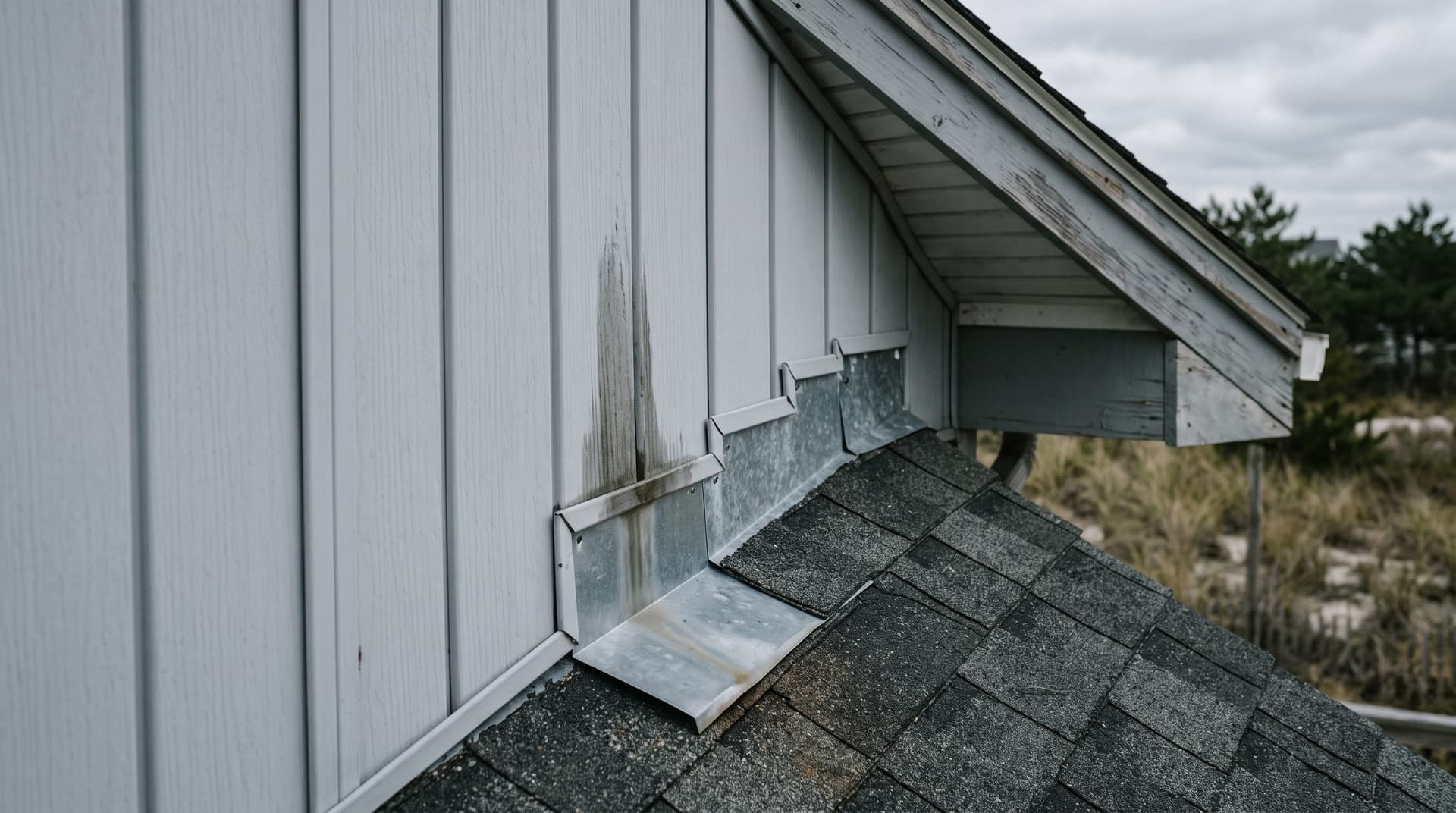
Flashing and drip edge. Reusing old step flashing, chimney flashing, and drip edge is a common, invisible way to shave a few hundred dollars off a bid, because old flashing looks fine in a photo. It's also where most "new roof, still leaking" calls we get on someone else's install trace back to. New drip edge, new step flashing, and a properly vented ridge belong on every full replacement, not as an upsell.
Disposal, Permits, and Labor Rates: Real Cost Differences That Are Not Corner-Cutting
Some of the gap between two honest quotes is not corner-cutting at all, it's a legitimate cost difference in disposal, permitting, and labor that a smaller or leaner operation can genuinely run for less. It's worth naming these separately from the four items above, because not every lower number is hiding something.
- Disposal. A full tear-off generates a real dumpster's worth of debris and a magnetic nail sweep of the yard afterward. A crew that skips the sweep or under-sizes the dumpster is cutting a corner; a smaller company genuinely paying less for a roll-off is not.
- Permits. Most Ocean and Monmouth County replacements need a reroof permit filed with the township, which triggers a final inspection confirming the work meets code. That takes real time, which belongs in the price. A contractor who says they skip permits isn't offering a discount, they're hiding your job from the inspector.
- Labor and crew structure. Employees on payroll with workers' comp cost more to field than uninsured day labor, and that shows up honestly in a bid. It's also why it's worth asking who's actually on your roof and whether they're insured.
A legitimate overhead difference of a few hundred dollars looks nothing like the thousands you get from skipping tear-off, decking, or code-grade underlayment. Small gap, ask about overhead. Large gap, ask about scope.
Warranty Terms That Make Two "30-Year Roofs" Different Products
Two roofs can both be sold as a "30-year roof" and still be different products, because that phrase usually describes the base material warranty on the shingle itself, not the workmanship coverage on the install, and the two aren't the same thing. The shingle manufacturer's material warranty covers defects in the shingle and exists whether the roofer who nailed it down has done one roof or ten thousand. What differs by contractor is the workmanship warranty, which covers installation errors, and the certification level behind any extended material coverage.
As a GAF Certified contractor, we can offer stronger GAF system warranties bundling extended material coverage with contractor-backed workmanship protection, but only when the whole system, underlayment, ice-and-water, shingles, and ventilation, is GAF-approved and installed to spec. Mix in off-brand components and that coverage isn't available no matter what the shingle brand on the wrapper says. A workmanship warranty that isn't written into the contract, with a specific term, isn't a warranty, it's a sales line. Ten years in writing is the floor we'd want on our own house. Ask every contractor for the exact number.
How to Put Three Quotes on One Page and Compare Them Fairly
The only fair way to compare three roofing quotes is to build one table with the same line items across all three, because the total at the bottom is meaningless until you know all three totals describe the same roof. Pull the scope-of-work section out of each quote and fill in this table before you look at the price line again.
| Line item | What to check for | What it changes |
|---|---|---|
| Tear-off vs. layover | The words "tear-off" and "to bare deck" stated plainly | Labor, disposal, and whether decking is ever inspected |
| Decking allowance | A stated per-sheet price and a sign-off step before extra work | Who eats a rotted-deck surprise, and when you find out |
| Underlayment product | Named as synthetic, not "felt paper" or left blank | How the roof handles moisture under the shingle field |
| Ice-and-water shield | Linear footage at eaves, valleys, and every penetration, not "where required" | Whether wind-driven rain and ice-dam backup get under the shingles |
| Flashing and drip edge | "New" stated explicitly, not silent, which usually means reused | The single most common cause of a leak on a brand-new roof |
| Shingle product | An actual named product line, not just "30-year architectural" | Material warranty terms and real MSRP per square |
| Workmanship warranty | A specific number of years and what it covers, in the contract | Who pays if the install itself fails, separate from the shingle |
| Disposal and cleanup | Dumpster and magnetic nail sweep named as included | Whether it's in the price or billed as a surprise |
| Permit | Contractor states they file it and coordinate inspection | Whether the job is on record with the township at all |
Once all three quotes are filled into the same nine rows, the total makes sense for the first time. Two quotes that were $4,000 apart on paper are often within a few hundred dollars once you match tear-off to tear-off and synthetic underlayment to synthetic underlayment. The quote that was thousands lower usually stays thousands lower and still can't fill in half the table, which is the answer you were looking for in the first place.
Roofing quotes vary so much because most of them aren't pricing the same roof, and the difference lives in nine specific line items, not in one contractor being honest and another dishonest. Fill in the table above with your own quotes before deciding on price alone. A straightforward tear-off and replacement in Ocean or Monmouth County typically runs $9,000 to $18,000 depending on size and complexity, and a number thousands below that on a comparable house means something is missing from the scope, not that you got lucky. Our own Ocean County roof replacement cost guide breaks that range down by line item, and our guide to hiring a roofing contractor in NJ covers the licensing and vetting side of this same decision.
Frequently Asked Questions
Why is one roofing quote thousands of dollars lower than the others?
Usually it's leaving out one of four things: a full tear-off to bare deck instead of a layover, a per-sheet decking allowance, synthetic underlayment and full ice-and-water coverage instead of felt, or a written workmanship warranty. Each is a real cost, and skipping it lowers the price without lowering what the roof needs.
What does a "square" mean on a roofing quote?
A roofing square is 100 square feet of roof surface, the unit contractors use to price materials and labor. A quote that states square count lets you check two bids are measuring the same roof before comparing totals. Very different square counts on the same house means one bid measured it wrong.
Is a roof layover cheaper than a full tear-off, and is it a bad idea?
A layover is cheaper because it skips tear-off labor and disposal, and NJ code allows it on a first layer, but nobody inspects the decking underneath, it traps moisture between shingle layers, and it disqualifies the roof from GAF's strongest warranty tiers, which require a tear-off to bare deck. Legal in limited cases, rarely the right call.
Should a roofing quote include a price for replacing rotted decking?
Yes, as a stated per-sheet rate and a sign-off step, because nobody can see the decking until the old roof comes off. A quote with no decking language either assumes a perfect deck, rare past 15 years old, or plans to bill you for it after the tarps are already down.
What is the difference between a shingle's material warranty and a workmanship warranty?
The material warranty comes from the shingle manufacturer and covers defects in the shingle, regardless of who installed it. The workmanship warranty is the contractor's own promise covering installation errors, and it should appear in the contract with a specific term. A "30-year roof" with no written workmanship warranty is only half a warranty.
How much does a full roof replacement cost in Ocean and Monmouth County, NJ?
A straightforward tear-off and replacement with architectural shingles typically runs $9,000 to $18,000, with larger, steeper, or more complex roofs running higher. A quote thousands below that range on a comparable house is usually missing tear-off, a decking allowance, code-grade underlayment, or full ice-and-water coverage rather than reflecting a genuine discount.
Ready to compare the quotes you already have?
Send us the two or three quotes you're weighing, from any contractor in Forked River, Lacey, Bayville, Barnegat, Toms River, Brick, Manahawkin, Waretown, Howell, Wall, or Manasquan, and we'll go line by line and tell you what each one is and isn't including, no charge, no pressure to switch. Home Pro Remodeling is GAF Certified, NJ HIC licensed (13VH08300200), 5.0 rating across 200+ Google reviews across Ocean County. Request a free roof estimate or call (732) 703-7808, you get us directly, not a call center. If your roof is past saving, here's what a real roof replacement includes.
Frequently Asked Questions
Why do roofing quotes vary so much for the same job?
Because most of the quotes homeowners collect are not actually pricing the same roof. The gap usually lives in four places: tear-off to bare deck versus a layover, a real per-sheet decking allowance versus none, synthetic underlayment and full ice-and-water shield coverage versus felt and minimal coverage, and a written workmanship warranty versus none at all. Any one of those, missing, can pull a number down by thousands of dollars without the roof itself being any cheaper to actually own.
What is the difference between a roof tear-off and a layover, and why does it matter?
A tear-off removes the existing roof down to bare wood decking before anything new goes on. A layover nails a second layer of shingles directly over the first, which skips the labor and disposal cost of tear-off and is why a layover-priced quote often comes in thousands lower. New Jersey code caps most homes at two shingle layers, so a layover is only legal on a first layer, and it means nobody ever inspects the decking underneath, which is exactly why GAF's strongest warranty tiers require a tear-off to bare deck.
Why doesn't a low roofing quote include a price for rotted decking?
Because the plywood or board sheathing under the shingles is invisible until the old roof actually comes off, and an honest contractor prices that uncertainty as a stated per-sheet rate with your sign-off required before any extra work happens. A quote with no decking language at all is either betting the deck is perfect, which is rare on a roof over 15 years old, or planning to bill the cost after the tarps are already down and there is no room left to say no.
Does underlayment really make a difference in what a roofing quote costs?
Yes. Felt paper is cheaper to buy and faster to install than synthetic underlayment, and it is still code-legal, but it tears more easily during install, absorbs moisture, and degrades faster under New Jersey's heat cycles. A quote naming synthetic underlayment by product, plus full ice-and-water shield coverage at every eave, valley, and penetration rather than vague 'where required' language, is pricing a materially different roof than one that specifies neither.
Is a '30-year roof' warranty the same no matter which contractor installs it?
No. The 30-year figure almost always describes the shingle manufacturer's base material warranty, which covers defects in the shingle regardless of installer. It says nothing about the workmanship warranty, which is the contractor's own written promise covering installation errors, or about whether the contractor is certified to offer extended manufacturer coverage. Two roofs sold as '30-year roofs' with the same shingle on top can carry very different real protection underneath.
What is the honest range for a full roof replacement in Ocean and Monmouth County, NJ?
A straightforward tear-off and replacement with architectural shingles typically runs $9,000 to $18,000, with larger, steeper, or more complex roofs running higher. A quote thousands below that range for a comparable house is almost always missing tear-off, a decking allowance, code-grade underlayment, or full ice-and-water coverage rather than reflecting a genuine discount, which is exactly why lining up scope of work matters more than lining up totals.