Black Streaks on Your Jersey Shore Roof: What Gloeocapsa Magma Is Doing to Your Shingles and How to Stop It
Those dark vertical streaks running down the north side of your roof are not dirt and they are not stains. They are a living algae colony eating the limestone in your shingles. Here is what is actually happening on Ocean County roofs, what cleaning works and what destroys the shingle, and the prevention that keeps it from coming back.
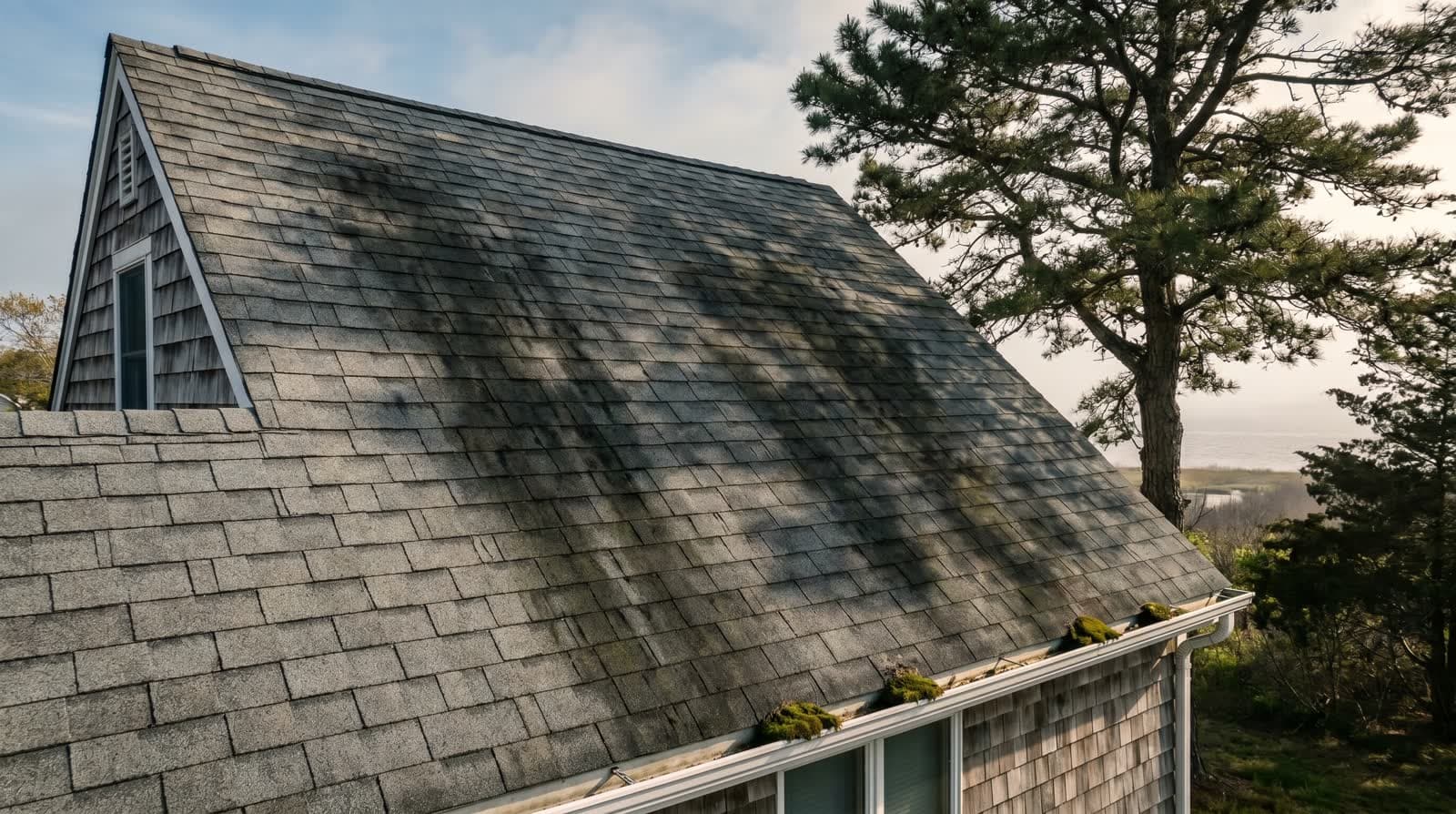
About a third of the residential roofs we look at in Ocean County between April and June have visible black streaks running vertically down at least one slope. Most homeowners think they are dirt. Some think they are mildew. A few have been told by a power-washing guy that they are mold and need to be blasted off with a 3,000 PSI rig. Almost none of them know what the streaks actually are or what to do about them.
The streaks are a living organism. The species is Gloeocapsa magma, a cyanobacterium that has spread through asphalt-shingle roofs along the entire East Coast over the last 25 years. The Jersey Shore is one of its favorite climates: humid summers, mild winters, salt air, and dense tree cover are all conditions it loves. Once it colonizes a roof, it spreads through wind and rain to every house in the neighborhood. By the time a homeowner notices the streaks from the street, the colony has been working on the shingles for a year or two.
This is the post we wish every Forked River, Lacey, Bayville, Barnegat, Manahawkin, Toms River, and Brick homeowner read in May before someone with a pressure washer rang the doorbell. The information applies whether you hire Home Pro, a roof-washing specialist, or do nothing. The point is to understand what is on your roof and what your options actually are.
What Gloeocapsa Magma Actually Is and Why It Eats Roofs
Gloeocapsa magma is a cyanobacterium, not a fungus or a moss. It is single-celled, photosynthetic, and surrounds itself with a dark sheath that protects it from UV light. That dark sheath is what turns the colony black-green as it grows. The algae feeds on two things that exist in modern asphalt shingles:
- Limestone filler. Standard architectural shingles use limestone (calcium carbonate) as a weight filler in the shingle body and as part of the ceramic-coated granule. The algae digests the limestone.
- Atmospheric moisture and humidity. The colony needs water to live. The Jersey Shore's humidity, dew cycles, and shaded north-slope drying conditions are ideal.
The colony grows in the direction water flows, which is why the streaks run vertically from ridge to gutter. Wind-driven spores land at the ridge, the colony establishes, and every rainstorm carries the algae downward, leaving a trailing streak. The pattern is so consistent that algae streaks are almost always longer on the north and west exposures (less direct sun, longer drying time) than on the south and east.
The damage matters because the limestone in the shingle is what holds the granules in place and protects the asphalt mat from UV. As the algae eats the limestone:
- Granule loss accelerates.
- The shingle surface goes from rough and gripping to smooth and shedding.
- UV starts breaking down the exposed asphalt.
- The shingle becomes brittle.
- The expected 30-year lifespan compresses to 18 to 22 years.
Roofs with heavy algae growth that goes untreated do not just look bad. They age years faster than the same roof would without the colony. We have torn off roofs in Lacey and Barnegat at year 16 that should have had a decade of life left. The algae did most of the damage.
Why Ocean and Monmouth County Roofs Get Hit Hardest
Five conditions stack up on most Jersey Shore homes:
Humidity. Coastal Ocean County humidity averages 70 to 80 percent from May through October. Inland Monmouth runs similar. The roof surface stays damp for hours after rain or morning dew, especially on shaded slopes. That damp window is when the algae actively grows.
Tree canopy. Most of southern Ocean County (Forked River, Lacey, Bayville, Waretown) was developed by clearing pitch pine and oak. Mature trees were left in place or grew up around the houses. Those trees drop spores, shade the roof, and slow drying. Inland Monmouth (Howell, Wall, Colts Neck) has similar canopy.
Salt air. Coastal homes within a few miles of the bay or the ocean get a constant salt-air deposition that holds moisture on surfaces longer than inland equivalents. Brielle, Manasquan, LBI corridor, and waterfront Tuckerton are the worst exposures.
Roof age. Modern algae-resistant shingles (the AR-rated lines we install) did not exist before about 1995. Most Ocean County roofs in this age band have either no AR protection or the protection has expired. The earliest AR shingles used copper-impregnated granules that lasted 10 to 15 years before depletion. Anything older than 1995 has no AR rating at all.
Slope orientation. A typical Ocean County ranch has a north-facing slope that stays shaded most of the day. That slope is where the algae establishes first and grows fastest. Single-story homes with shade trees on the north side are the highest-risk profile in the region.
How to Tell Algae From Mold, Mildew, and Roof Dirt
Three things on a roof can look like algae streaks. The diagnostic difference matters because the treatments differ:
Gloeocapsa magma (algae). Dark blackish-green vertical streaks, almost always running ridge to gutter on north and west slopes. The streaks are persistent year-round. Rinse with water and they stay dark.
Moss. Three-dimensional green tufts growing in the shaded joints and gaps between shingles. Moss has structure you can see and feel. It traps water on top of the shingle and accelerates rot in the underlying decking. Moss requires different treatment than algae.
Lichen. Round, crusty, gray-green patches with a defined edge. Slow-growing. Often shows up at year 10 to 15 on shaded slopes. Lichen is tough to remove because it physically bonds to the shingle surface.
Dirt and pollen. Diffuse staining, no defined streak pattern, washes off in heavy rain. Rare on a roof more than two years old.
If the streaks are dark, vertical, persistent, and concentrated on north or shaded slopes, the answer is almost always algae. We diagnose visually from the ground first, then go up on the roof to confirm and check for accompanying damage. A homeowner can do the same visual check from the yard.
What Pressure Washing Does to a Shingle Roof (Do Not Do This)
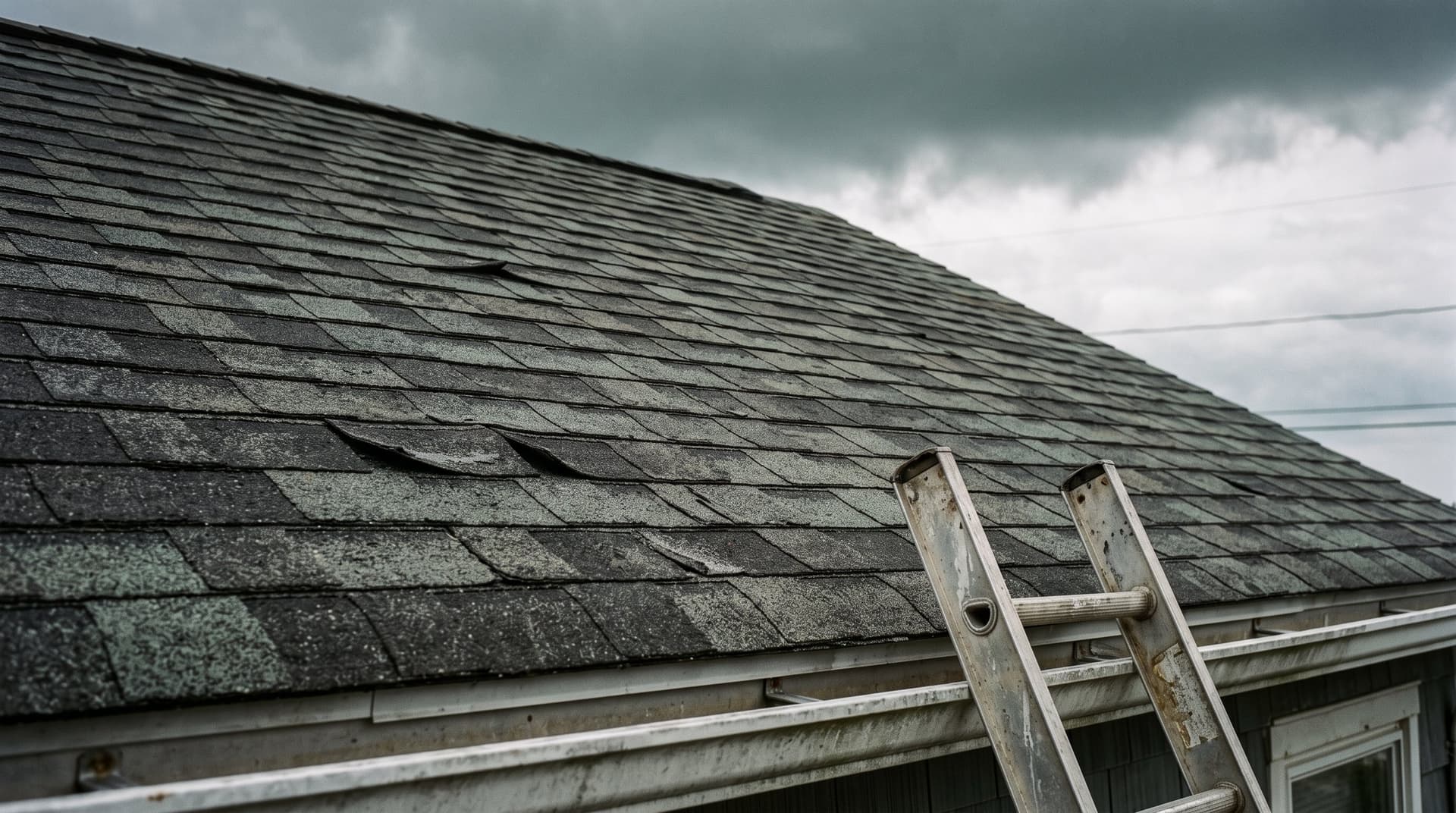
The most common bad advice we hear: "Just pressure wash the streaks off." A pressure washer at any pressure above about 600 PSI will strip the protective granules off the shingle in seconds. Once those granules are gone, the asphalt mat is exposed to UV, the shingle ages five times faster, and the roof has been visibly destroyed for a temporary cosmetic improvement.
We have inspected roofs in Toms River and Manahawkin where a pressure-washing contractor came through, sprayed the streaks off, and left behind:
- Streaks of bare asphalt where granules were blasted away.
- Lifted shingle tabs from the high-pressure water driving up under the edges.
- Water forced under the shingle into the underlayment, soaking the decking.
- Stripped sealant strips that should have held the shingle tabs down for storms.
The homeowner paid $400 for a cleaning that voided the manufacturer warranty and shortened the roof's life by a third. The streaks came back in two years anyway because the underlying biology was not addressed.
Pressure washing is wrong for shingle roofs. Full stop. Anyone offering it as a service is either uninformed or counting on the homeowner being uninformed.
What Soft Washing Actually Is and When It Works
The correct method for cleaning algae off a shingle roof is soft washing. The process:
- Pre-wet the surrounding landscaping and downspouts. The cleaning chemistry will run off the roof. Plants need protection.
- Apply a sodium hypochlorite (bleach) solution at the right dilution. Typical mix is 3 to 4 parts water to 1 part 12.5 percent sodium hypochlorite, with a small amount of surfactant. The dilution kills the algae without damaging the shingle.
- Let the solution dwell for 15 to 30 minutes. No scrubbing, no pressure. The biology kills itself within the dwell time.
- Rinse with low-pressure water. Garden-hose pressure or a soft-wash pump at under 100 PSI. The dead algae rinses off without disturbing the granules.
- Final rinse the landscaping and downspouts. Dilute any residual chemistry that ran off.
Done correctly, soft washing removes the visible streaks within 24 to 72 hours (the dead algae continues to break down and rinse with normal rain) and does not damage the shingle. The American Roof Cleaning Institute and the Asphalt Roofing Manufacturers Association both recognize sodium hypochlorite soft washing as the only safe cleaning method for asphalt shingles.
Pricing for a soft wash on a typical Ocean County ranch (1,500 to 2,000 square feet of roof) runs $400 to $800. A two-story Monmouth shoulder home (Howell, Wall, Manasquan) runs $700 to $1,300. The cleaning lasts two to four years before the algae returns, depending on exposure and whether prevention is in place.
Zinc and Copper: The Prevention That Actually Works
The reason algae returns is that the conditions that grew it in the first place are still there. The shingle does not have any active defense against re-colonization. The fix is metal: zinc and copper both leach trace ions in the rainwater that runs down the slope, and those ions kill the algae before it can establish.
Three options:
Zinc strips installed at the ridge. Galvanized or pure-zinc metal strip, 2 to 4 inches wide, installed under the ridge cap shingles so a small lip extends above the shingle field. Rainwater hits the zinc, picks up zinc ions, and washes them down the entire slope. Effective range is roughly 15 to 20 feet below the strip. Lifespan of the strip is 15 to 25 years.
Copper strips installed at the ridge. Same principle, copper instead of zinc. Slightly more effective per linear foot. Verdigris staining on white siding or stone is the visual side effect on some installations. Longer lifespan than zinc.
Algae-resistant shingles at replacement. Modern AR-rated shingles (GAF Timberline HDZ with the StainGuard Plus AR rating, Owens Corning Duration with Streakguard, CertainTeed with Streakfighter) bake copper-impregnated granules into the shingle surface. Lifespan of the AR protection on top-line products is 15 to 25 years. This is the right time to address algae if a roof replacement is on the horizon.
The right prevention strategy depends on the roof's life remaining:
- Roof has 10+ years of life left: Soft wash + zinc strips. Cost $800 to $1,500 total. Buys clean shingles for the rest of the roof's life.
- Roof has 3 to 8 years left: Soft wash only, or soft wash + zinc strips depending on how much the appearance matters. Plan the replacement.
- Roof has less than 3 years left: Skip the cleaning. Plan the replacement with AR-rated shingles.
When Algae Streaks Are Actually Hiding Worse Problems
About one in five algae-streak inspections we run turns into a bigger conversation. The algae is the visible symptom; the underlying roof has structural problems that the cleaning will not fix. The flags we look for during a soft-wash inspection:
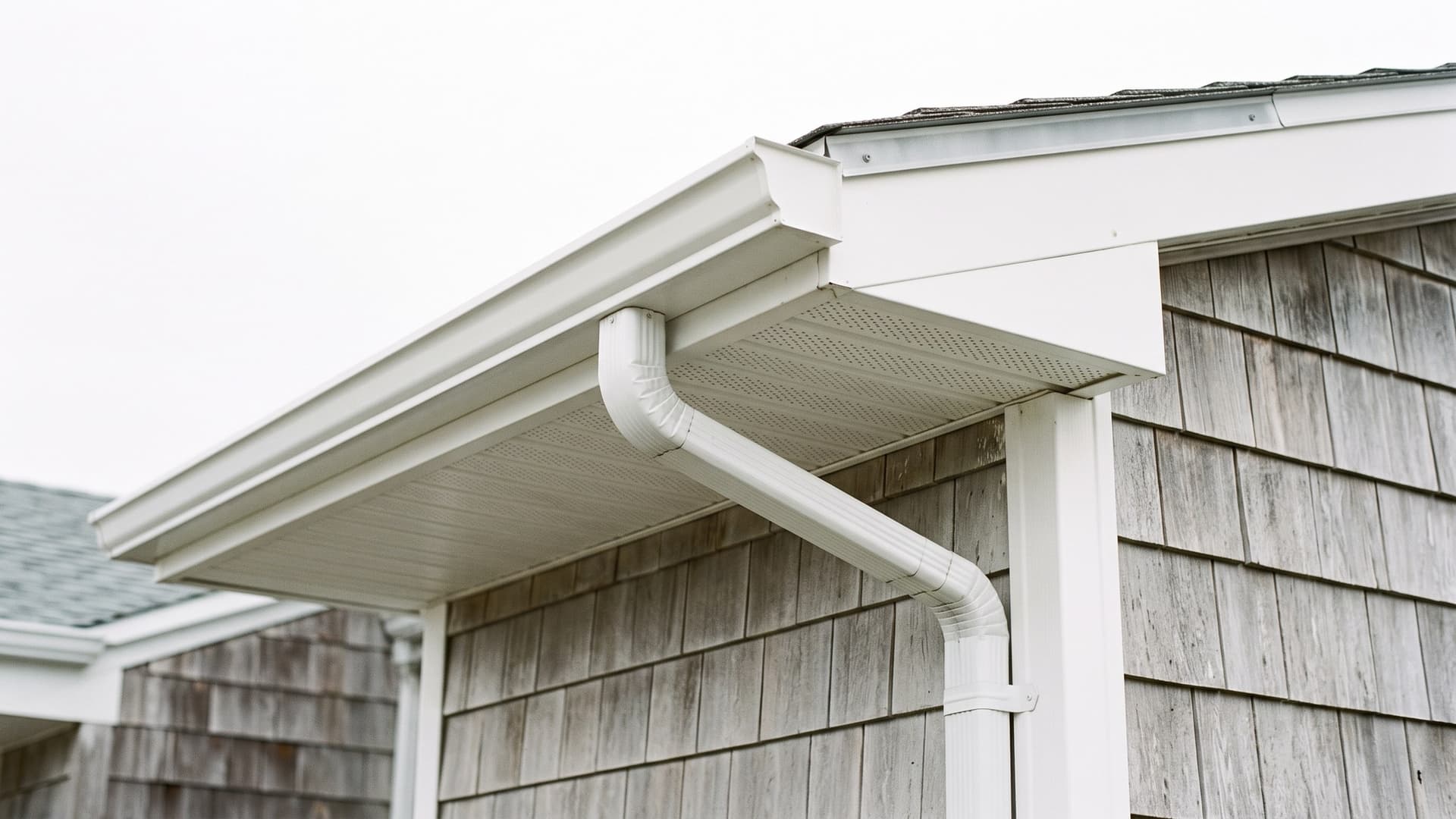
- Granule loss in the gutters. Coffee-ground-looking sediment piling up in the gutter or splash blocks. Sign the shingles are shedding their protection regardless of the algae.
- Curled or lifted tabs. Especially on south and west slopes where heat damage shows up first. Curling means the shingle is past its functional life.
- Cracked or broken shingles. Anywhere on the roof. Especially around chimneys, skylights, and valleys.
- Soft spots underfoot. Rot in the decking from long-term moisture under the algae mat.
- Daylight visible through the attic. Nail backout or worn nail penetrations.
- Active leaks at ceilings. Self-explanatory.
If any of these show up during inspection, cleaning the algae is the wrong first move. The roof is at end of life and the conversation should be about replacement, not maintenance. We have written more about diagnosing end-of-life on Ocean County roofs in our roof warning signs guide.
The other related condition we check during an algae inspection is attic ventilation. Ventilation problems and algae problems often show up together on the same Ocean County ranch because both are accelerated by trapped humidity. If the roof has an algae problem and an undersized ventilation system, the next roof has to address both. We covered the ventilation diagnosis in detail in our ventilation post.
What Algae Cleaning Costs in Ocean and Monmouth County
Honest 2026 pricing across the area we serve:
- Soft wash, single-story 1,200 to 1,800 sq ft roof: $400 to $700.
- Soft wash, two-story 1,800 to 2,800 sq ft roof: $700 to $1,200.
- Soft wash, larger or complex roof: $1,200 to $1,800.
- Zinc strips at the ridge, full ridge length: $300 to $600 installed.
- Copper strips, full ridge length: $500 to $1,000 installed.
- Soft wash + zinc strips (most common package): $700 to $1,500.
Anyone quoting under $300 for a soft wash is either using straight water (does not work), the wrong chemistry (damages shingles), or has no insurance for the work (your problem when they fall). Anyone quoting over $2,000 for a standard residential job is overcharging. The fair-market range is real and tight.
What to Ask the Next Contractor Who Quotes Your Roof Cleaning
Five questions surface most bad operators before money changes hands:
- "Is this a soft wash or a pressure wash?" The right answer is soft wash. If the contractor cannot articulate the difference, walk away.
- "What dilution of sodium hypochlorite do you use, and do you carry a surfactant?" A real soft-wash contractor will give specific numbers. A pressure washer pretending to soft wash will hedge.
- "Are you insured for roof work, and can you send the certificate of insurance before the job?" Roof work is a higher liability category than ground-level cleaning. Most landscape and pressure-wash contractors are not insured for it.
- "Will the cleaning affect my manufacturer warranty?" A real contractor knows the answer and can show the manufacturer guidance. GAF, Owens Corning, and CertainTeed all permit soft washing with sodium hypochlorite. None permit pressure washing.
- "How long should I expect the cleaning to last, and what prevention do you recommend?" Two to four years without prevention, six to ten years with zinc strips. A contractor who promises "permanent" cleaning is selling fiction.
How Home Pro Handles Algae
We do not run a roof-cleaning service. We do roof replacement, repair, and ventilation work. What we do, on every quote, is inspect for algae as part of the overall roof condition. If the roof is mid-life and the algae is the main problem, we recommend a qualified local soft-wash contractor (not ourselves) and zinc strips installed by us. If the roof is at end of life, we put GAF Timberline HDZ with StainGuard Plus AR in the new-roof proposal and the algae problem is solved for the next 25 years.
If you are in Forked River, Lacey, Bayville, Barnegat, Manahawkin, Tuckerton, Berkeley, Waretown, Toms River, Brick, Howell, Wall, Manasquan, Brielle, Spring Lake, Sea Girt, or anywhere else in Ocean or Monmouth County and your roof has black streaks running down the north side, get an honest inspection. We will tell you whether the streaks are an algae problem (most of the time), an end-of-life problem (sometimes), or both. Schedule a free inspection or call (732) 703-7808.